
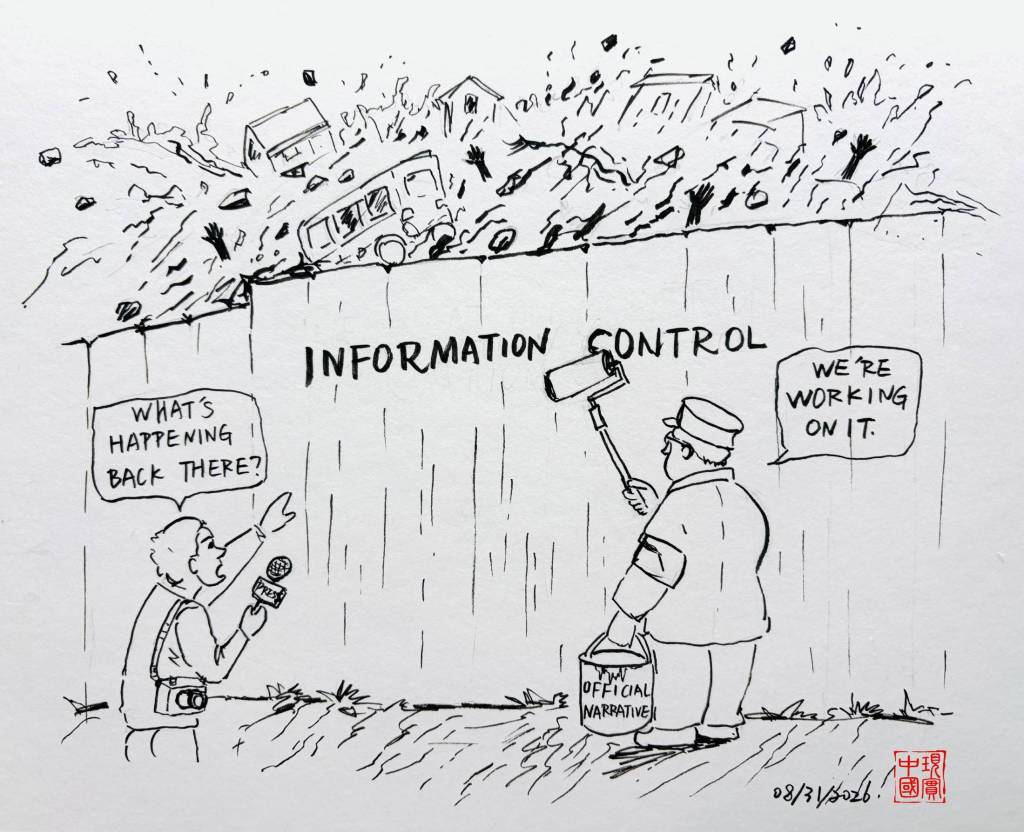
The devastating mudslide and flash flood that struck the China–Nepal border region in late August was first and foremost a human tragedy. Entire sections of a vital Himalayan trade corridor were destroyed within minutes as ice, rock, and debris swept through mountain valleys, devastating communities and infrastructure.
But the disaster also exposed a political reality: in China, the government controls not only territory, but information about what happens there.
On the Nepalese side, journalists and the public were able to report extensively on the destruction and its aftermath. On the Chinese side, particularly in the Tibetan region, access to the affected areas was much more restricted. Chinese authorities control access for foreign journalists and tightly regulate the flow of information from politically sensitive areas. This makes independent reporting and verification far more difficult.
That distinction is politically significant. The problem is not simply that the disaster occurred in an isolated and difficult-to-reach part of the Himalayas. The Chinese government’s control over information determines what can be reported, who can report it, and what the outside world is allowed to see.
In a disaster, transparency is not a luxury. Accurate information can affect rescue efforts, international cooperation, public accountability, and future preparedness. When authorities restrict independent scrutiny, official narratives can become the primary—and sometimes only—source of information.
The mudslide demonstrated the destructive power of nature. The information restrictions demonstrated the political power of the state. And when a government controls the story of a disaster, the public is left with a fundamental question: what else are we not being allowed to see?
Click HERE for the news report.
Discover more from The Truth Of China
Subscribe to get the latest posts sent to your email.

