When Disaster Strikes, Who Controls the Story?

The devastating mudslide and flash flood that struck the China–Nepal border region in late August was first and foremost a human tragedy. Entire sections of a vital Himalayan trade corridor were destroyed within minutes as ice, rock, and debris swept through mountain valleys, devastating communities and infrastructure.

But the disaster also exposed a political reality: in China, the government controls not only territory, but information about what happens there.

On the Nepalese side, journalists and the public were able to report extensively on the destruction and its aftermath. On the Chinese side, particularly in the Tibetan region, access to the affected areas was much more restricted. Chinese authorities control access for foreign journalists and tightly regulate the flow of information from politically sensitive areas. This makes independent reporting and verification far more difficult.

That distinction is politically significant. The problem is not simply that the disaster occurred in an isolated and difficult-to-reach part of the Himalayas. The Chinese government’s control over information determines what can be reported, who can report it, and what the outside world is allowed to see.

In a disaster, transparency is not a luxury. Accurate information can affect rescue efforts, international cooperation, public accountability, and future preparedness. When authorities restrict independent scrutiny, official narratives can become the primary—and sometimes only—source of information.

The mudslide demonstrated the destructive power of nature. The information restrictions demonstrated the political power of the state. And when a government controls the story of a disaster, the public is left with a fundamental question: what else are we not being allowed to see?
Click HERE for the news report.

China’s Ethnic Unity Law and the Push for a Single Identity

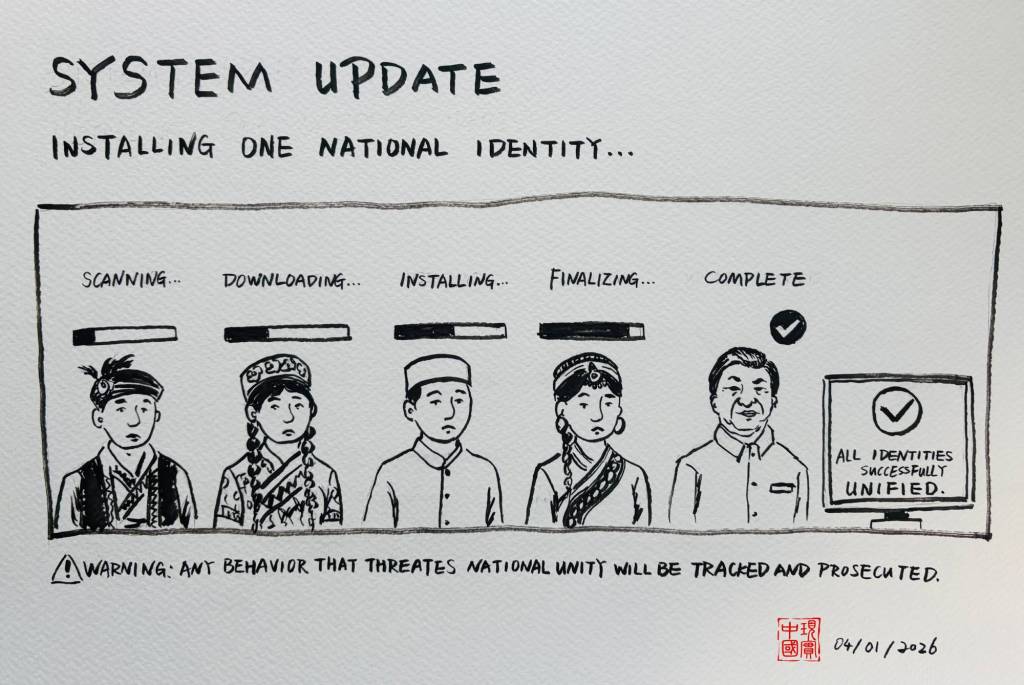
China has formally codified its long-running campaign to reshape ethnic identity into law, marking a major step in President Xi Jinping’s push for a unified national consciousness.

The new “ethnic unity” legislation was passed by China’s national legislature on March 12, 2026, and will take effect on July 1, 2026. It makes promoting national unity a responsibility of all levels of society, including government agencies, businesses, schools, and families.

The law reflects Xi’s broader goal of strengthening a single Chinese identity centered on loyalty to the Communist Party. It spans education, housing, media, and public life. It requires Mandarin Chinese to be the primary language of instruction in schools and official communication, and directs authorities to guide citizens toward “correct views” on history, culture, and religion.

Parents are also instructed to raise children to “love the Communist Party,” while ethnic and religious objections to marriage are prohibited.

Although Beijing says the law protects China’s 56 officially recognized ethnic groups, critics argue it accelerates assimilation into Han cultural norms. The policy builds on earlier restrictions in regions such as Xinjiang and Tibet, where language and cultural autonomy have already been significantly reduced.

Scholars say the legislation formalizes years of policy shifts aimed at strengthening national cohesion, but at the cost of cultural and linguistic diversity. Human rights researchers also warn it expands the state’s authority to pursue individuals abroad deemed to threaten national unity, reflecting a broader trend of transnational repression.

Click HERE for news report.

When Vanity Erupts on the Roof of the World

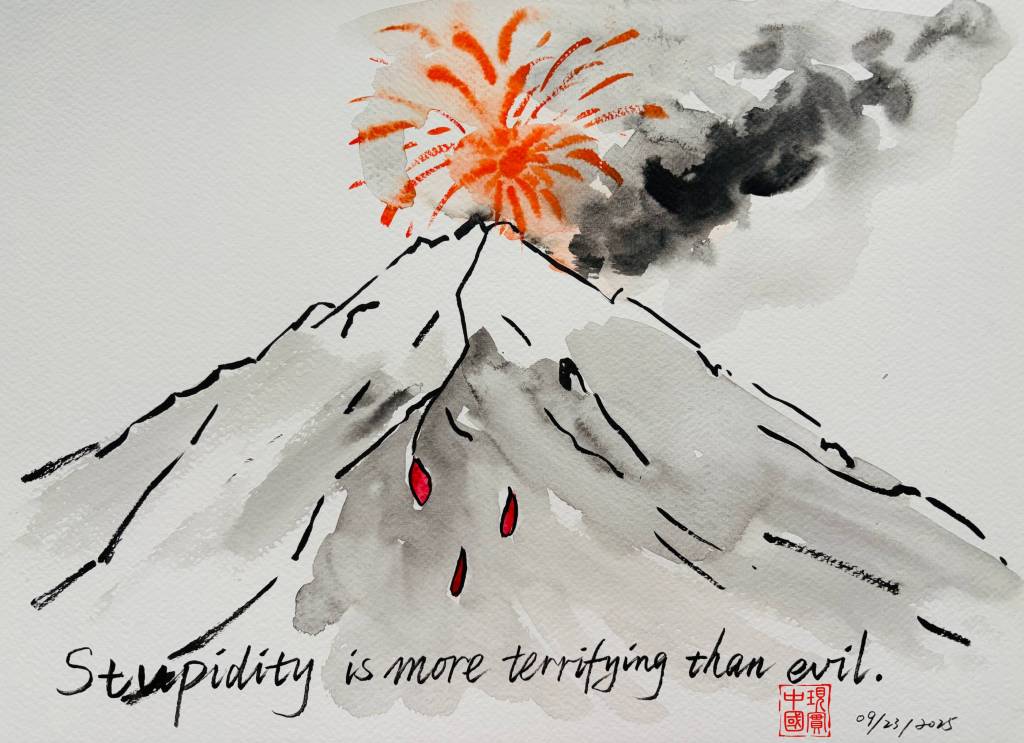
What was meant to be an “artistic celebration” became a symbol of arrogance and hypocrisy. At 5,500 meters above sea level, artist Cai Guo-Qiang and outdoor brand Arc’teryx lit up Tibet’s Himalayas with a massive “Rising Dragon” fireworks display — in one of Earth’s most fragile ecosystems.

The irony is breathtaking: a brand built on love for the outdoors helped pollute the very wilderness it claims to protect. Social media erupted with anger, and Arc’teryx was forced to issue an apology, calling the event “deeply disappointing.” Cai, too, expressed regret — but only after the backlash.

This was not art honoring nature; it was spectacle consuming it. On the world’s highest ground, humanity once again proved that ego burns brighter than respect.

Click here for the report.