
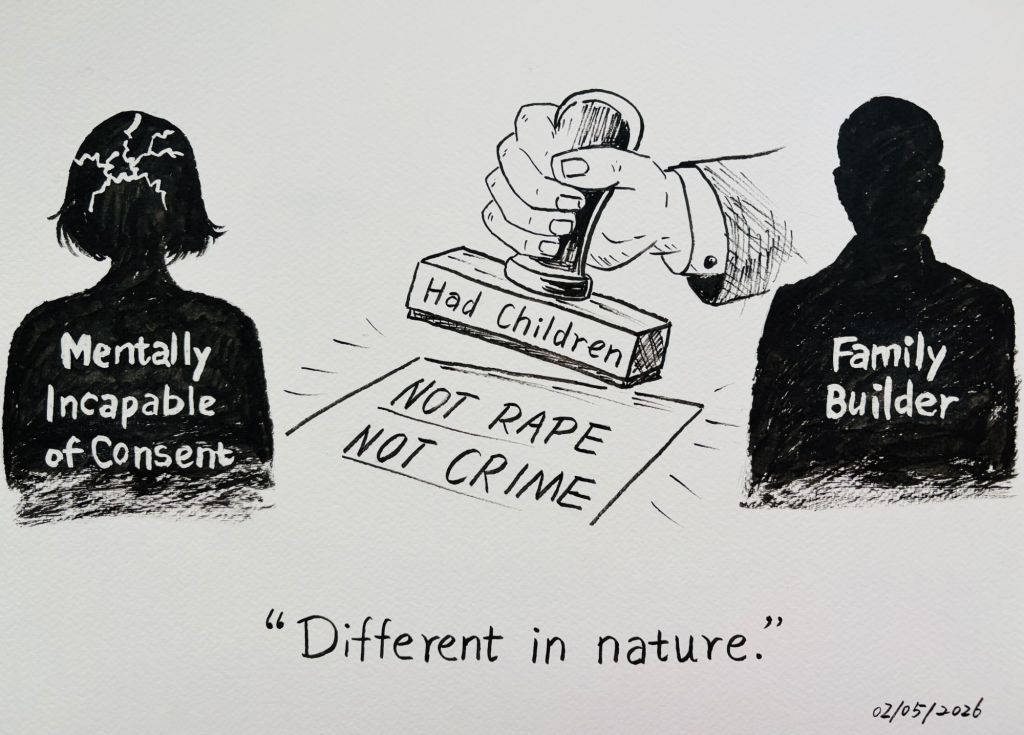
A recent prosecutorial decision in Shanxi has sparked widespread outrage across China. According to official accounts, years ago a woman who was disheveled and appeared to suffer from severe mental illness wandered into a rural village in northern China. A local man decided to take her into his home. Over the next 13 years, he lived with her and fathered multiple children.
Prosecutors later acknowledged that the woman lacked the capacity to consent to sexual activity. Yet they concluded that the man committed no crime. Their reasoning was that the two had lived together long-term and had children, making his actions “different in nature” from rape.
This conclusion stunned many observers. It effectively treats the initial act—bringing a mentally ill woman home without her consent—as irrelevant once a family-like arrangement and children result. Consent, in this logic, is not a prerequisite but something that can be overwritten by outcome.
The contradiction became even sharper when prosecutors charged two other men from the same village with raping the woman, explicitly citing her inability to resist or consent. The difference was not her condition, but the nature of the relationship afterward.
For many, the case crystallizes a troubling message: when sexual exploitation is successfully packaged as family formation, it may be excused. In a country anxious about falling birth rates and lacking clear legal recognition of marital rape, this reasoning raises profound concerns about how women’s autonomy is weighed against demographic priorities.







 The Truth Of China