
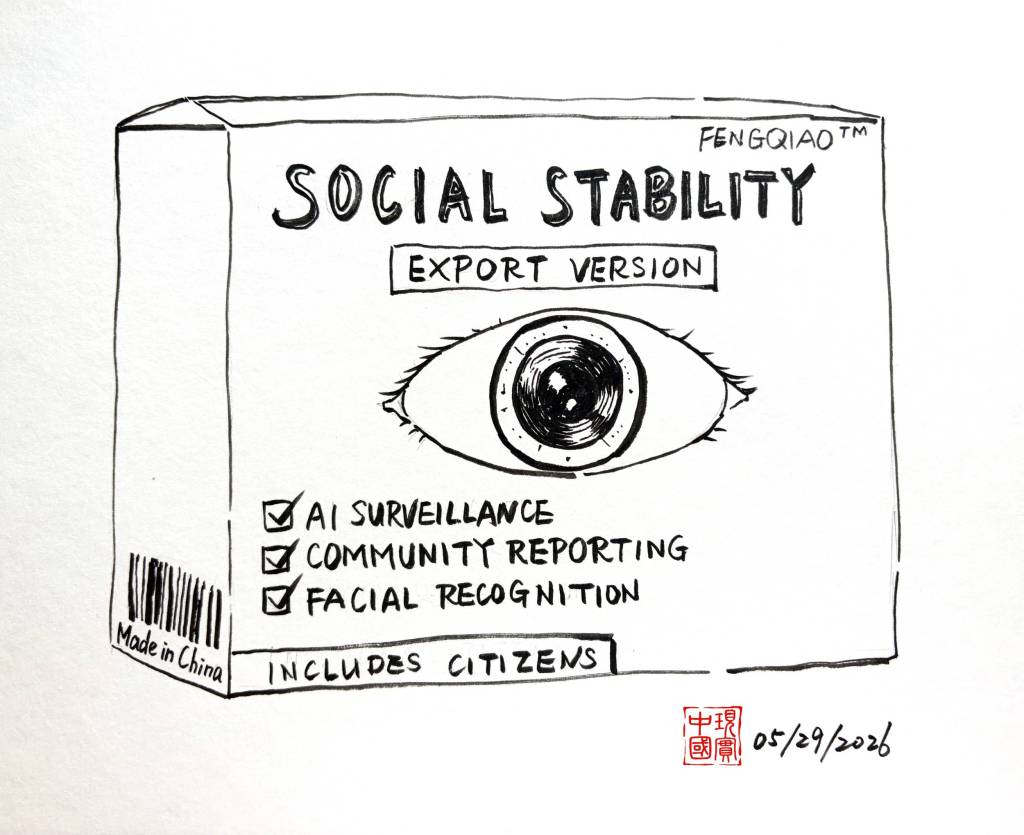
A recent report describes how China’s “Fengqiao Experience,” a Mao-era model of community surveillance and social control, has been introduced in places as distant as the Solomon Islands. What began as a local request for help with nighttime disturbances in a village near Honiara gradually turned into something far more controversial: proposals to collect fingerprints, household data, and other personal identifiers from residents.
In China, the Fengqiao model emphasizes resolving threats to social order through dense neighborhood monitoring and early intervention. Critics argue it also normalizes extensive state surveillance and the blending of policing with political control.
Its overseas adaptation raises a deeper question: is this simply a tool for public safety, or part of a broader effort to export a governance philosophy centered on state oversight? Supporters describe it as practical assistance for countries with limited policing capacity. Critics, however, warn that such systems may shift the balance between security and personal freedom.
In the Solomon Islands, the pilot program was eventually suspended after public concern. But the experiment highlights a larger global trend—how models of internal governance can travel, adapt, and sometimes collide with local norms.
Click Here for the news report.
Discover more from The Truth Of China
Subscribe to get the latest posts sent to your email.

