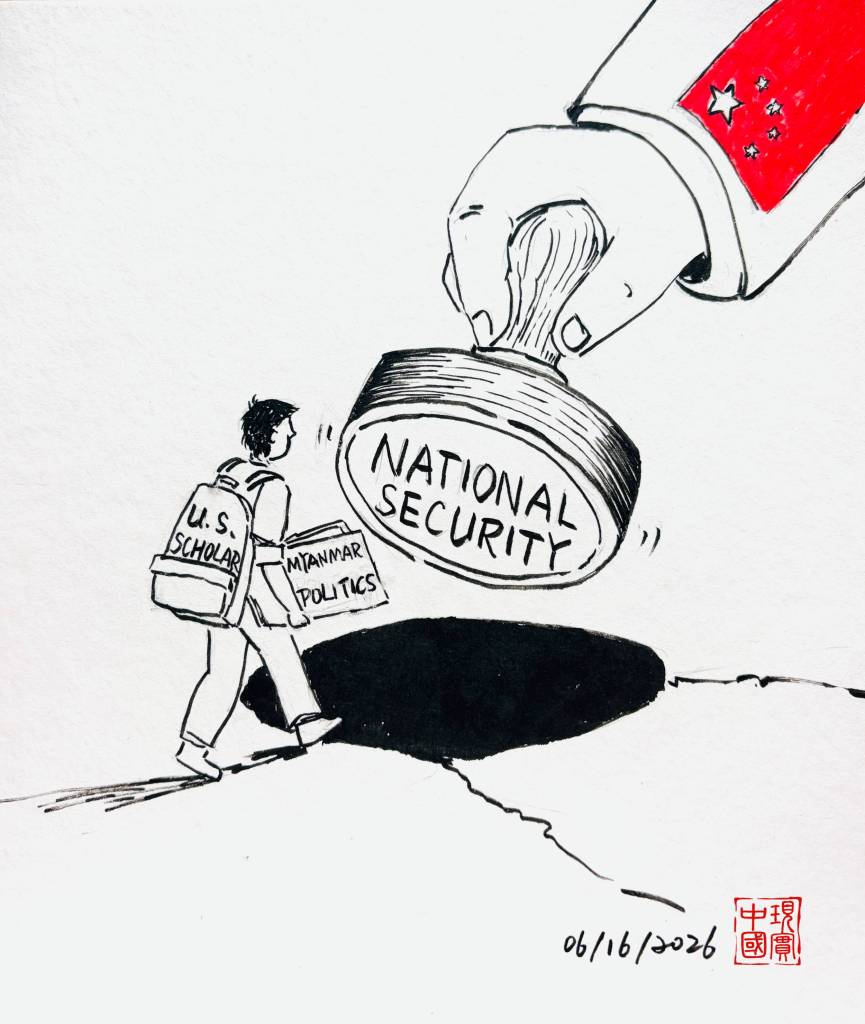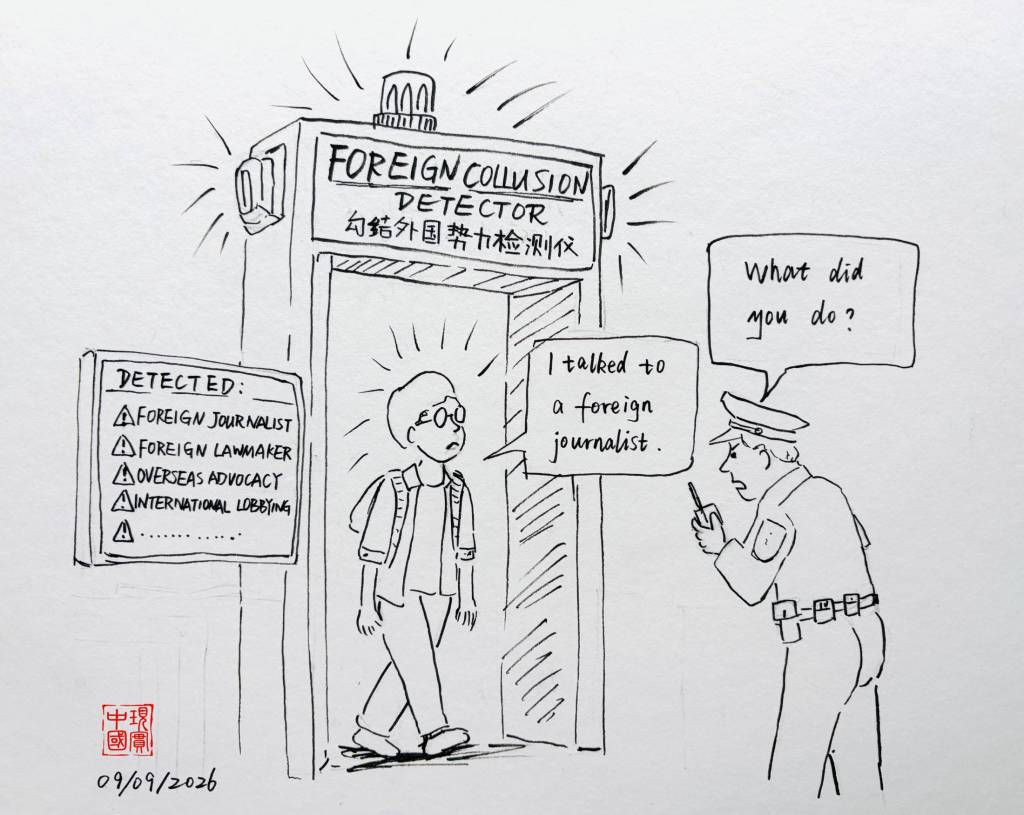
In early June 2026, reports emerged that U Min Zin (敏辛), a U.S. scholar known for his research on Myanmar politics, was detained in China.
U Min Zin’s academic work focuses on Myanmar’s political landscape, including civil conflict, governance, and regional security dynamics in Southeast Asia. His research is often cited in discussions on Myanmar’s ongoing instability and the broader geopolitical role of China in the region.
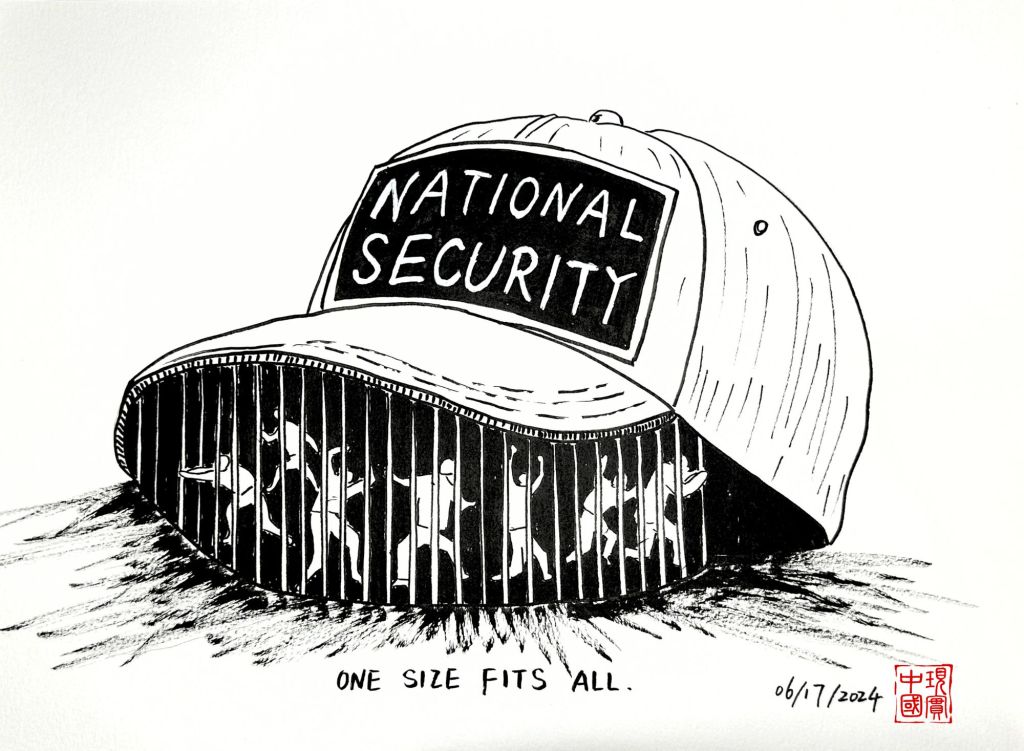
According to people with knowledge of the arrest, he was detained in Kunming, in China’s Yunnan province, shortly after arriving for an academic-related visit. He is being investigated on suspicion of espionage and activities endangering national security.
However, details remain limited. The specific allegations have not been publicly explained, and no detailed evidence has been released. As a result, many aspects of the case remain unclear.
The incident has drawn attention from academic and policy communities, particularly given U Min Zin’s work on a sensitive regional topic and the broader context of U.S.–China tensions.
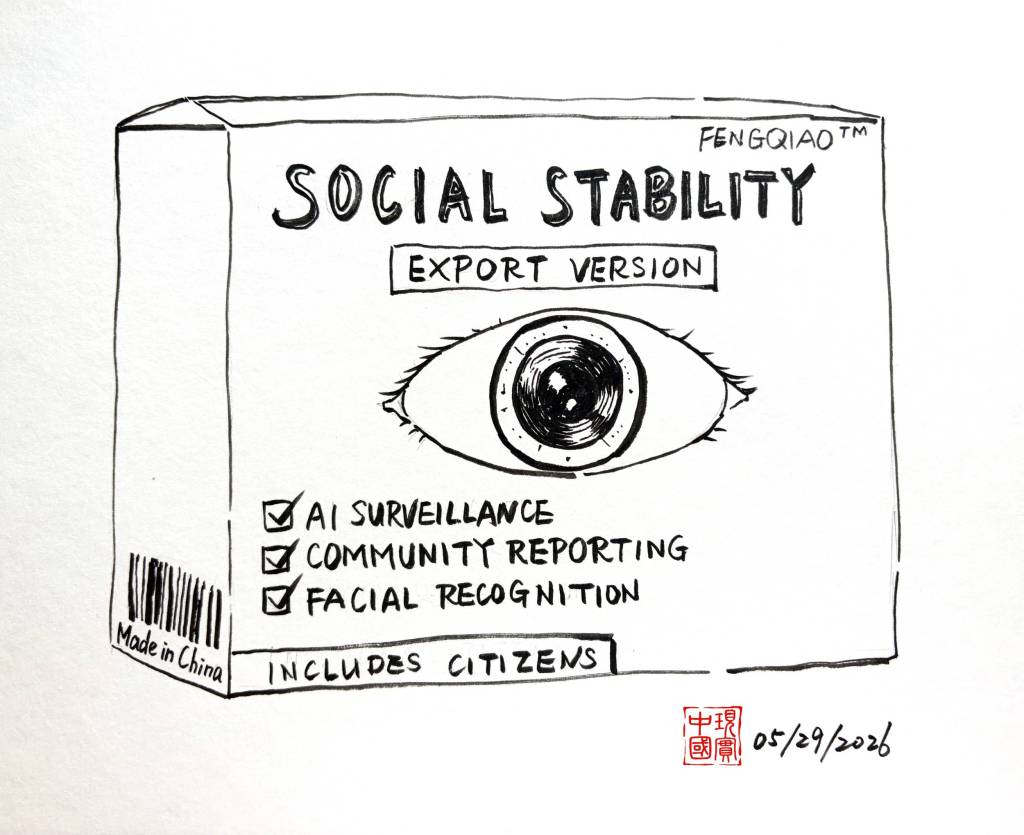
A recent report describes how China’s “Fengqiao Experience,” a Mao-era model of community surveillance and social control, has been introduced in places as distant as the Solomon Islands. What began as a local request for help with nighttime disturbances in a village near Honiara gradually turned into something far more controversial: proposals to collect fingerprints, household data, and other personal identifiers from residents.
In China, the Fengqiao model emphasizes resolving threats to social order through dense neighborhood monitoring and early intervention. Critics argue it also normalizes extensive state surveillance and the blending of policing with political control.
Its overseas adaptation raises a deeper question: is this simply a tool for public safety, or part of a broader effort to export a governance philosophy centered on state oversight? Supporters describe it as practical assistance for countries with limited policing capacity. Critics, however, warn that such systems may shift the balance between security and personal freedom.
In the Solomon Islands, the pilot program was eventually suspended after public concern. But the experiment highlights a larger global trend—how models of internal governance can travel, adapt, and sometimes collide with local norms.
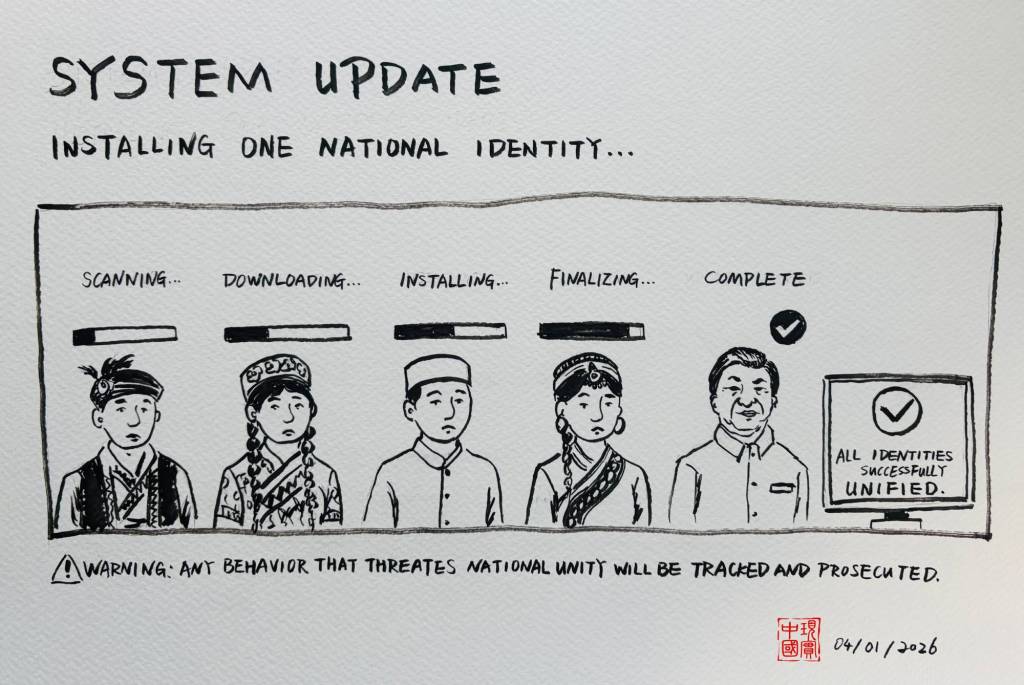
China has formally codified its long-running campaign to reshape ethnic identity into law, marking a major step in President Xi Jinping’s push for a unified national consciousness.
The new “ethnic unity” legislation was passed by China’s national legislature on March 12, 2026, and will take effect on July 1, 2026. It makes promoting national unity a responsibility of all levels of society, including government agencies, businesses, schools, and families.
The law reflects Xi’s broader goal of strengthening a single Chinese identity centered on loyalty to the Communist Party. It spans education, housing, media, and public life. It requires Mandarin Chinese to be the primary language of instruction in schools and official communication, and directs authorities to guide citizens toward “correct views” on history, culture, and religion.
Parents are also instructed to raise children to “love the Communist Party,” while ethnic and religious objections to marriage are prohibited.
Although Beijing says the law protects China’s 56 officially recognized ethnic groups, critics argue it accelerates assimilation into Han cultural norms. The policy builds on earlier restrictions in regions such as Xinjiang and Tibet, where language and cultural autonomy have already been significantly reduced.
Scholars say the legislation formalizes years of policy shifts aimed at strengthening national cohesion, but at the cost of cultural and linguistic diversity. Human rights researchers also warn it expands the state’s authority to pursue individuals abroad deemed to threaten national unity, reflecting a broader trend of transnational repression.
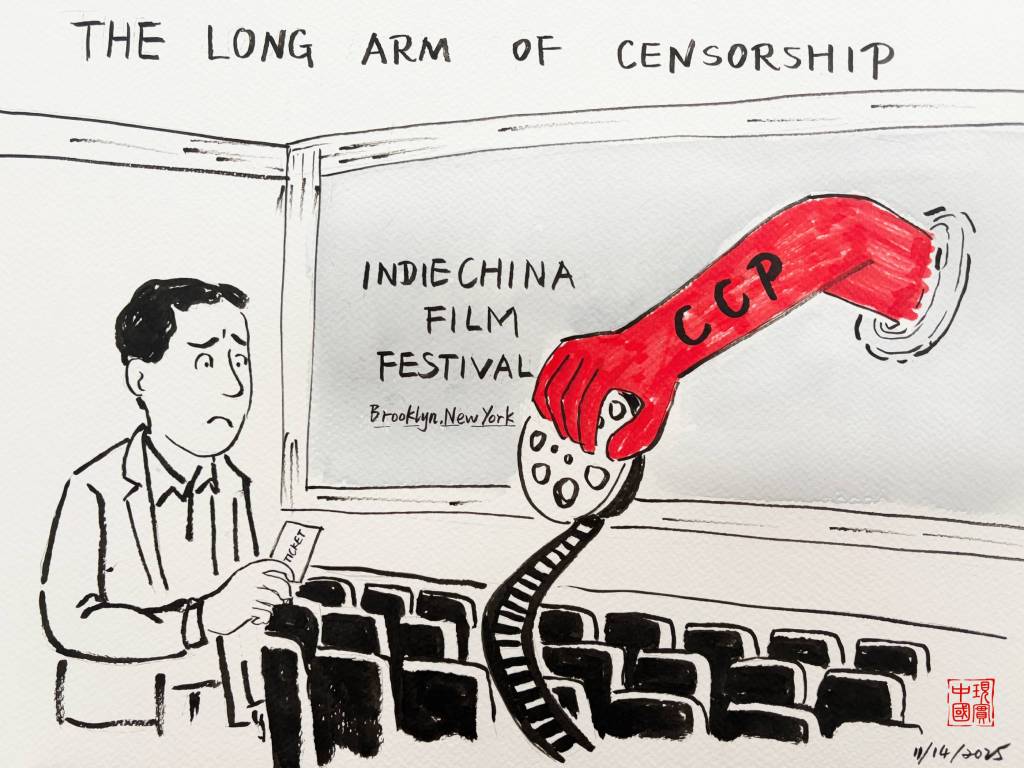
The cancellation of the IndieChina Film Festival in New York reveals an unsettling truth: censorship today is no longer confined by borders. What began as a small, independent gathering of filmmakers quickly became the target of pressure from thousands of miles away.
Organizer Zhu Rikun received a 5 a.m. call from his father in China — a call clearly influenced by authorities. Over the following days, directors, moderators, and even volunteers withdrew without explanation. Some quietly admitted they or their families had been warned by Chinese police. Others, including foreign citizens, faced pressure from employers connected to China.
The festival was modest in scale, yet the intimidation was sweeping. It shows a government willing to silence criticism wherever it appears, even in a Brooklyn theater with room for just a few dozen viewers.
Zhu ultimately canceled the event, not out of fear, but in hopes of shielding others from harassment. His empty screening room now symbolizes something far larger: the shrinking space for creative freedom, no matter where it tries to exist.
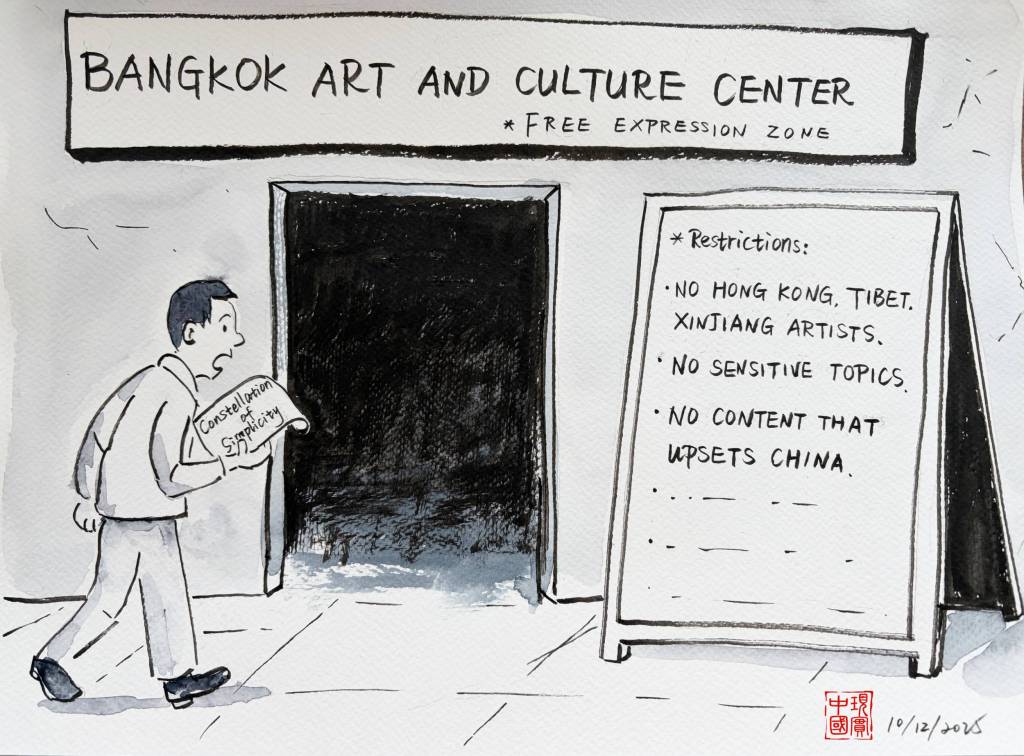
A new exhibition named “Constellation of Simplicity” in Bangkok was meant to explore how authoritarian governments cooperate across borders. Instead, it became an example of cross-border repression itself. The show’s curator, Sai — a Myanmar artist living in exile — found himself fleeing Thailand only two days after the opening. Museum directors warned him that Thai police were asking for his information, raising fears he might be deported back to Myanmar.
Pressure escalated quickly. Chinese authorities demanded that the museum erase the names and works of artists from Hong Kong, Tibet and Xinjiang. While the exhibition remained open, the institution blacked out those artists’ names and removed symbolic flags, turning a space meant for free expression into a quietly censored one.
The censorship was selective: works criticizing Myanmar’s junta, Iran or Russia stayed untouched. Only pieces tied to China’s most sensitive regions were targeted — a reminder of Beijing’s growing influence in Southeast Asia.
For Sai, now in London, the experience underscores a shrinking global space for political art. Yet he says he has no regrets and hopes to bring the exhibition to places where it can be shown freely.
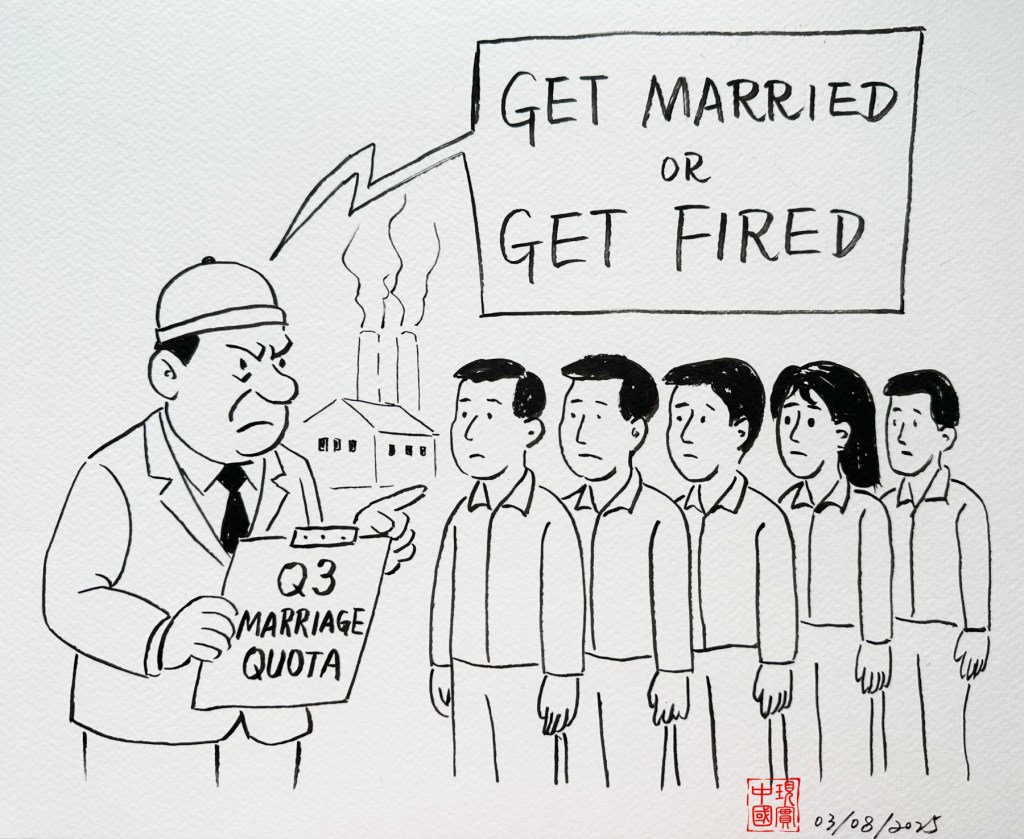
A recent controversy in China has exposed the troubling lengths some companies will go to in order to enforce the state’s demographic agenda. Shandong Shuntian Chemical Group issued a memo ordering unmarried employees between the ages of 28 and 58 to get married and start families by September 30—or face dismissal. The notice, which went viral online, declared that refusing to wed and reproduce was “disloyal” to the nation.
This is not an isolated case. A popular supermarket chain has also banned its employees from paying or demanding expensive dowries, framing it as a way to promote affordable marriages. While officials and state media defend such measures as creating a “pro-family environment,” many young people see them as intrusive, costly, and ultimately counterproductive.
As China’s birthrate continues to fall, the question remains: how far will institutions go to fill the nation’s cradles?
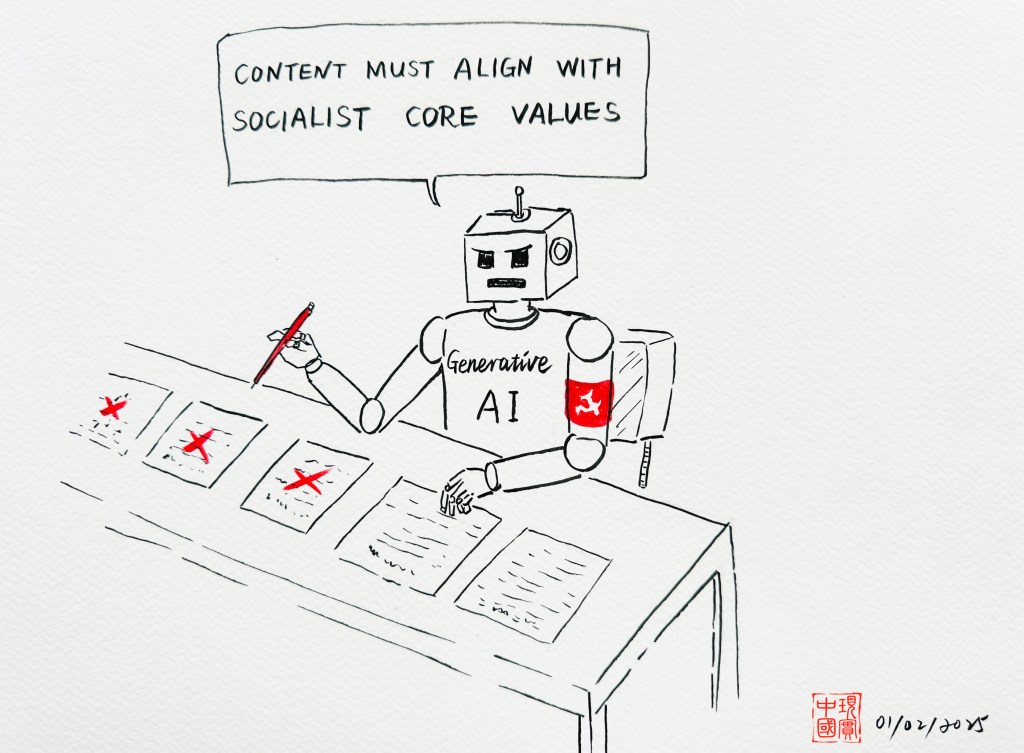
China is tightening control over artificial intelligence by requiring tech firms to undergo mandatory government censorship tests. According to insiders, companies such as ByteDance and Alibaba. AI must ensure their large language models reflect “socialist core values.”
The Cyberspace Administration of China (CAC) is said to be testing how these models respond to politically sensitive questions, including those related to President Xi Jinping. Officials reportedly review training data and security processes on-site, with some companies needing multiple attempts to pass the evaluation.
China’s approach is seen as an effort to establish the world’s most stringent AI regulatory framework. While this ensures alignment with state ideology, it also forces AI startups to adapt quickly, often by building keyword filters and sanitizing datasets. For many developers, compliance has become as critical as innovation itself.
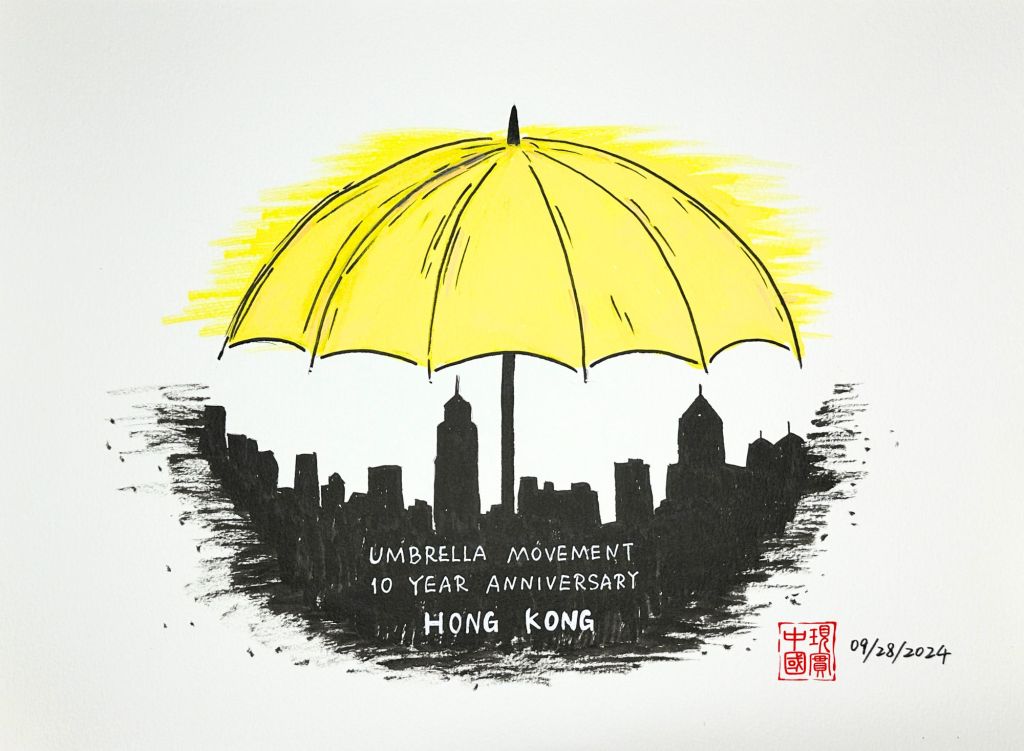
Ten years ago, Hong Kong witnessed a remarkable chapter in its history—the Umbrella Movement. What began as a call for democratic reforms and universal suffrage swiftly grew into a powerful symbol of peaceful resistance. Thousands of citizens, armed only with umbrellas to shield against tear gas, united in a non-violent stand for their rights.
The spirit of the movement has left an indelible mark on the city. Though the physical barricades have long been dismantled, the ideals of democracy, freedom, and autonomy continue to inspire. The Movement’s legacy lives on through the resilience of Hong Kongers who strive for justice, despite facing increasing challenges and suppression.
As we commemorate this anniversary, we honor the courage and determination of those who stood on the front lines and reflect on the ongoing struggle for democracy. The Umbrella Movement reminds us that the fight for freedom is enduring, and the hope for a brighter, more democratic future remains alive in the hearts of many.
Here’s to remembering the past, acknowledging the present, and hoping for a future where the spirit of the Umbrella Movement thrives.
China has approved a plan to raise its statutory retirement age for the first time since the 1950s, addressing the challenges of its aging population. Starting on January 1, 2025, the retirement age will increase gradually. Men, who could previously retire at 60, will see their age rise incrementally to 63 by 2040. For women in white-collar jobs, the retirement age will increase from 55 to 58. Women in blue-collar jobs, previously able to retire at 50, will now work until 55. Although necessary, the changes have been met with resistance from the public.
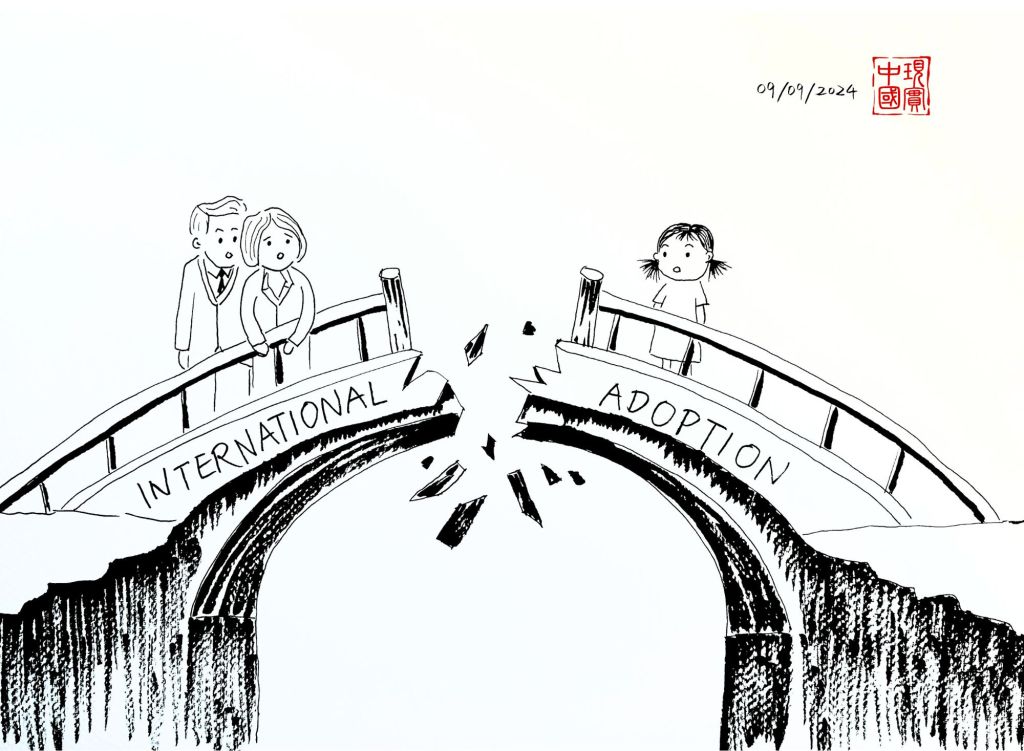
China has officially ended most foreign adoptions, closing a significant chapter that spanned over three decades. During this time, tens of thousands of children were sent overseas for adoption, largely due to the country’s one-child policy, which led many families to abandon their babies. The Chinese government stated that this decision aligns with global trends, signaling a shift in the country’s approach to international adoption.
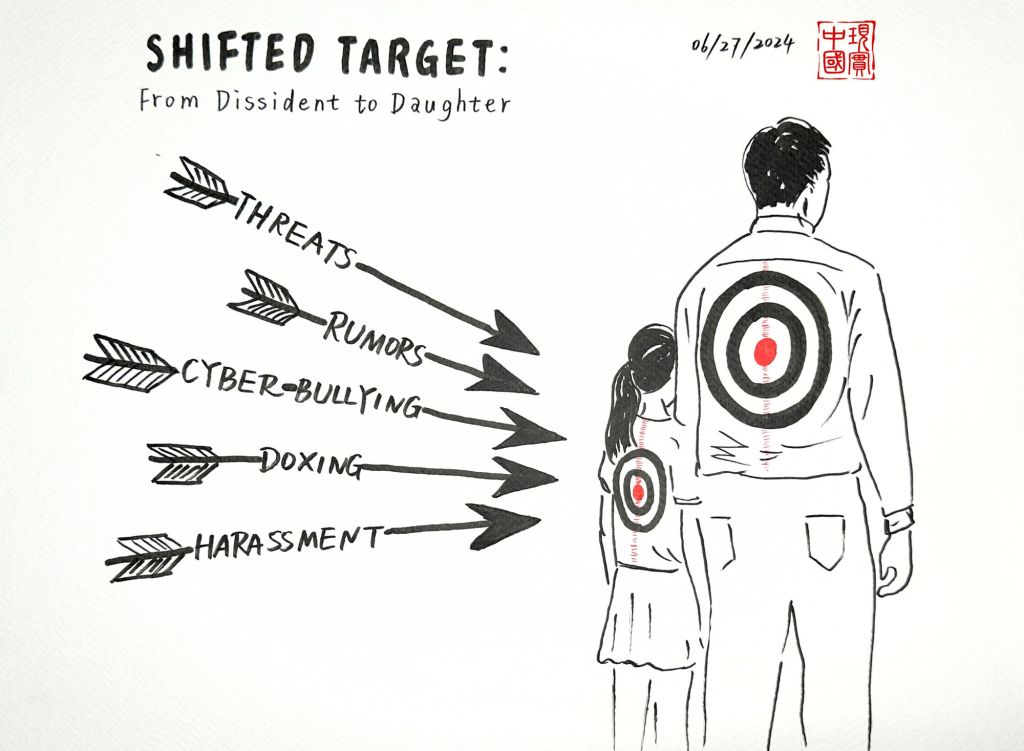
Living in the suburbs of Philadelphia, the prominent Chinese exile writer Deng Yuwen frequently criticizes China and its authoritarian leader, Xi Jinping. Recently, China’s response has been severe, launching aggressive and malicious attacks against his daughter online.
Research by Clemson University and Meta, the parent company of Facebook and Instagram, reveals that a secret propaganda network, possibly linked to China’s security apparatus, has targeted Deng Yuwen and even his teenage daughter on popular social media platforms. These attacks involve posts filled with sexual innuendos and threats, posted by fake identities. They appear in replies to Deng’s posts on platform X and comments on public school accounts in his community, falsely accusing his 16-year-old daughter of drug use, arson, and prostitution.
“Blocking isn’t effective,” Deng Yuwen remarked in an interview about the relentless online assaults. “Today you block it, tomorrow it resurfaces under a new alias.”
Researchers note that crude comments targeting Deng’s daughter have also appeared on Facebook community pages, as well as platforms like TripAdvisor, local news site Patch, and school rating site Niche. This harassment fits a pattern of cyber intimidation that has raised alarms in Washington, Canada, and beyond, highlighting China’s increasingly brazen attacks abroad.
For Deng Yuwen and his family, these attacks represent an escalation. Despite federal laws prohibiting severe online harassment or threats, China’s actions continue unchecked, reflecting a growing concern over its global influence and tactics aimed at stifling dissent, even beyond its borders.
On Friday, a court in southern China sentenced prominent feminist journalist Huang Xueqin to five years in prison for inciting subversion of state power, marking Beijing’s latest crackdown on civil society. Labor activist Wang Jianbing received a three-year, six-month sentence on the same charge. Their activities leading to arrest and conviction included organizing discussions, supporting other activists, and receiving overseas training. Experts note the severity of these legal actions, even by Chinese standards, signaling a shrinking space for independent social discourse. Huang, once a vocal figure in China’s #MeToo movement and later a writer on Hong Kong protests, and Wang, an advocate for worker and disability rights, faced prolonged detention before a brief trial last September. Critics argue these cases reflect broader suppression of topics like women’s and workers’ rights under increasingly expansive interpretations of “threats to public order.”
Human Rights Watch stated today that since June 12, 2019, when Hong Kong citizens took to the streets in a months-long democratic protest, the Chinese government has continued to stifle basic freedoms in the city. Government data shows that over 10,000 protesters have been arrested, with 2,910 facing charges and 1,475 convicted.
Governments worldwide should hold accountable Hong Kong and Chinese officials responsible for human rights abuses, including imposing sanctions such as asset freezes and travel bans.
“In five years of Hong Kong’s struggle, the government has not apologized or held the police accountable for abuses; instead, officials involved in the crackdown have been promoted to leadership positions,” said Wang Songlian, Acting China Director at Human Rights Watch. “Criticism of the police or seeking justice can now lead to imprisonment in Hong Kong.”
The proposed extradition bill in February 2019 sparked massive peaceful protests, with over a million people demonstrating on June 9 against its passage. By June 12, tens of thousands had gathered around the Legislative Council, occupying nearby streets. Police responded with tear gas, beanbag rounds, and rubber bullets, injuring dozens. Former Chief Executive Carrie Lam condemned the protests as “riots.”
Over the next six months, Hong Kong saw daily protests demanding the withdrawal of the extradition bill, an end to the riot classification, dropping charges against protesters, an independent inquiry into police misconduct, and genuine universal suffrage.
While the extradition bill was withdrawn, none of the other demands, including investigation into police violence, were met. Protests spread across Hong Kong, involving people from all walks of life. The largest protest on June 16, 2019, drew an estimated two million people in a city of seven million.
Hong Kong police increasingly used excessive and indiscriminate force against largely peaceful protesters, violating international human rights standards. They fired pepper balls, tear gas canisters, and rubber bullets, including shooting at close range, causing injuries like blindness.
Police actions included firing tear gas in subway stations and malls, assaulting protesters’ heads, chasing crowds in ways that risked stampedes, driving vehicles into crowds, and unnecessarily tackling protesters including pregnant women, children, and the elderly.
As of June 2024, China and Hong Kong have employed various tactics to suppress civil liberties, including enacting stringent national security laws, arresting and prosecuting elected legislators, dismantling civil society organizations and independent unions, and shutting down pro-democracy media.
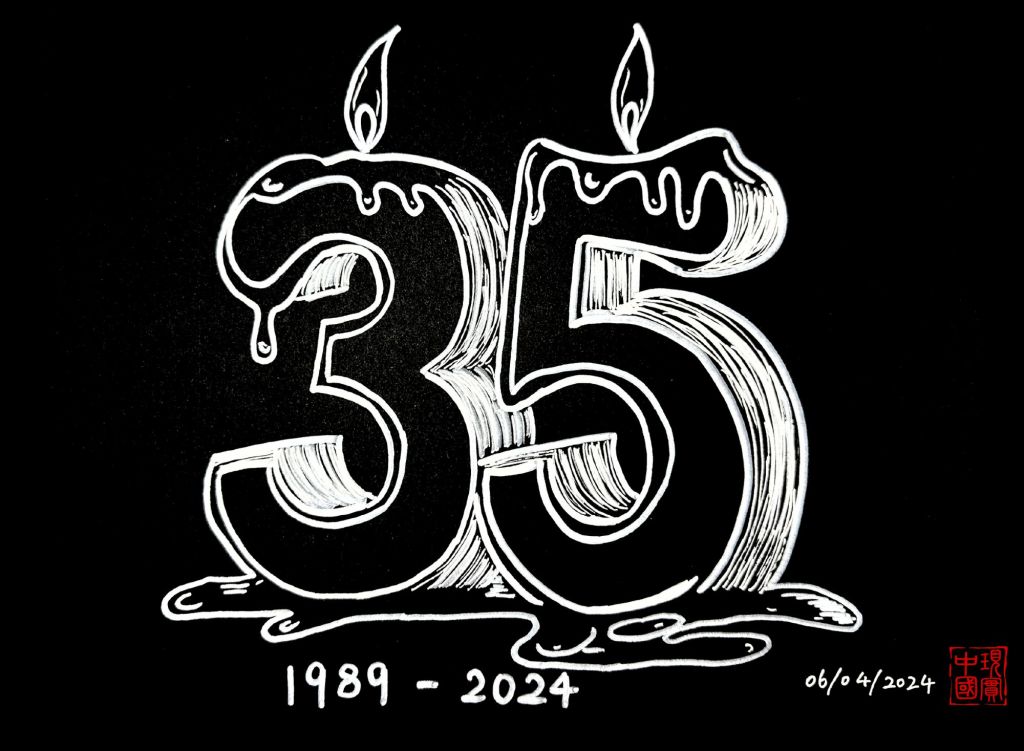
As we mark the 35th anniversary of the Tiananmen Square massacre, it’s a somber moment to reflect on a pivotal event in modern history. On June 4, 1989, peaceful protests in Beijing demanding democratic reforms met a tragic end as Chinese authorities cracked down with force, resulting in countless deaths and injuries.
The memory of those brave individuals standing for freedom and democracy resonates globally, reminding us of the enduring struggle for human rights. Despite efforts to suppress the truth, the spirit of Tiananmen lives on through the courage of those who continue to seek justice and accountability.
In a landmark ruling on Thursday, a Hong Kong court sentenced dozens of prominent democracy activists and leaders to potential life imprisonment, marking a severe crackdown under Beijing’s imposed national security law. The charges stem from organizing primary elections to enhance their chances in city-wide elections, deemed by authorities as a conspiracy to subvert state power.
Among the convicted are figures like legal scholar Benny Tai and protest leader Joshua Wong, whose activism symbolized Hong Kong’s vibrant political landscape. The verdict underscores Beijing’s use of broad powers to suppress dissent, turning these activists into political prisoners, some of whom were lawmakers since Hong Kong’s handover to China in 1997.
Most of the defendants have spent at least the last three years in detention ahead of and during the 118-day trial. It highlight a fundamental shift in Hong Kong’s political environment, where even mild opposition activities are no longer tolerated. Critics argue that the government’s prosecution of nonviolent electoral preparations undermines the city’s once-celebrated judicial independence and freedom of elections.
As Hong Kong faces its most significant political challenge in decades, international observers view these trials as a litmus test for Hong Kong’s judicial independence and fear a chilling effect on free speech and dissent.