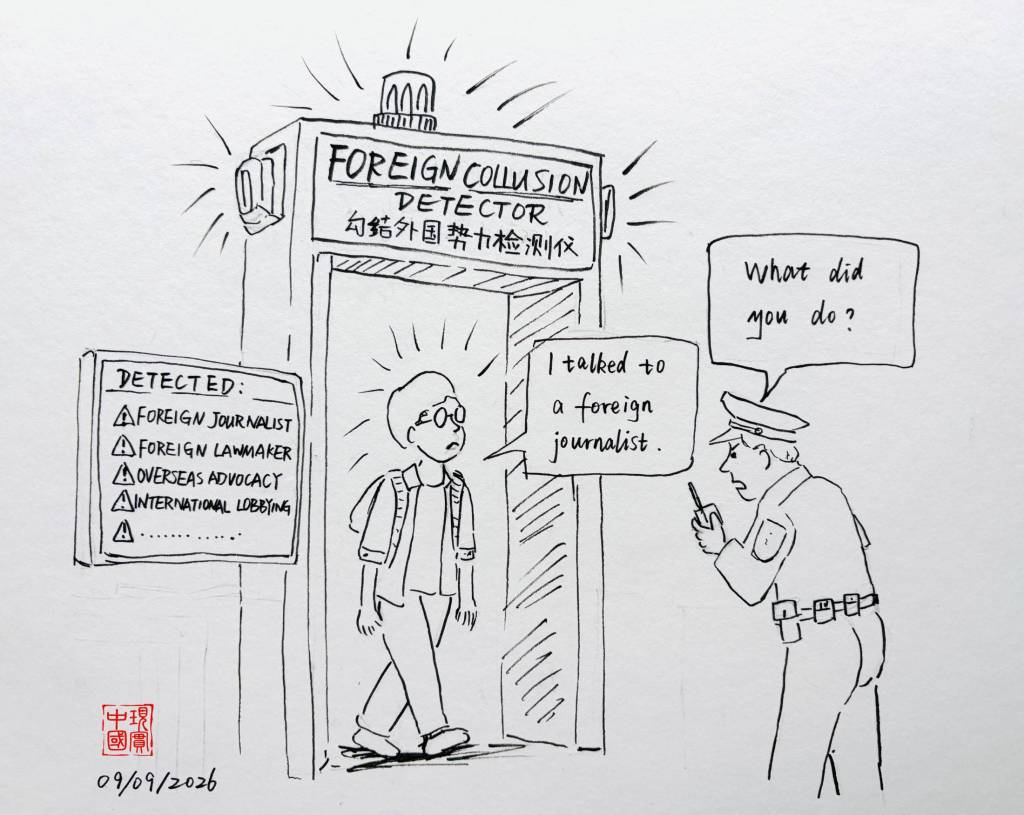
When a Conversation Becomes a Threat

The recent guilty plea of Hong Kong activist Joshua Wong (黄之锋) on charges of “collusion with foreign forces” has once again drawn international attention to the city’s changing political landscape. According to prosecutors, the case centers on Wong’s efforts to lobby foreign lawmakers and governments to place pressure on Hong Kong and Beijing over democratic reforms.

Supporters argue that engaging with foreign politicians, journalists, and international organizations has long been a common practice among activists around the world. They see such outreach as a way to raise awareness of local issues and seek international support. Critics of the campaign, however, view foreign lobbying as interference in domestic affairs and believe it can threaten national sovereignty.

The case highlights a broader debate about the boundaries between political advocacy and national security. In recent years, Hong Kong’s political environment has changed significantly under the National Security Law. Activities that were once considered part of normal political discourse are now subject to far greater scrutiny.

Beyond the legal arguments, the case raises a larger question that extends far beyond Hong Kong: when does communication with the outside world become a security concern, and who gets to decide where that line is drawn? The answer will continue to shape discussions about freedom, sovereignty, and political participation for years to come.

Click HERE for the news report.

Hong Kong’s National Security Trial: A Turning Point in Democratic Dissent

In a landmark ruling on Thursday, a Hong Kong court sentenced dozens of prominent democracy activists and leaders to potential life imprisonment, marking a severe crackdown under Beijing’s imposed national security law. The charges stem from organizing primary elections to enhance their chances in city-wide elections, deemed by authorities as a conspiracy to subvert state power.

Among the convicted are figures like legal scholar Benny Tai and protest leader Joshua Wong, whose activism symbolized Hong Kong’s vibrant political landscape. The verdict underscores Beijing’s use of broad powers to suppress dissent, turning these activists into political prisoners, some of whom were lawmakers since Hong Kong’s handover to China in 1997.

Most of the defendants have spent at least the last three years in detention ahead of and during the 118-day trial. It highlight a fundamental shift in Hong Kong’s political environment, where even mild opposition activities are no longer tolerated. Critics argue that the government’s prosecution of nonviolent electoral preparations undermines the city’s once-celebrated judicial independence and freedom of elections.

As Hong Kong faces its most significant political challenge in decades, international observers view these trials as a litmus test for Hong Kong’s judicial independence and fear a chilling effect on free speech and dissent.