
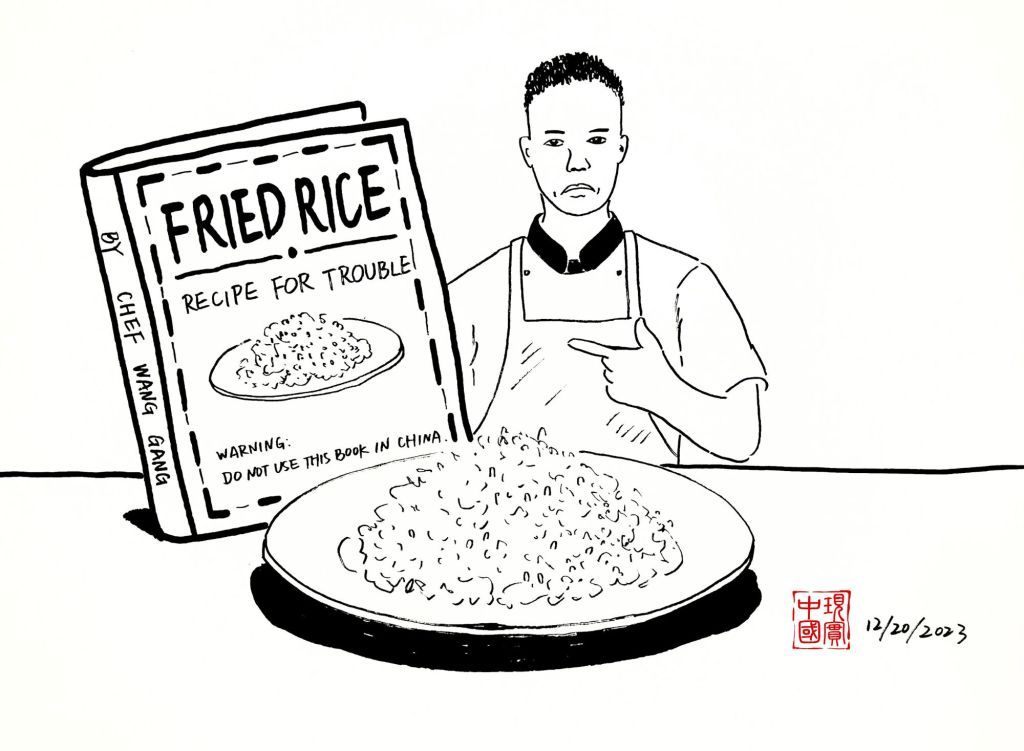
In the midst of heated debates about anti-Semitism and free speech on American college campuses, China has witnessed a viral controversy over a video teaching how to cook fried rice. Fried rice, a staple in Chinese households and often the first dish many learn to cook, holds a cultural significance akin to macaroni and cheese in the United States. This culinary icon has thrust Wang Gang, one of China’s most popular food bloggers, into the spotlight with his “perfect” fried rice recipe sparking both acclaim and critique.
However, a particular video stirred outrage among Chinese state media and the internet. On November 27th, just two days after the anniversary of Mao Zedong’s son Mao Anying’s death, Wang posted a fried rice video. Speculation arose that Mao Anying was preparing fried rice when he died in the Korean War.
China’s landscape has become increasingly politicized, turning everyday topics like cooking into potential minefields. Wang, who started working in restaurants at 15, has always focused solely on cuisine in his shows. Despite this, he found himself embroiled in political currents.
In China’s highly controlled online environment, coded language and cautious expressions have become common as citizens navigate what can and cannot be openly discussed. Wang’s experience highlights the constraints on free speech in China, where even seemingly innocuous topics can lead to controversy and censorship.
Discover more from The Truth Of China
Subscribe to get the latest posts sent to your email.
 The Truth Of China