
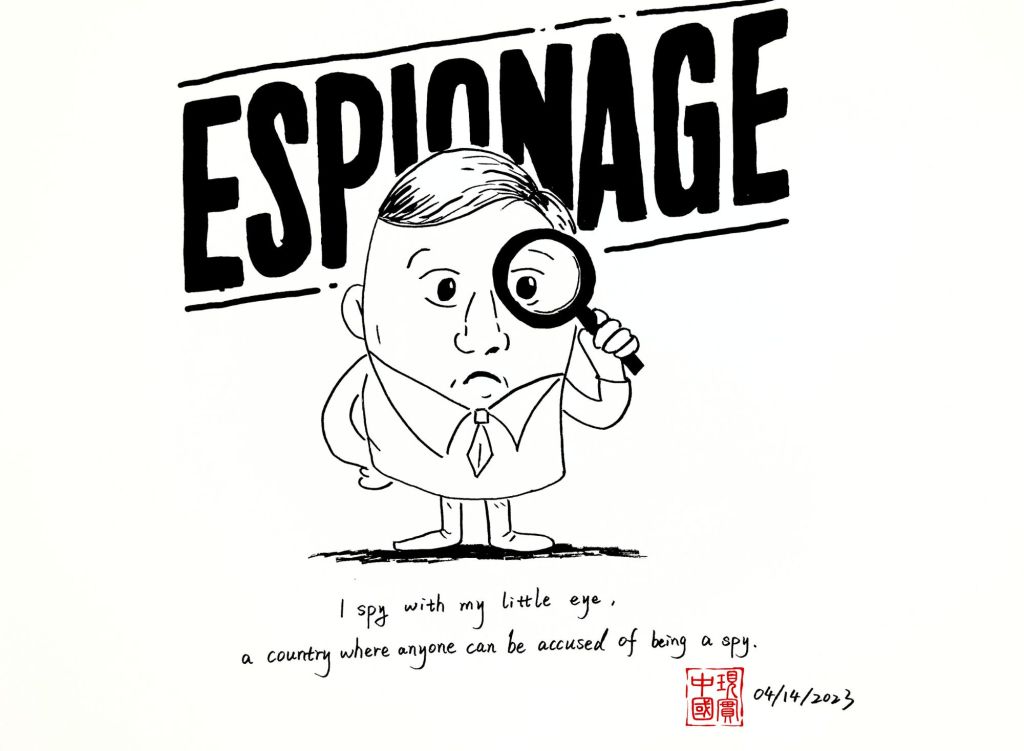
Hideji Suzuki, a Japanese citizen, was sentenced to six years in prison in China for espionage charges and was recently released from prison.
He said the conviction stemmed from a dinner party where he did nothing more than try to chat with a Chinese scholar about North Korean issues.
Since 2015, 17 Japanese citizens have been detained on similar charges, with Suzuki being one of them and the only one to publicly speak about his experience.
While it is difficult to determine the exact number of foreigners imprisoned in China, Beijing seems to have detained an unusually high number of Japanese citizens on espionage charges. Suzuki, a former chairman of a Japan-China friendship organization, was arrested during a trip to China in 2016. Since his first visit to China in 1983, he had visited over 200 times. He said he made many friends among Chinese scholars and senior officials during these visits and even met former Premier Li Keqiang twice. He also taught university courses on China and translated books on the normalization of Sino-Japanese relations after World War II.
However, he said that as China’s vigilance towards foreigners increased, these relationships and experiences made him a suspect. He believes he became a target because the Chinese government is tightening control over academic research on China, leading to the arrest of nearly 20 professors who returned to China after working at Japanese universities.
Suzuki said he was preparing to fly home from Beijing when plainclothes men forcibly pushed him into a van. He was informally detained and interrogated for seven months. During that time, the lights in his room were never turned off, even when he was sleeping; the guards only let him see the sun once for 15 minutes, he said.
When Suzuki was finally tried, the trial was not public and lasted only two days: the charges were read on the first day, and the verdict was announced on the second day. Although he was allowed to appeal, his appeal was rejected.
Japanese analysts attribute the surge in arrests to new national security laws introduced by China in 2014 and 2015. These laws target those seen as foreign spies and their local collaborators, expanding the scope of espionage charges.
The espionage charges against Japanese citizens vary but often seem arbitrary. Chinese law defines what constitutes state secrets broadly, including some information considered harmless in other countries.
Discover more from The Truth Of China
Subscribe to get the latest posts sent to your email.
 The Truth Of China