
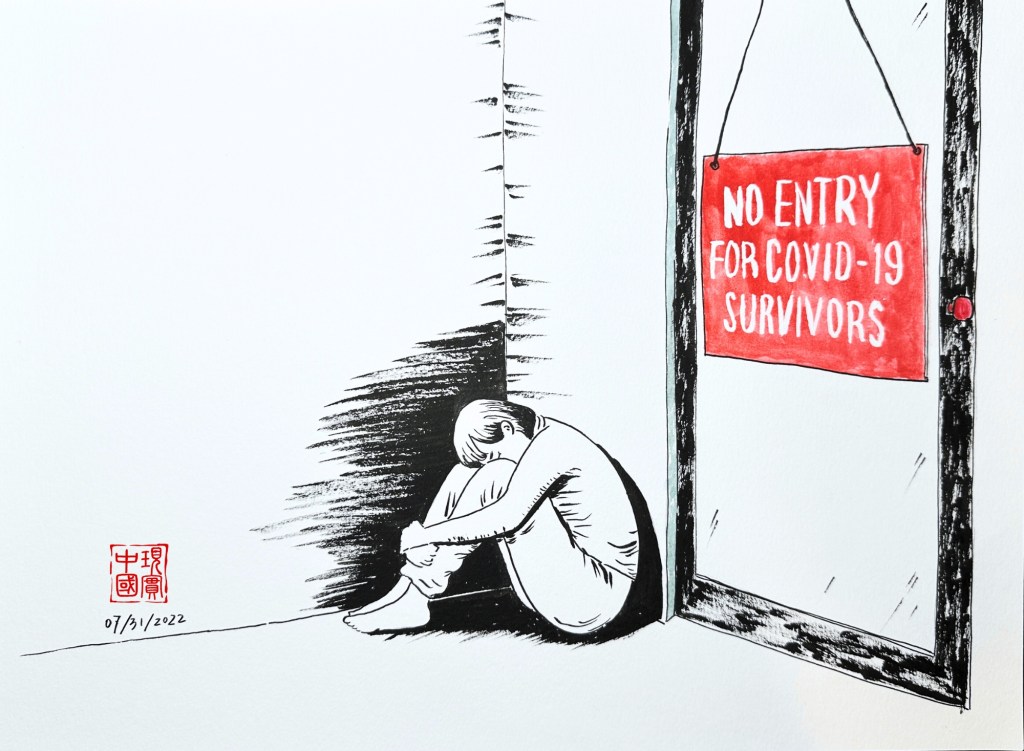
In the aftermath of the COVID-19 pandemic, various discriminatory practices have emerged worldwide, but few are as stark as the “No COVID History” policies seen in China. In a bid to control the spread of COVID-19, some institutions in China have implemented a policy requiring individuals to have no history of COVID-19 infection. This means that even those who have recovered from the virus are denied entry to certain public spaces or employment opportunities. For instance, a museum in Hangzhou explicitly stated that visitors must not have been previously diagnosed with COVID-19.
The discrimination goes beyond policy. COVID-19 survivors have been labeled with dehumanizing terms such as “Yang Ren” (阳人), “Little Sheep” (小羊人), and simply “Sheep” (羊). These labels strip individuals of their dignity and reinforce negative stereotypes. Moreover, the personal details of COVID-19 patients have been publicly disclosed, leading to online harassment and further stigmatization.
Afen’s story is a poignant example of the impact of these discriminatory policies. After recovering from COVID-19, Afen struggled to find employment due to the “No COVID History” requirement. Despite numerous attempts to secure a job, she faced repeated rejections solely based on her past infection. Her situation became so dire that she ended up living in Hongqiao Railway Station, reflecting the harsh reality faced by many in similar circumstances.
The widespread implementation of the “No COVID History” policy has resulted in mass discrimination within industries such as the service sector in Shanghai. Many recovered patients, like Afen, find themselves in a precarious position, unable to secure basic employment despite being otherwise qualified.
One of the underlying reasons for this discrimination is the fear of “re-positive” cases—instances where recovered patients test positive for COVID-19 again. However, scientific evidence suggests that these cases are typically due to the presence of non-infectious viral fragments. Despite this, the fear persists, fueled by sensational media reports and public misunderstanding.
Educational efforts are crucial in combating the stigma associated with COVID-19 recovery. Clear communication about the nature of “re-positive” cases and the actual risks involved can help alleviate public fear. Additionally, policies must be revised to align with scientific understanding and to protect the rights of those who have recovered from COVID-19.
In conclusion, the “No COVID History” policy in China is a glaring example of how fear and misinformation can lead to widespread discrimination. It is a call to action for policymakers, educators, and the public to stand against such practices and support the rights and dignity of all individuals, regardless of their health history.
Discover more from The Truth Of China
Subscribe to get the latest posts sent to your email.
 The Truth Of China