
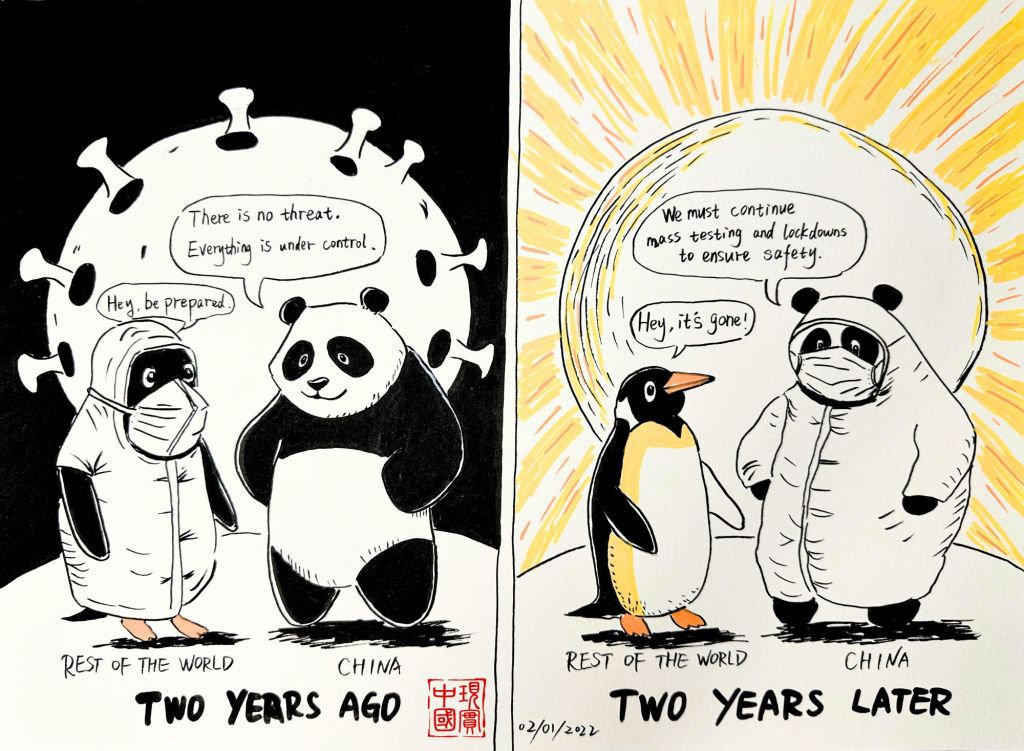
I wish I could say “Happy New Year” to my friends in China, but I know they’re not happy under the oppressive regime of mass testing and forced quarantine that keeps them from being together with their families. It’s hard to believe it’s been two years since Wuhan was first locked down on January 23, 2020, just two days before the Chinese New Year. Yet, most of China remains under stringent restrictions.
In the early days of COVID-19, when the world was grappling with the unknowns of a mysterious pneumonia, the Chinese government stood firm in its denial. The virus, according to official statements, was under control, posing no significant threat. Yet, the world watched as the truth seeped through the cracks of censorship, revealing a different, grimmer reality.
Fast forward two years. While most countries have moved past stringent lockdowns, eased social distancing, and lifted mask mandates, China remains an outlier. The once rigid zero-COVID policy has evolved into a relentless regime of mass testing and forced quarantines. The irony is palpable: the same government that initially downplayed the virus now clings to extreme measures, unwilling to acknowledge the global shift towards coexistence with COVID-19.
This persistence in denial, both at the onset and now, illustrates a troubling pattern. It’s a testament to a government’s refusal to adapt, to admit mistakes, or to change course. As the rest of the world breathes a cautious sigh of relief, China’s citizens are left suffocating under a blanket of outdated policies and endless PCR tests.
Two years ago, the virus’s arrival was denied. Two years later, its departure is met with the same resistance. The tragedy lies not only in the missteps but in the stubborn refusal to learn from them.
Discover more from The Truth Of China
Subscribe to get the latest posts sent to your email.
 The Truth Of China