The Expansion of Surveillance in Chinese Communities

In a Beijing police station, walls are covered with papers, each representing a building in a large residential area. These papers list residents’ names, phone numbers, and other details, with color codes indicating their risk levels. Green means safe, yellow means to be watched, and orange signifies strict monitoring. A police officer marked a third-floor apartment in yellow, noting its high turnover and labeling it as “high risk” for follow-up.

This meticulous surveillance is a cornerstone of Xi Jinping’s grassroots governance strategy: more visible, invasive, and vigilant against real or perceived threats. Police officers immerse themselves in communities, understanding neighborhood disputes and recruiting retirees as extra eyes and ears. Employers are required to appoint “security advisors” to report regularly to the police.

Historically, the Chinese Communist Party (CCP) has implemented extensive surveillance on activists and dissenters. During the COVID-19 pandemic, this surveillance expanded to track nearly every urban resident. Xi Jinping aims to make this control permanent, embedding the Party deeply into daily life to prevent any disruptions, no matter how minor or non-political.

This approach, known as the “New Era Fengqiao Experience,” revives a method from Mao’s era where citizens were mobilized to publicly shame and control class enemies. Xi frequently references Fengqiao to highlight the Party’s commitment to addressing people’s needs, despite suppressing free speech and dissent.

This strategy aims to strengthen Beijing’s ability to quash dissent amid growing economic challenges and social unrest, solidifying the Party’s control and extending its reach into every aspect of citizens’ lives.
The Hidden Life: A Wife’s Journey into State Oppression and Online Dissent in China

Bei Zhenying never suspected her husband Ruan Xiaohuan of any subversive activities against the Chinese government. He was a brilliant computer programmer they met during their university days in Shanghai, and she was enamored with his curiosity and wit. His quirks, such as avoiding social media and new clothes, and his intense privacy, spending hours in his study on undisclosed work, seemed typical of a dedicated tech enthusiast.

At 45, Bei Zhenying believed these eccentricities were part of being a career geek, a world she, as a business manager, couldn’t fully comprehend. But her understanding shattered when Shanghai police stormed into their apartment and arrested him. Authorities accused Ruan Xiaohuan of writing articles that criticized China’s political system and plotting to overthrow the government. In February, he was sentenced to seven years in prison.

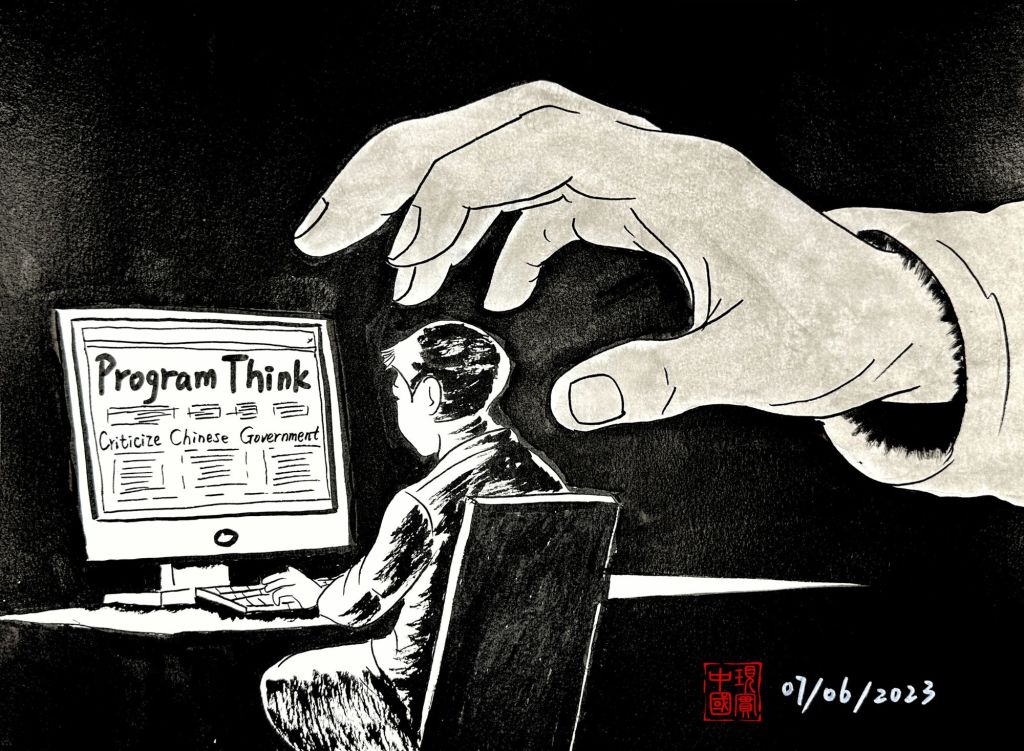
Over the following months, Bei Zhenying discovered more than just personal secrets. Ruan Xiaohuan was revealed as the enigmatic blogger “Program think,” known for satirizing the ruling Communist Party on China’s heavily controlled internet. His blog had attained near-mythical status among followers, sharing posts anonymously critical of government leaders’ hidden wealth and encouraging independent thinking.

Despite efforts to maintain anonymity, Ruan Xiaohuan’s fate intertwined with “Program think,” highlighting the severe measures taken against dissent under Xi Jinping’s leadership. Bei Zhenying, initially disinterested in politics, found herself thrust into a journey of awakening, navigating a landscape of state censorship and secrecy to understand her husband’s hidden life and the realities of dissent in China.

Will there be more Chinese spy balloons?

Chinese Spy Balloon over United States

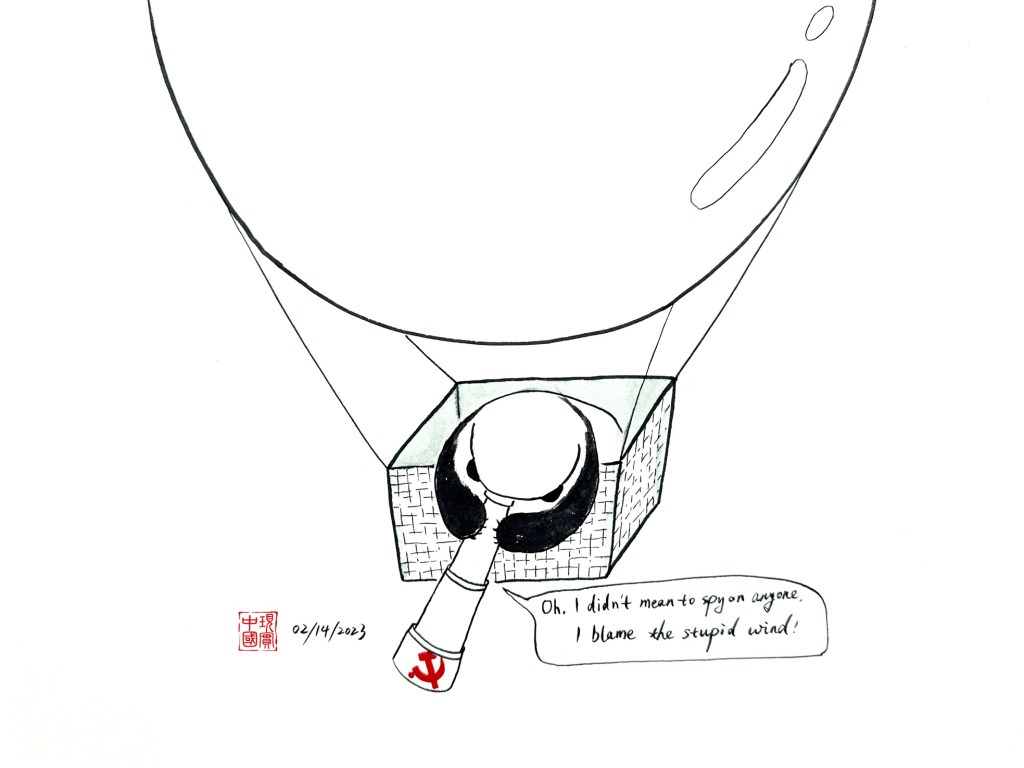
From January 28 to February 4, 2023, a Chinese-operated high-altitude balloon was seen in North American airspace. On Feb 4, it was shot down by U.S. Air Force.

The U. S. government said that balloon carried antennas and other equipment clearly for intelligence surveillance, yet Chinese government insisted it was a civilian meteorological research airship that had blown off course.

Over the past weekend, four more unidentified objects were spotted U.S. and Canadian airspace and were shot down as well. Whether they’re also operated by China is unclear so far.