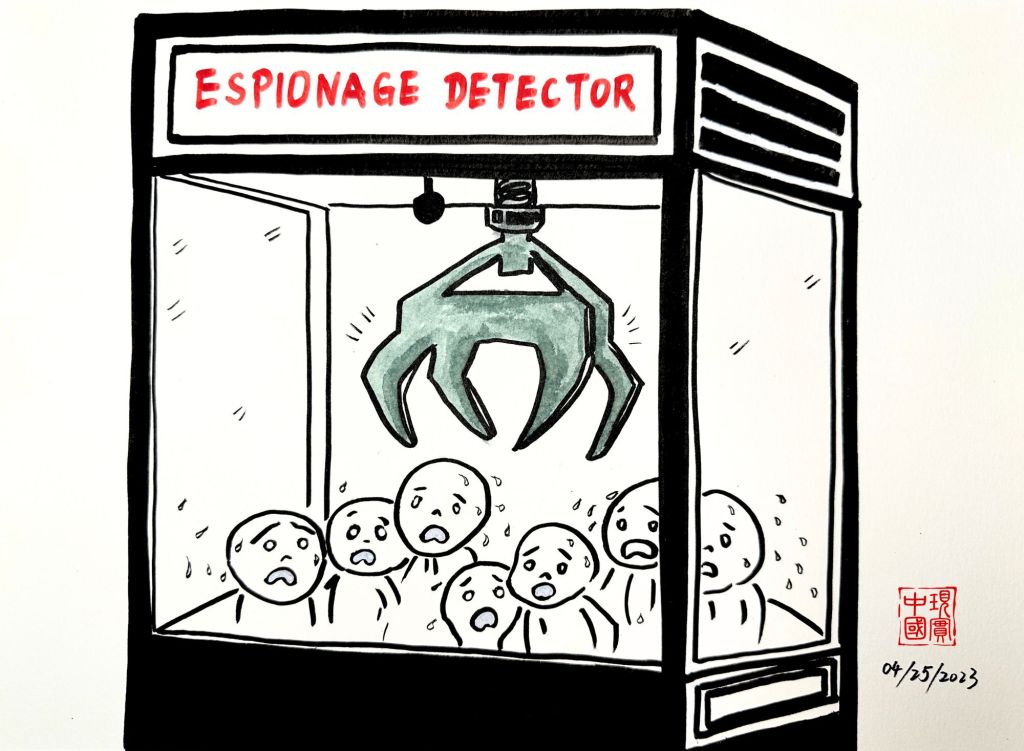
Chinese Editor Faces Espionage Trial After Arrest During Diplomat Lunch

A senior editor from a Chinese Communist Party newspaper, known for his liberal views, is set to face trial in Beijing on espionage charges after being arrested while having lunch with a Japanese diplomat. Dong Yuyu, deputy director of the commentary department and columnist at Guangming Daily, has had extensive interactions with foreigners, including diplomats and journalists, for his writing. His family believes these interactions are now being used against him as evidence of spying for Japan or the US.

Chinese President Xi Jinping has encouraged suspicion of foreign nations, especially the West, and has suppressed liberal views like Dong’s. Dong has contributed to both his own paper and relatively freer Chinese publications, many of which are now banned. He has also written for the New York Times Chinese website. It’s unclear if Dong is being targeted for his liberal views or his foreign contacts, or both. His family, fearing retaliation, has requested anonymity. The only evidence presented so far is his contacts with foreign diplomats and academic scholarships abroad.

Dong was arrested in February last year during a meeting with a Japanese diplomat, who was also detained but released hours later following Japanese government protests. Dong, however, was held in secret for six months before his formal arrest and recent indictment. He faces up to ten years in prison if convicted of espionage, with the trial date unknown and proceedings held in secret.
点此查看相关中文报道

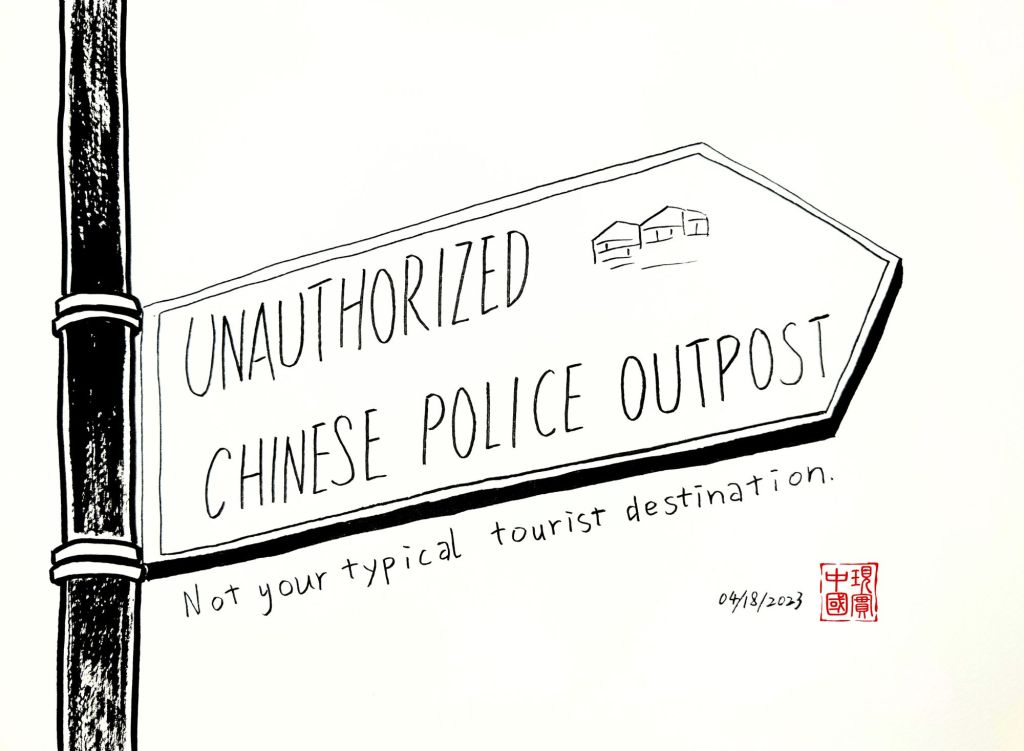
Unauthorized Chinese Police Outpost in Manhattan Exposed

For many years, thousands of New Yorkers and tourists have walked past an unremarkable office building in downtown Manhattan. On Monday, federal prosecutors announced criminal charges against two men accused of running an unauthorized Chinese police outpost in that building. This outpost is one of over 100 worldwide used to intimidate and control overseas Chinese citizens and suppress criticism of the ruling Communist Party.

The two men were arrested on Monday and charged with conspiring to act as agents of the Chinese government and obstructing justice. They allegedly used the police station to intimidate Chinese dissidents living in the United States on behalf of China.

Additionally, charges in two related cases were announced: 34 Chinese police officers are accused of harassing Chinese citizens living in the New York area, and eight Chinese officials are charged with instructing a Zoom employee in China to remove dissidents from the platform.

Court documents state that the Chinese police outpost in Manhattan was overseen by the Fuzhou Public Security Bureau, which is under the Chinese Ministry of Public Security. This is one of numerous such operations around the world that have alarmed diplomats and intelligence officials.

点此查看相关中文报道

The Chinese Government’s Silent Crackdown on White Paper Movement Protesters

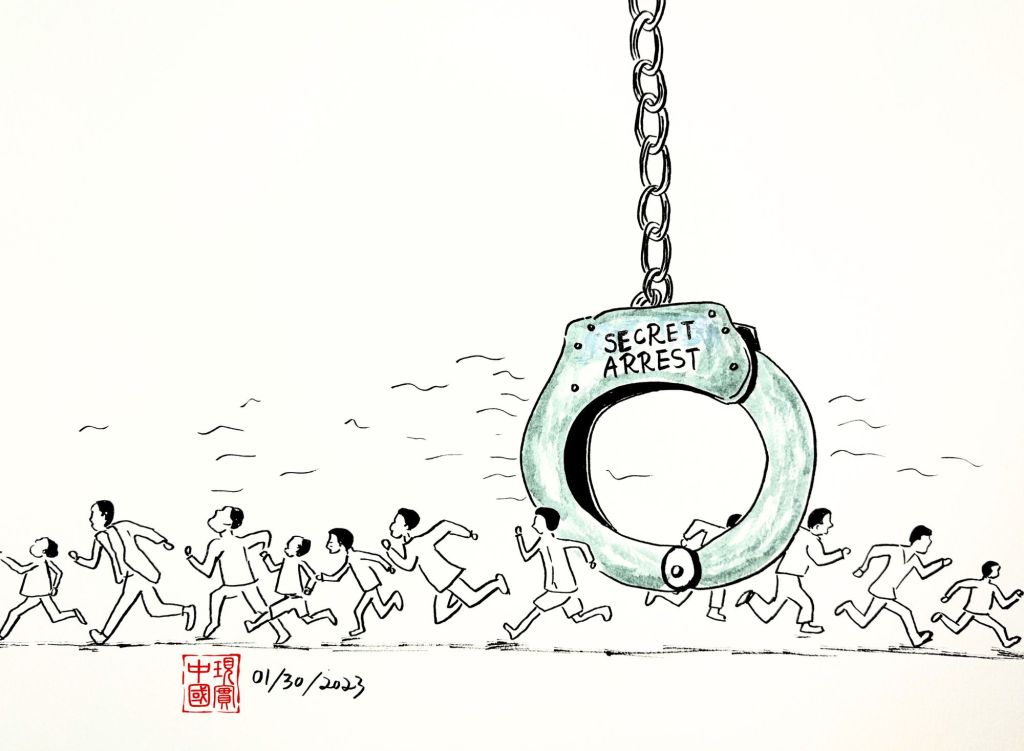
In late November 2022, Beijing saw rare protests against the strict “zero-COVID” policy. The Chinese Communist Party (CCP) quickly responded with its usual tactic of silencing dissent through secret arrests and intimidation, all while attempting to discredit protesters by alleging foreign influence.

The first to be detained were a finance firm employee, a freelance writer, a teacher with a degree in British literature, and an editor at a Beijing publishing house. These four women, friends who shared interests in social issues like feminism and LGBTQ rights, participated in the November protests and were swiftly arrested.

These arrests are part of a broader strategy by the CCP to intimidate and warn those who might be inspired by the recent surge of public discontent. The protests posed a significant challenge to the CCP’s rule and embarrassed President Xi Jinping.

Despite the government’s efforts to keep these actions under wraps, news of the arrests has spread among those involved in the protests. The CCP has avoided officially announcing these arrests to prevent further public outrage but has ensured that the message is clear: even peaceful expression of dissent will not be tolerated, and those who challenge the government face severe personal risks.

The Beijing protests began as a vigil for victims of a deadly fire in Xinjiang, which many blamed on the restrictive “zero-COVID” measures. While initial police response during the protests was relatively restrained, it soon escalated. In the following days, police summoned or visited demonstrators, questioning their participation and connections.

One of the detained women, Cao Zhixin, recorded a video before her arrest, expressing her belief in the right to express opinions even in China. Her case, along with the other three women, has highlighted the personal risks of challenging the government.

Authorities have accused these women of using foreign communication platforms and participating in feminist activities, framing their actions as influenced by foreign forces. The charge of “picking quarrels and provoking trouble,” a vague but commonly used accusation, carries a potential five-year prison sentence.

The CCP’s crackdown on these protesters serves as a stark reminder of the risks of dissent in China. The government’s actions aim to ensure that the recent wave of protests does not inspire further public outcry, using fear and repression to maintain control.

点此查看相关中文报道