
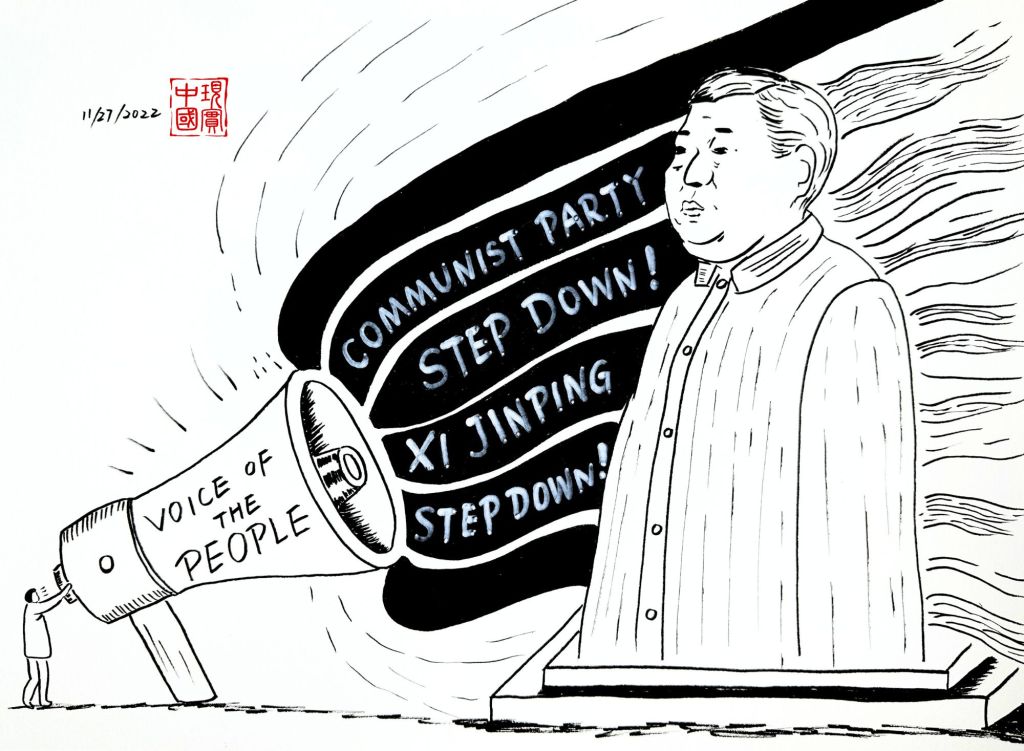
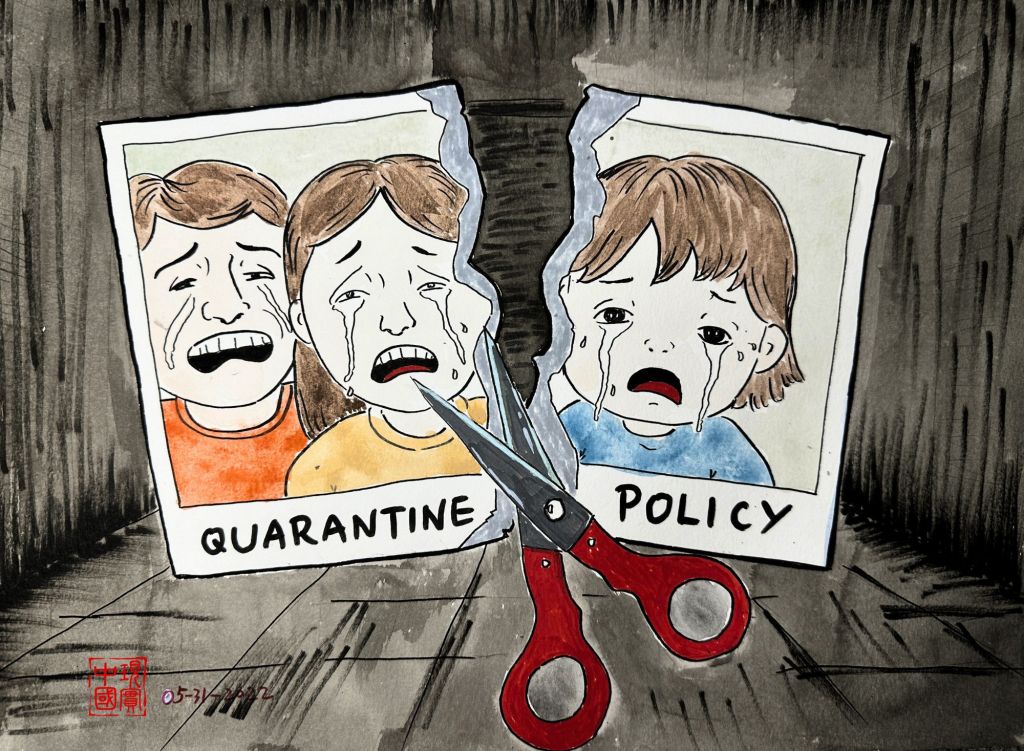
During the spring and summer lockdowns in Shanghai, a young couple refused to go to a quarantine center. When a health worker threatened that it would affect their family for three generations, the young man replied, “We are the last generation.” This statement was seen as an expression of despair. Now, Shanghai’s youth are chanting “We want freedom, we want human rights,” and “Xi Jinping step down, Communist Party step down.” This transformation of grievances into political demands is rare since the 1989 Tiananmen Square protests. The harsh zero-COVID policy of Xi Jinping’s regime has accelerated public resistance.
On November 24, a deadly fire in Urumqi trapped and killed over ten people in their homes. Fire trucks couldn’t get close to the building to extinguish the fire, fueling anger over the zero-COVID policy. The tragedy in Urumqi sparked nationwide protests, led by the youth. In Lanzhou, people overturned COVID testing vehicles, and Nanjing Communication University students gathered to support Xinjiang. The most prominent scene occurred in Shanghai, the economic hub devastated by the lockdown. Videos show that on the night of November 26, predominantly young people gathered on Urumqi Street, laying flowers and candles to mourn the victims. The police confronted them, leading to a standoff. When the police tried to disperse the crowd, the protesters sang “The March of the Volunteers,” China’s national anthem, and chanted “Communist Party, step down! Xi Jinping, step down!”
This scene was unprecedented in China, where anti-government street protests are extremely rare. Despite Xi Jinping reaching the peak of his power at the recent 20th Party Congress, where he eliminated all internal opposition and secured a third term, the Shanghai people demanded his resignation.
The police eventually cleared the area, and videos show people protecting each other and rescuing fellow protesters. Photos shared by the Associated Press show a bus taking away a group of protesters. Although dispersed, their calls for “human rights, freedom” were echoed by students at Peking University and Tsinghua University. In Beijing, protesters at Liangmaqiao chanted slogans in support of Shanghai, and on Sunday, Shanghai residents returned to protest again.
Many wonder why, in such a large country with so many people, there has been compliance with a scientifically unfounded policy solely to satisfy the leader’s will. The answer is fear. Numerous tragedies have occurred this year alone: a nurse in Shanghai was denied emergency treatment at her own hospital, a three-year-old child in Lanzhou died of gas poisoning because his family couldn’t take him to the hospital, and two young women in Guangdong were publicly humiliated for not wearing masks. However, more and more people are refusing to be slaves. The “Superman” hero of Chongqing famously declared, “We have neither freedom nor wealth. We are still struggling with a mild illness.”
In September, a quarantine bus accident in Guizhou killed 27 people, prompting the cry, “We are all on that bus.” The Urumqi fire, which killed ten people, made many realize they could no longer “sit on the train of enslavement.” Three years of violent zero-COVID policies have led to economic decline and hardship. Many migrant workers are homeless, small businesses bankrupt, and youths have wasted their prime years, suffering humiliation and abuse from health workers.
Observers believe the Chinese people are aware of who is behind the cruel zero-COVID policies. By calling for the Communist Party and Xi Jinping to step down, Shanghai residents have shown their intolerable anger towards tyranny. Protests for human rights and freedom are common in most countries, even in autocratic ones like Russia and Iran. However, in China, these actions come with severe consequences, as evidenced by the continuous arrests by the police.
Shanghai’s protests were not isolated, as videos showed solidarity demonstrations in dozens of cities across China on Sunday. In Chengdu, people gathered on Wangping Street and chanted slogans against dictatorship and lifelong rule. Across many places in China, protesters held up blank sheets of paper in silent protest. Some said, “This is our generation’s revolution. We insist on saying what they forbid, insisting on freedom, dignity, and a China that belongs to us!” The blank paper has thus become a symbol of resistance against tyranny.
 The Truth Of China