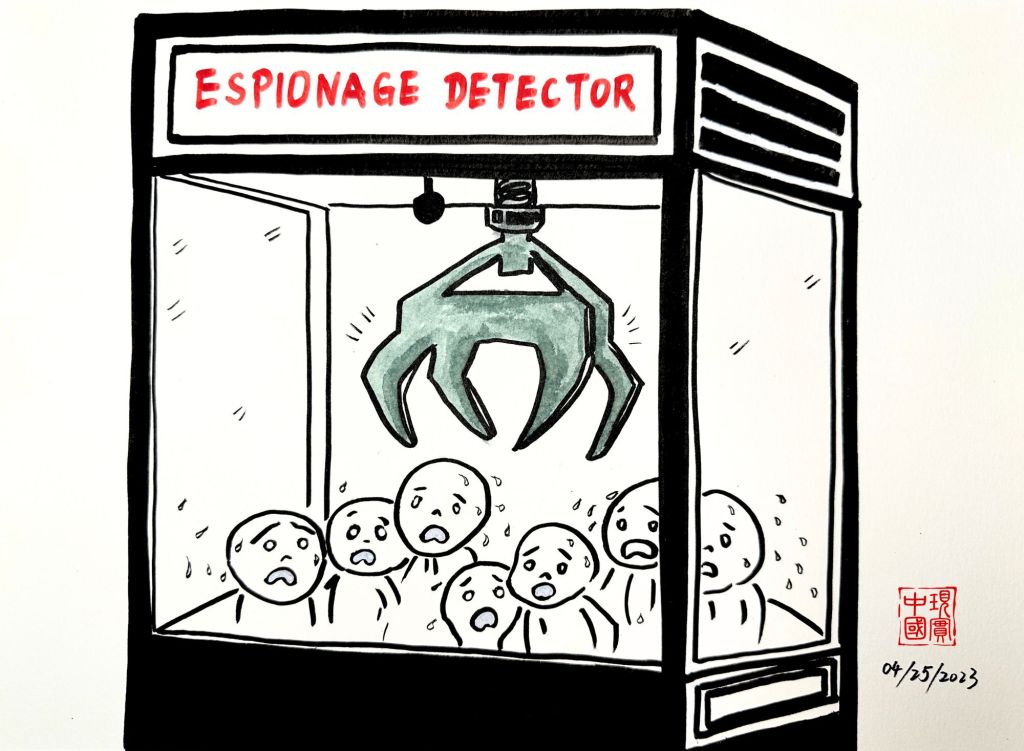
Chinese Editor Faces Espionage Trial After Arrest During Diplomat Lunch

A senior editor from a Chinese Communist Party newspaper, known for his liberal views, is set to face trial in Beijing on espionage charges after being arrested while having lunch with a Japanese diplomat. Dong Yuyu, deputy director of the commentary department and columnist at Guangming Daily, has had extensive interactions with foreigners, including diplomats and journalists, for his writing. His family believes these interactions are now being used against him as evidence of spying for Japan or the US.

Chinese President Xi Jinping has encouraged suspicion of foreign nations, especially the West, and has suppressed liberal views like Dong’s. Dong has contributed to both his own paper and relatively freer Chinese publications, many of which are now banned. He has also written for the New York Times Chinese website. It’s unclear if Dong is being targeted for his liberal views or his foreign contacts, or both. His family, fearing retaliation, has requested anonymity. The only evidence presented so far is his contacts with foreign diplomats and academic scholarships abroad.

Dong was arrested in February last year during a meeting with a Japanese diplomat, who was also detained but released hours later following Japanese government protests. Dong, however, was held in secret for six months before his formal arrest and recent indictment. He faces up to ten years in prison if convicted of espionage, with the trial date unknown and proceedings held in secret.

点此查看相关中文报道

Beijing’s Crackdown on Tech Giants: A Warning Against Unchecked Power

Under my thumb

Chinese President Xi Jinping called on Monday for national financial regulatory authorities to strengthen control over the internet economy. Chinese tech giants, already heavily suppressed by the government for monopolistic behavior, are likely to face more trouble.

In November, Xu Lin, Deputy Minister of the Central Propaganda Department, publicly stated that China must “resolutely prevent the weakening of the Party’s leadership in the name of integrated development,” referring to media integration, and “resolutely guard against the risk of capital manipulating public opinion.”

The message is clear: only the Party can censor and manipulate public opinion.

Authorities establish cybersecurity police units directly within major internet companies. Countless users have been arrested and imprisoned for criticizing the government on Tencent’s WeChat. ByteDance, the parent company of the video-sharing app TikTok, closely cooperates with police to push official propaganda and cover up human rights abuses in Xinjiang.

Tech company CEOs in China have little room to negotiate or resist regulatory authorities because there is no rule of law and nowhere to appeal in China. No one understands the consequences of deviating from the Party line better than Jack Ma, founder of Alibaba and its affiliate Ant Financial. In November, the initial public offering of Ant Financial was abruptly halted by Chinese regulatory authorities just days before its scheduled listing because Ma had publicly criticized China’s financial regulatory system for stifling innovation in a speech.

After that speech, Ma disappeared from public view until he reappeared in an online video in late January, discussing how to support Xi Jinping’s vigorously promoted rural poverty alleviation economic strategy through philanthropic activities.

In this era of government versus tech giants, we already know which side will prevail in China. Big tech companies are simply no match.

点此查看相关报道中文