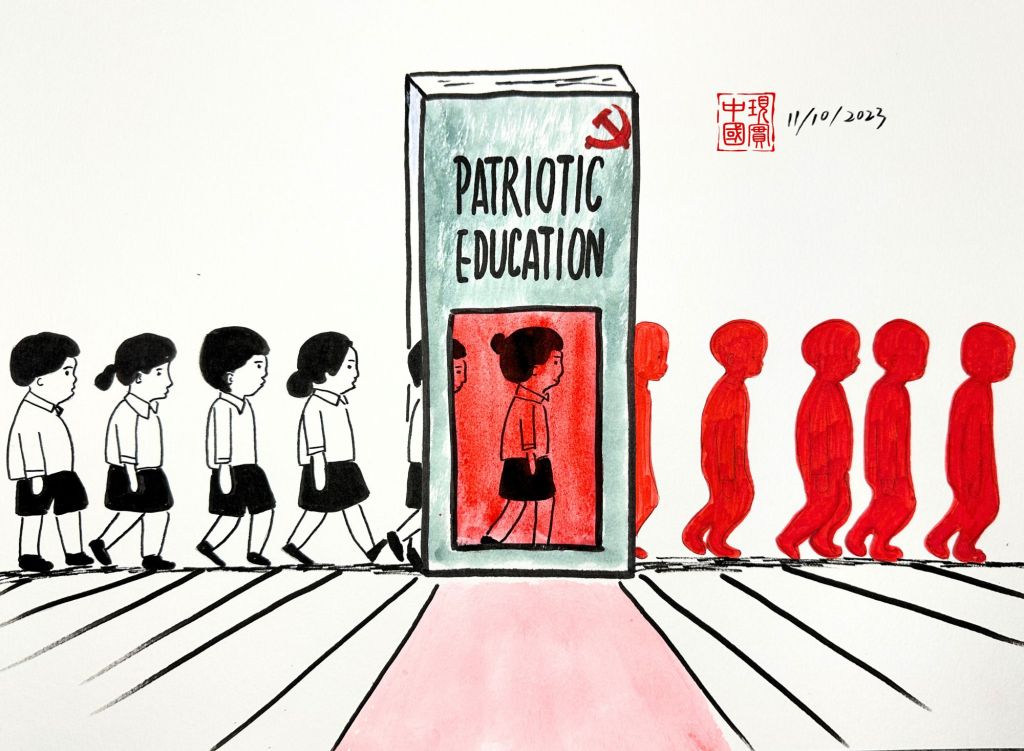
Hong Kong’s New Patriotism Education Initiative Raises Alarm

Hong Kong Chief Executive John Lee unveiled his second Policy Address in late October, introducing “patriotic education” for the first time in Hong Kong’s national education system. The Chief Secretary for Administration will oversee a task force to coordinate efforts across government and non-government sectors to promote this initiative.

Scholars noted the timing of Lee’s announcement, coinciding with China’s National People’s Congress Standing Committee passing the “Patriotic Education Law.” Led by the Chief Secretary for Administration, akin to the Cultural Revolution’s Central Cultural Group, the task force aims for comprehensive ideological education.

China’s National People’s Congress Standing Committee passed the “Patriotic Education Law of the People’s Republic of China” on October 24, effective January 1 next year. The following day, Lee integrated patriotic education into Hong Kong’s national education system, forming the “Patriotic Education Working Group” under Chief Secretary Chan Kwok-ki. This move aligns with mainland China’s law, emphasizing Chinese history, culture, and national identity education.
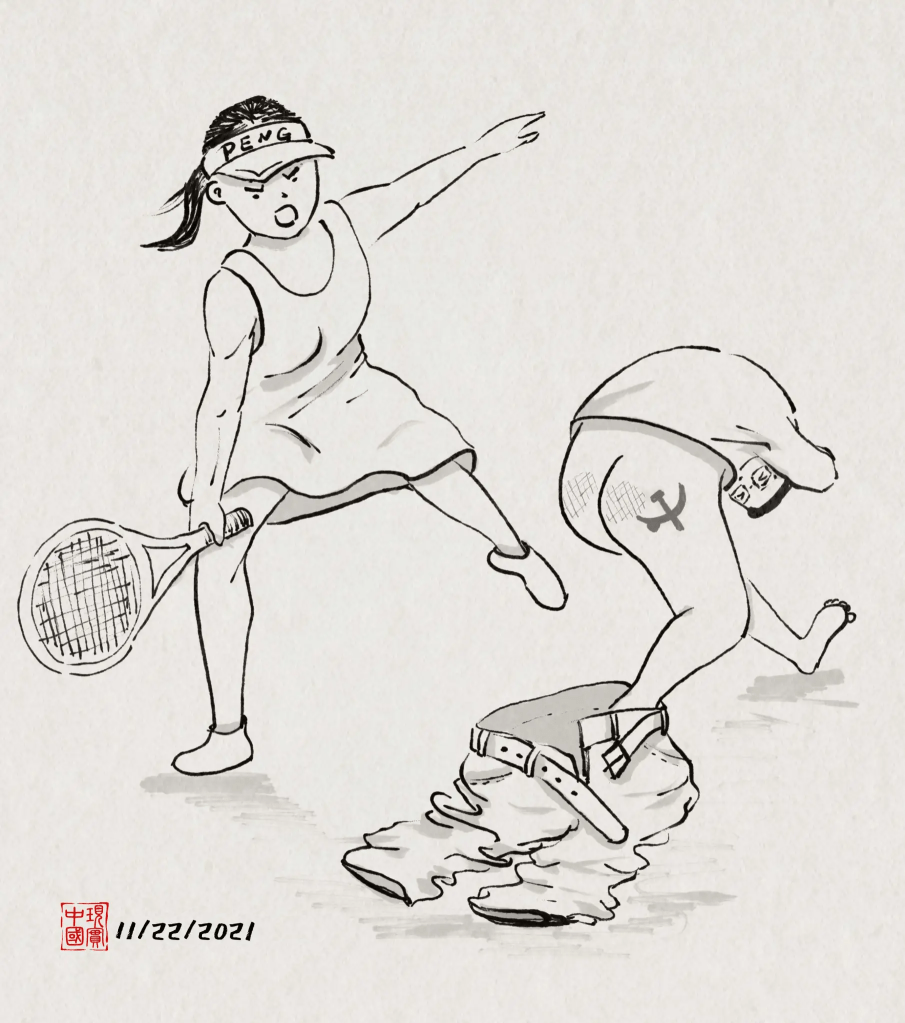
Chinese tennis player Peng Shuai accused ex-Chinese official of sexual assault

Get out of here

Peng Shuai, a 35-year-old Chinese tennis player and former world doubles No.1, published a long post on Weibo on Nov 2, 2021, accused Zhang Gaoli, now 75, a former high-ranking Chinese government official, of sexual assault. Zhang Gaoli is a former vice premier who served on China’s Politburo Standing Committee and was one of the country’s most powerful officials behind President Xi Jinping.

In the post, Peng Shuai wrote that Zhang had forced her to have sex despite repeated refusals, giving the timeline of her on-and-off affairs with Zhang during the past 10 years. The post was removed within 20 minutes from her verified account on Weibo, and even her name became a censored word. Since then, Peng hasn’t posted again on the site or been seen in public for 3 weeks.

Now, her safety and whereabouts have become a growing concern among her peers, the Women’s Tennis Association (WTA) and the White House. And a campaign #whereispengshuai intitiated by Chinese feminists to located the disappeared tennis star has gone global. Many of the world’s biggest tennis stars, including Serena Williams, Naomi Osaka, and Andy Murray, have posted messages on Twitter with the hashtag.

The outcry prompted Chinese state media to release a series of photographs and videos that appeared to show all was well.

Over the weekend, Peng had a video call with the head of the International Olympic Committee (IOC), after which a statement from the group said she had appeared safe and well. 

But concerns over her safety and well-being remain.

Human Rights Watch criticized the IOC over the video call, saying its “collaboration” with Chinese authorities on Ms. Peng’s reappearance “undermines its expressed commitment to human rights, including the rights and safety of athletes”.

Beijing’s Crackdown on Tech Giants: A Warning Against Unchecked Power

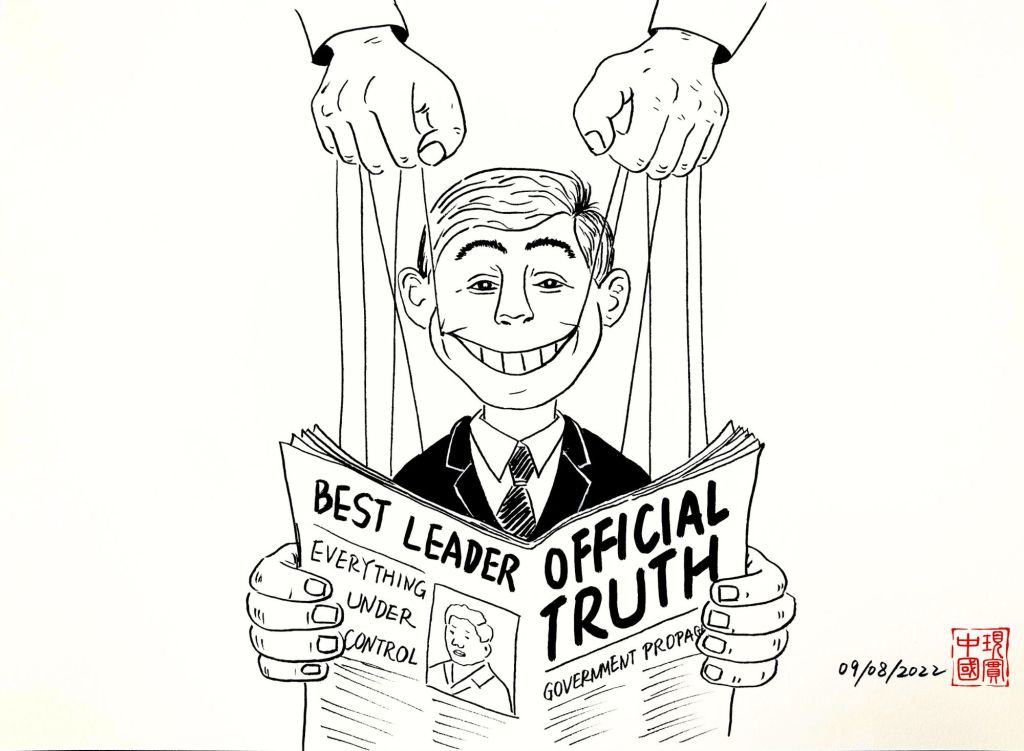
Under my thumb

Chinese President Xi Jinping called on Monday for national financial regulatory authorities to strengthen control over the internet economy. Chinese tech giants, already heavily suppressed by the government for monopolistic behavior, are likely to face more trouble.

In November, Xu Lin, Deputy Minister of the Central Propaganda Department, publicly stated that China must “resolutely prevent the weakening of the Party’s leadership in the name of integrated development,” referring to media integration, and “resolutely guard against the risk of capital manipulating public opinion.”

The message is clear: only the Party can censor and manipulate public opinion.

Authorities establish cybersecurity police units directly within major internet companies. Countless users have been arrested and imprisoned for criticizing the government on Tencent’s WeChat. ByteDance, the parent company of the video-sharing app TikTok, closely cooperates with police to push official propaganda and cover up human rights abuses in Xinjiang.

Tech company CEOs in China have little room to negotiate or resist regulatory authorities because there is no rule of law and nowhere to appeal in China. No one understands the consequences of deviating from the Party line better than Jack Ma, founder of Alibaba and its affiliate Ant Financial. In November, the initial public offering of Ant Financial was abruptly halted by Chinese regulatory authorities just days before its scheduled listing because Ma had publicly criticized China’s financial regulatory system for stifling innovation in a speech.

After that speech, Ma disappeared from public view until he reappeared in an online video in late January, discussing how to support Xi Jinping’s vigorously promoted rural poverty alleviation economic strategy through philanthropic activities.

In this era of government versus tech giants, we already know which side will prevail in China. Big tech companies are simply no match.

点此查看相关报道中文