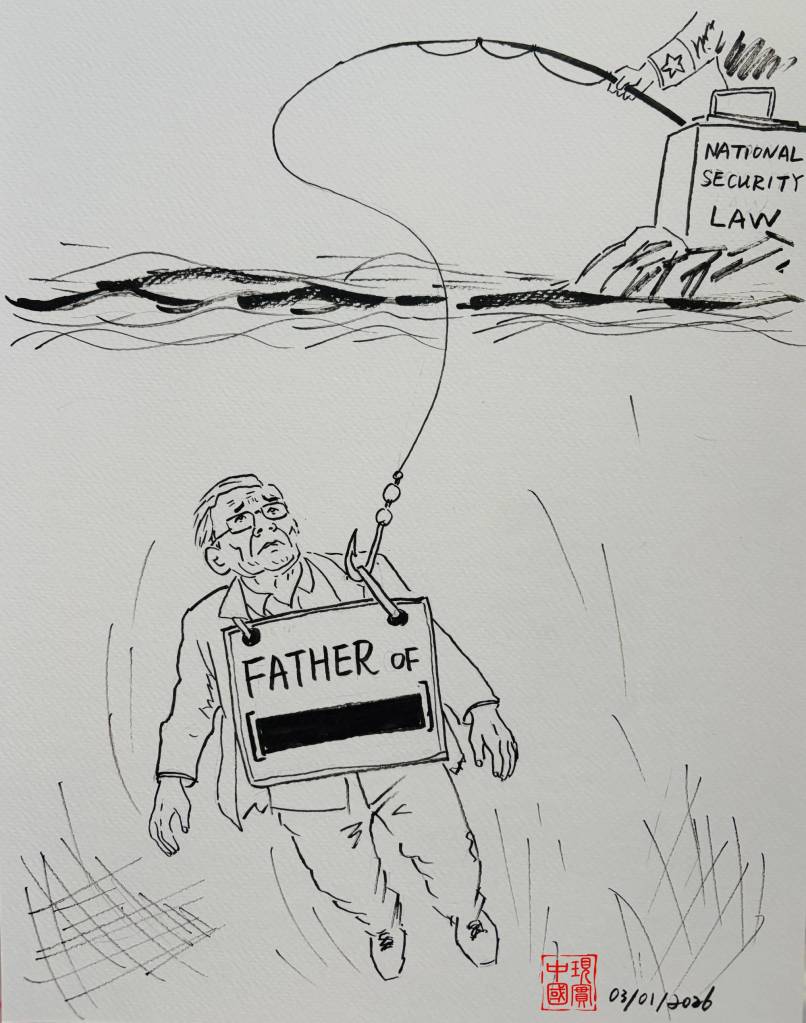
A Hong Kong court has convicted Kwok Yin-sang, the father of overseas activist Anna Kwok, in a national security case that human rights groups say reflects an expanding strategy of pressuring dissidents through their families.
Kwok Yin-sang, 68, was found guilty of handling funds linked to his daughter, whom authorities have designated an “absconder” after she fled Hong Kong in 2020. Prosecutors argued the actions were illegal under national security rules. He faces up to seven years in prison, with sentencing scheduled for February 26.
Anna Kwok became a prominent pro-democracy figure during and after the 2019 protests. She helped organize crowdfunding campaigns that financed newspaper ads critical of the Hong Kong government. After leaving Hong Kong in 2020, she took on a leadership role as director of the Hong Kong Democracy Council, a Washington-based advocacy group.
Her activism continued to draw attention from authorities. She publicly urged the U.S. government to block Hong Kong leader John Lee from attending the 2023 APEC summit in San Francisco, and she traveled to the event to protest the presence of Chinese President Xi Jinping—actions that further elevated her profile in exile.
The case against her father centers on a life insurance policy purchased for her when she was a child. Authorities say it became her property when she reached adulthood, while her lawyers dispute that interpretation. Since his release on bail in May, Kwok Yin-sang has been barred from contacting his daughter.
Anna Kwok said she has had no communication with her father since then and has relied on media images to understand his condition. She described the prosecution as an attempt to exert emotional pressure through family ties.
Human rights groups, including Human Rights Watch, condemned the ruling as a form of “collective punishment.” Analysts also note similar pressure on relatives of other overseas activists, including Frances Hui and Carmen Lau.
The case unfolds amid broader crackdowns on dissent, alongside high-profile prosecutions such as media tycoon Jimmy Lai, highlighting Hong Kong’s continued use of national security laws against pro-democracy figures.