Two Fires, One Extinguisher

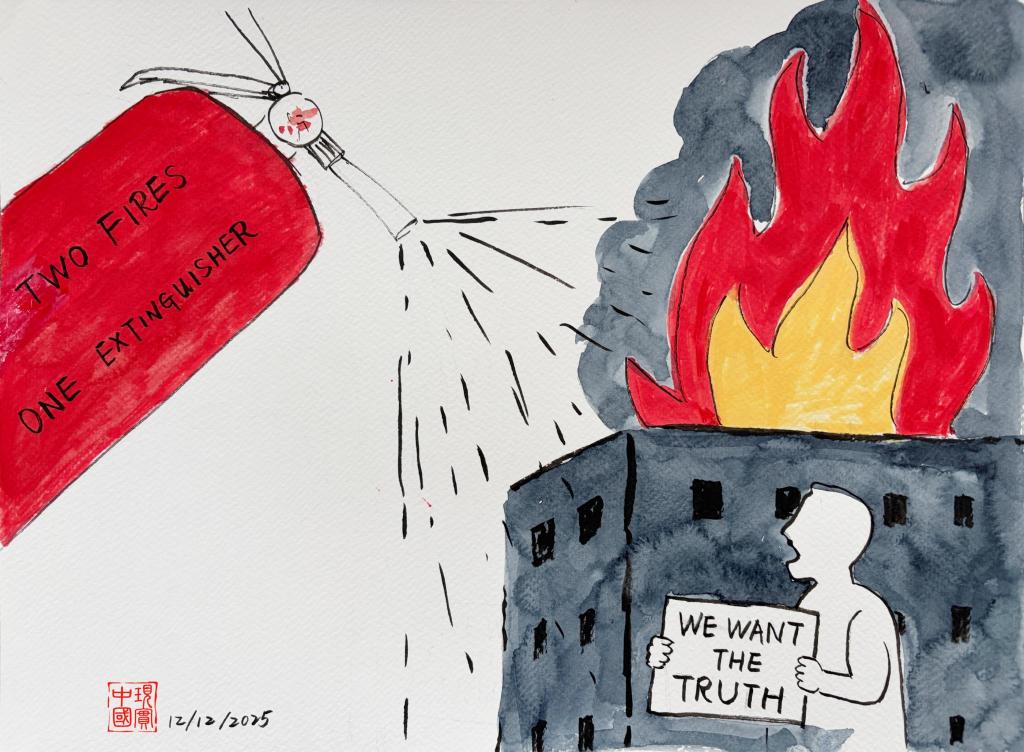
On November 26, 2025, a five-alarm fire tore through Hong Kong’s Tai Po estate, MacPherson Court (Hung Fuk Estate), engulfing seven residential blocks. At least 160 people died, dozens were injured, and the city was left in shock. The physical fire burned for more than 43 hours. Another fire — political and institutional — was extinguished far more quickly.

As residents mourned and volunteers mobilized aid, some asked uncomfortable but reasonable questions: Why were flammable materials used? Why did the fire spread so fast? Could this tragedy have been prevented? The official response focused less on answers than on control. Calls for independent investigation, leaflets, and online criticism were treated as security risks.

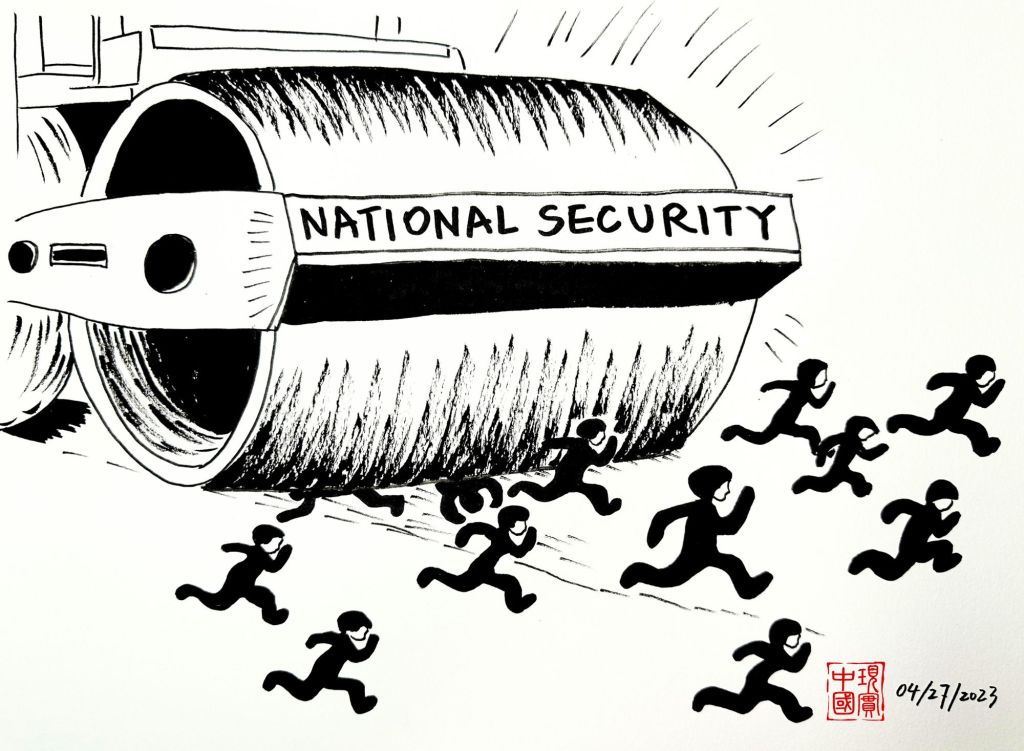
This is where the second fire appeared. Shared grief, if allowed to gather, can become shared accountability. For the authorities, that possibility was more dangerous than the blaze itself. One extinguisher was deployed for both fires: a national security mindset designed to smother not only unrest, but also collective mourning.
Click Here for detailed reports.

Wave of Performance Cancellations Sweeps Across China Amid Tightened Censorship

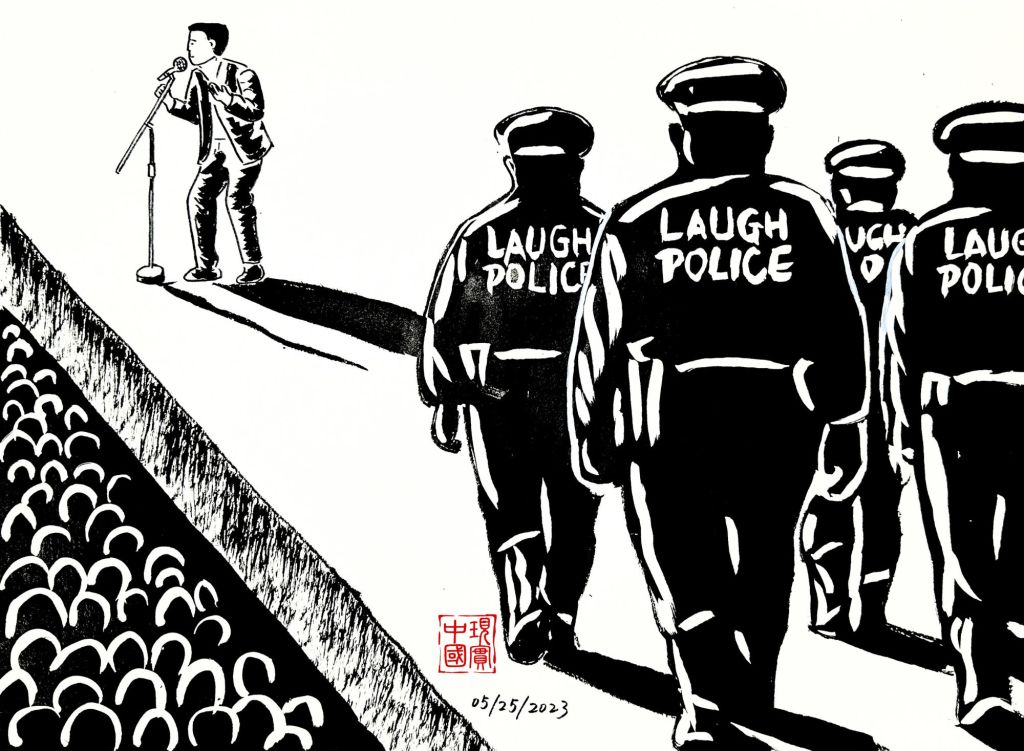
In recent days, China has witnessed a wave of performance cancellations across the country. A Japanese monk singer called off his tour, several cities halted stand-up comedy shows, and Beijing bars canceled jazz performances. Over a span of just a few days, more than a dozen shows were abruptly canceled, some mere minutes before they were scheduled to start, with little to no explanation provided.

These cancellations followed a significant fine imposed on a Chinese comedy studio in Beijing. The studio was fined 13.35 million yuan after the government accused one of its comedians of insulting soldiers in a joke. In a northern city, police also detained a woman for defending the comedian online. These actions highlight the increasing scrutiny faced by China’s creative industries.

Chinese President Xi Jinping has intensified the control over art and culture as part of an ideological campaign, urging artists to align their work with the Communist Party’s goals. Performers must submit scripts for review, and publications are closely monitored. In a letter to the National Art Museum of China on its 60th anniversary, Xi emphasized the need to “maintain the correct political direction.”

This heightened emphasis on controlling art and culture aligns with Xi’s broader focus on national security and eliminating foreign influences. Recently, authorities have raided Western consulting firms and expanded anti-espionage laws.

The crackdown also extended to live performances involving foreign artists, resulting in canceled shows for rock bands, jazz musicians, and rappers across major cities like Beijing, Shanghai, and Guangzhou. Cancellations were often attributed to “force majeure,” a term commonly used to imply government pressure.

Many observers see this as part of a larger strategy to tighten control over cultural expression amid deteriorating relations with the West. As Xi’s China becomes increasingly paranoid, cultural activities, including comedy and music, are becoming battlegrounds for ideological control.

American Citizen Sentenced to Life Imprisonment in China on Espionage Charges

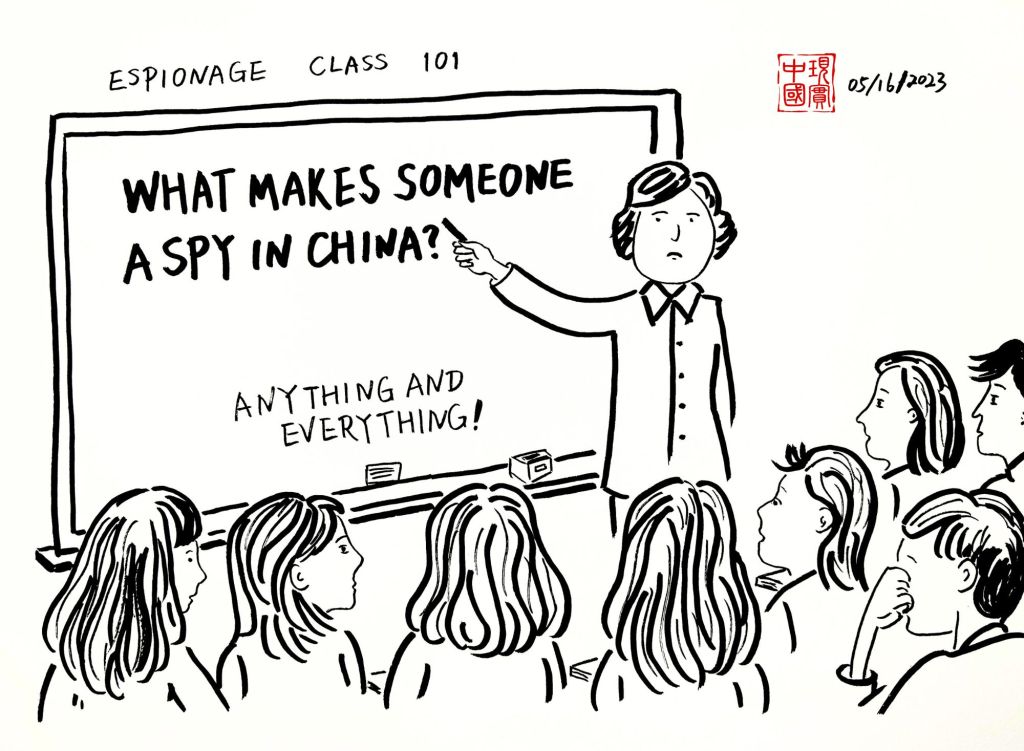
A Chinese court has sentenced a 78-year-old American citizen, Chengyun Liang, to life imprisonment on charges of espionage, according to a statement released on Monday. The specific details of the charges were not disclosed. This case is part of a broader crackdown by Chinese authorities on alleged espionage activities amid rising concerns over foreign influence.

The Suzhou Intermediate People’s Court announced the verdict in a brief statement, revealing that Liang was detained by national security officials on April 1, 2021. The court also ordered the confiscation of Liang’s personal property worth 500,000 Chinese Yuan (~USD 68,8000). Liang, who holds a U.S. passport and is a permanent resident of Hong Kong, faced charges in a trial that lacked transparency, as is typical for politically sensitive cases in China.

点此查看相关中文报道

Taiwan Publisher Detained in China, Sparking Concerns

Chinese authorities have confirmed the detention of Taiwanese publisher Li Yanhe, known by pen-named Fu Cha, on allegations of violating national security laws. This incident has raised fears in Taiwan about Beijing’s intentions towards its vibrant publishing industry.

Li Yanhe, a Chinese citizen who has lived in Taiwan since 2009, runs Gusa Publishing, known for its critical stance against the Chinese Communist Party (CCP). He disappeared shortly after returning to China for a family visit last month, causing alarm among colleagues and friends.

This is a strong blow, creating a chilling effect. Publishers, publishing, and freedom of speech are fundamental indicators of an open society. Convicting someone for publishing books critical of China is unacceptable.

Lee’s detention could further strain the already tense relations between Taiwan and China. Beijing views Taiwan as part of its territory, while many in Taiwan reject this claim, disapproving of Chinese President Xi Jinping’s authoritarian rule, especially after the crackdown on freedoms in Hong Kong.

点此查看相关中文报道