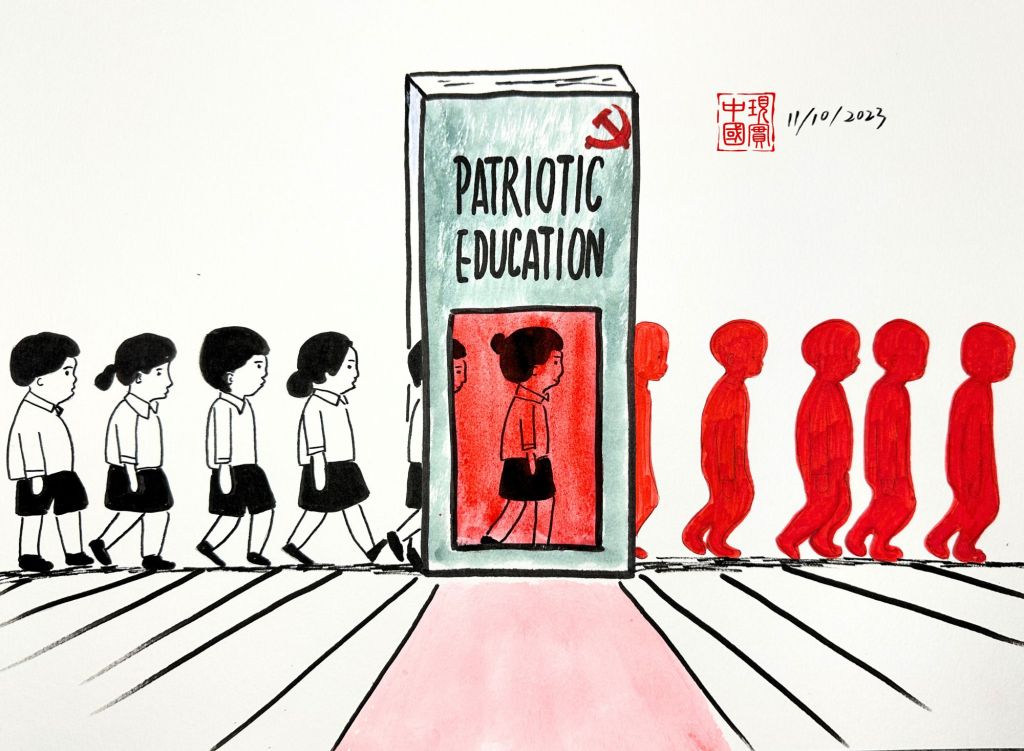
Hong Kong’s New Patriotism Education Initiative Raises Alarm

Hong Kong Chief Executive John Lee unveiled his second Policy Address in late October, introducing “patriotic education” for the first time in Hong Kong’s national education system. The Chief Secretary for Administration will oversee a task force to coordinate efforts across government and non-government sectors to promote this initiative.

Scholars noted the timing of Lee’s announcement, coinciding with China’s National People’s Congress Standing Committee passing the “Patriotic Education Law.” Led by the Chief Secretary for Administration, akin to the Cultural Revolution’s Central Cultural Group, the task force aims for comprehensive ideological education.

China’s National People’s Congress Standing Committee passed the “Patriotic Education Law of the People’s Republic of China” on October 24, effective January 1 next year. The following day, Lee integrated patriotic education into Hong Kong’s national education system, forming the “Patriotic Education Working Group” under Chief Secretary Chan Kwok-ki. This move aligns with mainland China’s law, emphasizing Chinese history, culture, and national identity education.
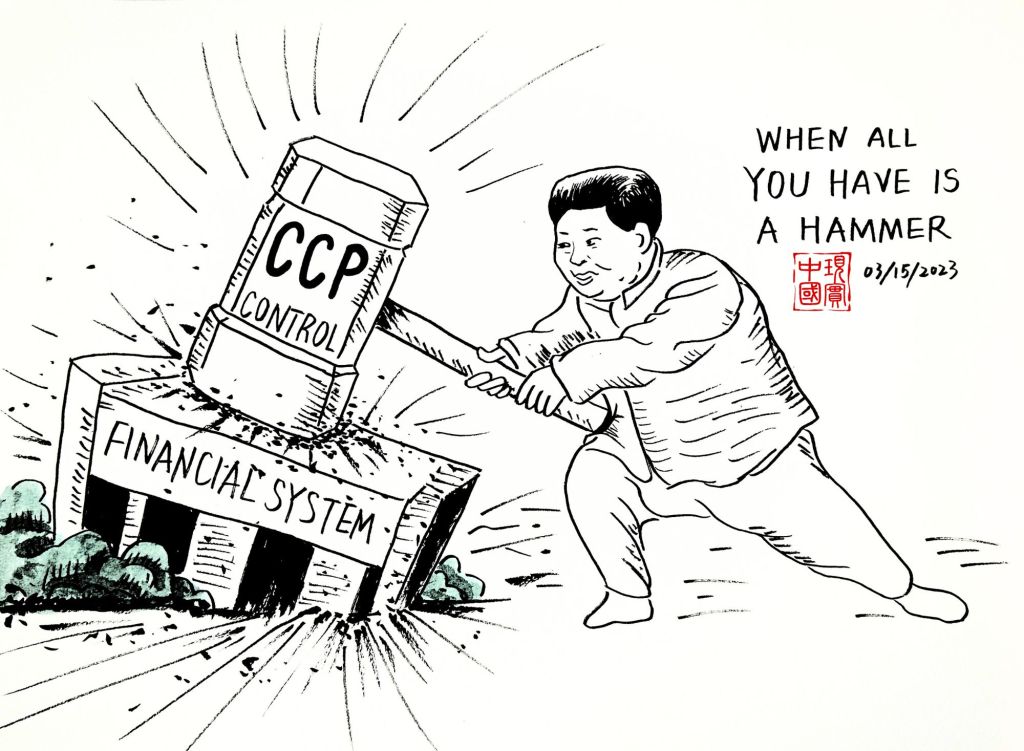
Xi Jinping Tightens Control Over China’s Financial System

To a man with a hammer, everything looks like a nail. Now, as China faces economic slowdowns, a real estate crisis, and heavy local government debt, Xi is once again wielding his hammer.

At the recent National People’s Congress (NPC), Xi introduced sweeping reforms to China’s regulatory framework, giving the CCP more direct control over financial policy and banking regulation. In the coming days, Xi’s loyalists are expected to be appointed to key regulatory positions, further solidifying CCP’s grip on the financial system.

These reforms align with Xi’s approach over the past decade: centralizing power within the CCP. As China’s economic growth slows, ensuring the financial sector aligns with his vision is crucial. Xi needs bankers to allocate funds according to government directives, prevent capital from flowing abroad, and avoid excessive lending that could jeopardize the financial system.

Last month, China’s top anti-corruption body issued a stern warning to bankers about ignoring the CCP’s leadership in financial work. This warning hints at structural reforms in financial regulation. The establishment of the new National Financial Regulatory Administration to oversee China’s massive financial system marks a significant shift in governance.

Heads are already starting to roll. Bao Fan, a prominent investment banker and chief executive of China Renaissance Holdings, vanished last month. After initially saying that it was unable to contact Mr. Bao, China Renaissance said it had learned that the banker was cooperating with an investigation being carried out by certain Chinese authorities.

By tightening control over the financial sector, Xi is guiding China further away from the market-driven economy that fueled its rise, towards a model where the CCP has an unchallenged influence over all aspects of the economy.

点此查看相关中文报道

Xi Jinping Begins Third Term as President, Strengthening His Dominance

On Friday, Xi Jinping began his new term as President of China, solidifying his position as the country’s most powerful leader in decades.

In 2018, Xi Jinping pushed for a constitutional amendment to remove the two-term limit for the presidency, paving the way for his third term. During that session, three National People’s Congress deputies abstained, and two others bravely opposed the amendment.

Last October, Xi was re-elected as General Secretary. The result of the presidential election, unanimously approved by the legislature controlled by the Chinese Communist Party (CCP), officially confirmed his continued dominance over Chinese politics. He will continue to hold the highest power in the party, military, and government, with no political rivals or prominent potential successors in sight.

As his personal power consolidates, the 69-year-old Xi is positioning himself as the strong leader China needs in a hostile international environment, dismissing criticisms that his authoritarian style is leading the country into more crises.

The CCP’s strict enforcement of the “Zero-COVID” policy has hampered the economy, triggered rare large-scale protests, and heightened investor concerns about China’s long-term growth prospects. Under Xi’s leadership, China’s relations with the West have grown increasingly tense, especially given Beijing’s mounting pressure on Taiwan and its close ties with Russia during the Ukraine war.