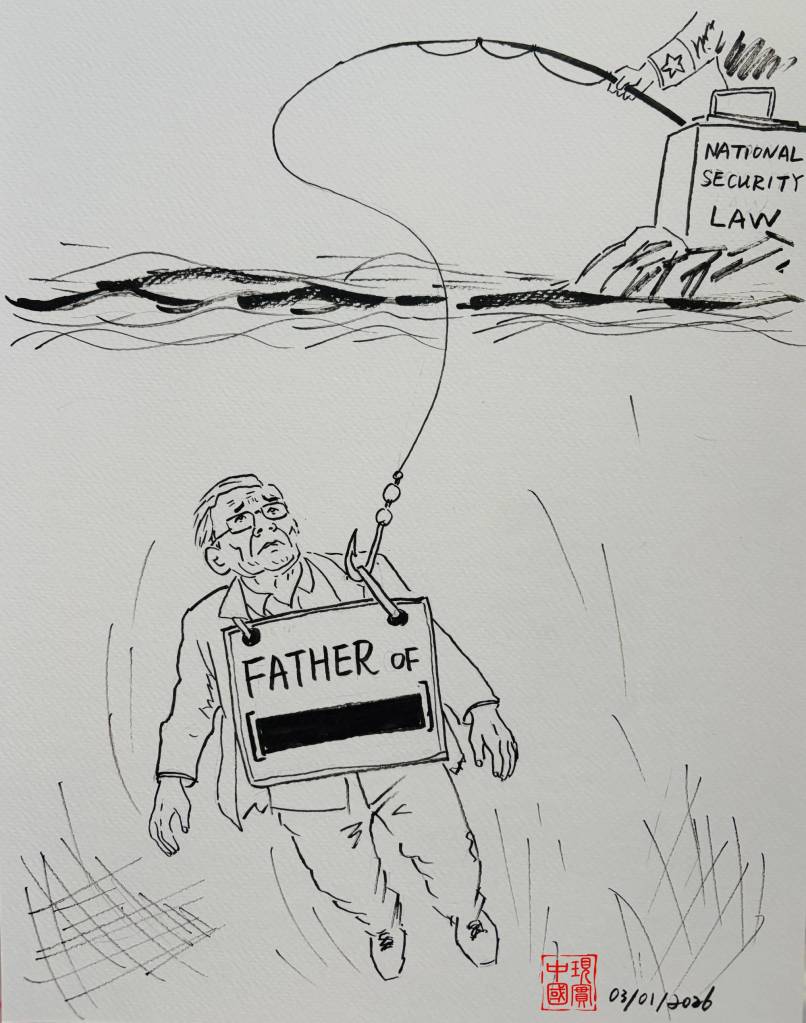
Hong Kong Targets Activist’s Family in National Security Case

Father of Redacted

A Hong Kong court has convicted Kwok Yin-sang, the father of overseas activist Anna Kwok, in a national security case that human rights groups say reflects an expanding strategy of pressuring dissidents through their families.

Kwok Yin-sang, 68, was found guilty of handling funds linked to his daughter, whom authorities have designated an “absconder” after she fled Hong Kong in 2020. Prosecutors argued the actions were illegal under national security rules. He faces up to seven years in prison, with sentencing scheduled for February 26.

Anna Kwok became a prominent pro-democracy figure during and after the 2019 protests. She helped organize crowdfunding campaigns that financed newspaper ads critical of the Hong Kong government. After leaving Hong Kong in 2020, she took on a leadership role as director of the Hong Kong Democracy Council, a Washington-based advocacy group.

Her activism continued to draw attention from authorities. She publicly urged the U.S. government to block Hong Kong leader John Lee from attending the 2023 APEC summit in San Francisco, and she traveled to the event to protest the presence of Chinese President Xi Jinping—actions that further elevated her profile in exile.

The case against her father centers on a life insurance policy purchased for her when she was a child. Authorities say it became her property when she reached adulthood, while her lawyers dispute that interpretation. Since his release on bail in May, Kwok Yin-sang has been barred from contacting his daughter.

Anna Kwok said she has had no communication with her father since then and has relied on media images to understand his condition. She described the prosecution as an attempt to exert emotional pressure through family ties.

Human rights groups, including Human Rights Watch, condemned the ruling as a form of “collective punishment.” Analysts also note similar pressure on relatives of other overseas activists, including Frances Hui and Carmen Lau.

The case unfolds amid broader crackdowns on dissent, alongside high-profile prosecutions such as media tycoon Jimmy Lai, highlighting Hong Kong’s continued use of national security laws against pro-democracy figures.
Click HERE for news report.

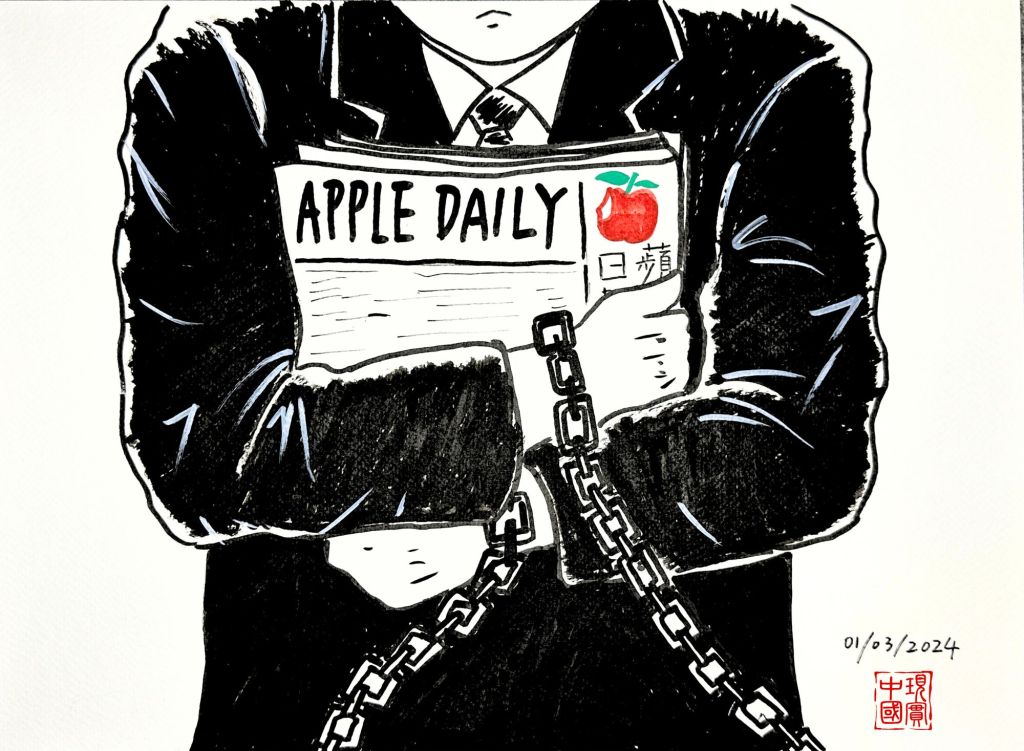
Defiance on Trial: Jimmy Lai and the Fight for Hong Kong’s Autonomy

In a dramatic trial unfolding in Hong Kong, media tycoon Jimmy Lai, once a symbol of defiance against Beijing, faces severe charges under China’s National Security Law. Lai, known for his outspoken criticism of Beijing through his newspaper, APPLE DAILY, became a prominent figure in Hong Kong’s pro-democracy protests. Arrested in 2020, Lai now confronts allegations of colluding with foreign forces, which could lead to a life sentence. Despite international outcry over what many view as politically motivated charges, Lai appeared in court, greeted by supporters and family members, clad in a blue shirt and khaki jacket, his trademark defiance undiminished.

The trial marks a pivotal test for Hong Kong’s judicial independence under the controversial security law, widely criticized for eroding freedoms once enjoyed in the region. Amid heightened security at the courthouse, including police dogs and armored vehicles, supporters like elderly activist Grandma Wong continue to rally, waving British flags in protest against what they perceive as Beijing’s encroachment on Hong Kong’s autonomy.

As the trial proceeds, international observers and human rights advocates closely monitor proceedings, emphasizing concerns over fair trial standards and political interference. Lai’s case underscores broader tensions surrounding Hong Kong’s autonomy and the implications of Beijing’s tightening grip on dissent.

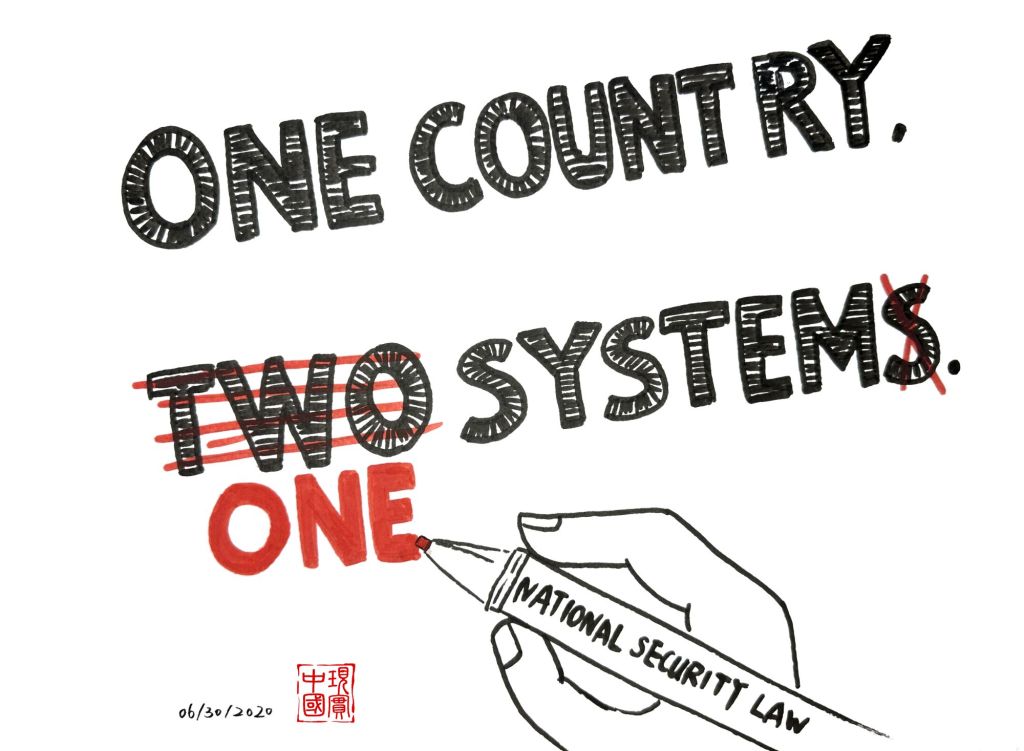
One Country, One System

On June 30, 2020, the Standing Committee of the National People’s Congress of China passed and implemented the “Law of the People’s Republic of China on Safeguarding National Security in the Hong Kong Special Administrative Region,” commonly referred to as the Hong Kong National Security Law (NSL). The introduction of this law in Hong Kong has sparked intense controversy, as it is widely seen as a severe breach of the “one country, two systems” principle that was meant to guarantee Hong Kong’s high degree of autonomy and its own legal system for 50 years following the 1997 handover.

The implementation of the Hong Kong National Security Law marks a significant turning point in the city’s history, raising profound concerns about the future of its freedoms, autonomy, and the rule of law.