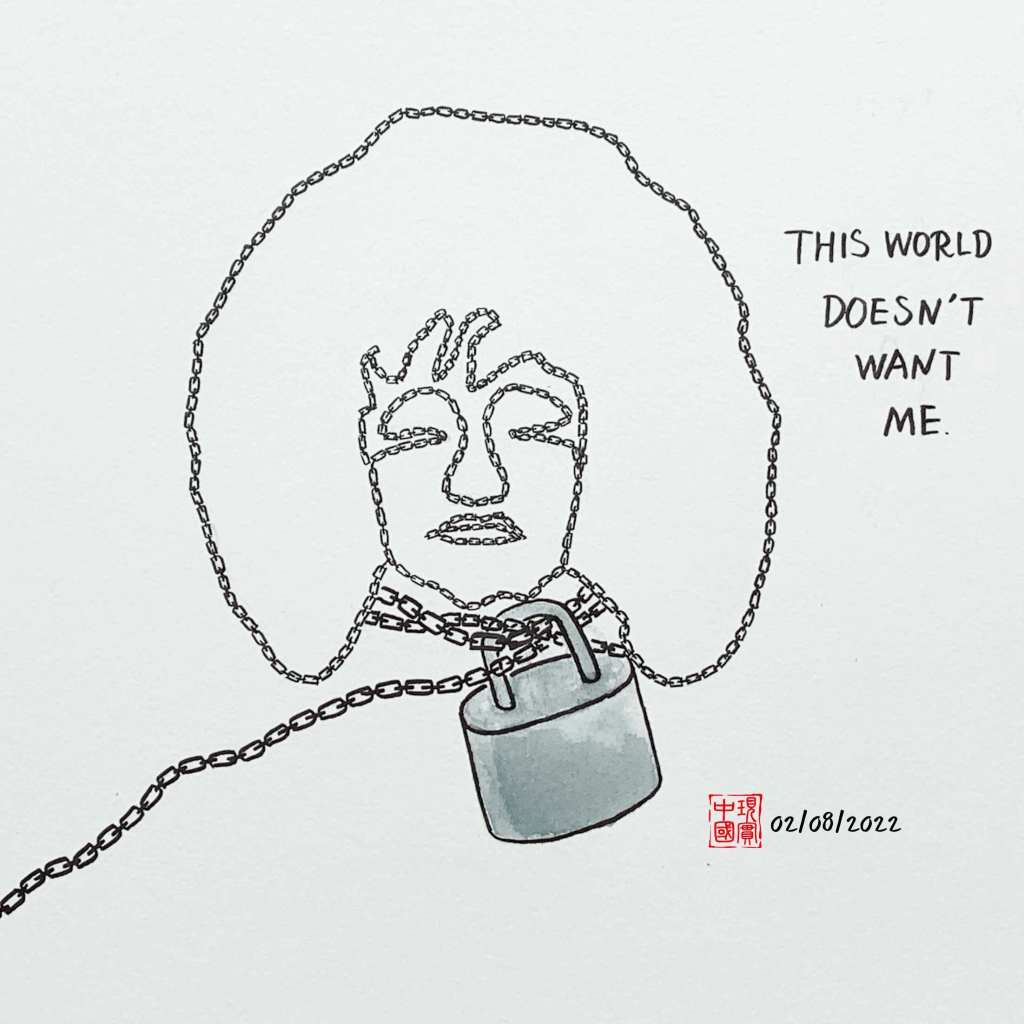
As China’s Winter Olympics presents a picture of peace and prosperity, a TikTok video revealed a woman chained around her neck, secured with a lock and affixed to the wall in a shack that opens up to the exterior. She wears a light sweater despite the January cold and looks haggard and her hair hangs lankly.
“This world doesn’t want me,” the woman can be heard saying.
Netizens has been calling for justice: Who really is she? Who and why chained her? Had she been abused or trafficked, like being sold as a bride under fraud or coercion? How had she managed to birth eight children under strict national birth policies that until 2016 had restricted families to only one child?
I wish I could say “Happy New Year” to my friends in China, but I know they’re not happy under the oppressive regime of mass testing and forced quarantine that keeps them from being together with their families. It’s hard to believe it’s been two years since Wuhan was first locked down on January 23, 2020, just two days before the Chinese New Year. Yet, most of China remains under stringent restrictions.
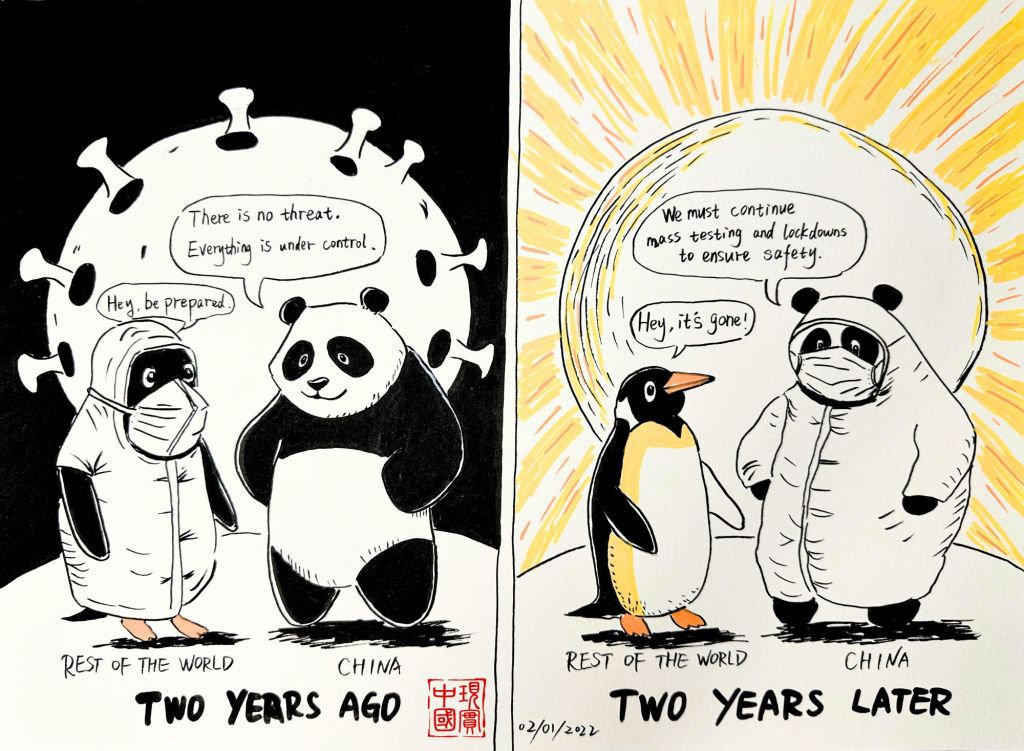
In the early days of COVID-19, when the world was grappling with the unknowns of a mysterious pneumonia, the Chinese government stood firm in its denial. The virus, according to official statements, was under control, posing no significant threat. Yet, the world watched as the truth seeped through the cracks of censorship, revealing a different, grimmer reality.
Fast forward two years. While most countries have moved past stringent lockdowns, eased social distancing, and lifted mask mandates, China remains an outlier. The once rigid zero-COVID policy has evolved into a relentless regime of mass testing and forced quarantines. The irony is palpable: the same government that initially downplayed the virus now clings to extreme measures, unwilling to acknowledge the global shift towards coexistence with COVID-19.
This persistence in denial, both at the onset and now, illustrates a troubling pattern. It’s a testament to a government’s refusal to adapt, to admit mistakes, or to change course. As the rest of the world breathes a cautious sigh of relief, China’s citizens are left suffocating under a blanket of outdated policies and endless PCR tests.
Two years ago, the virus’s arrival was denied. Two years later, its departure is met with the same resistance. The tragedy lies not only in the missteps but in the stubborn refusal to learn from them.
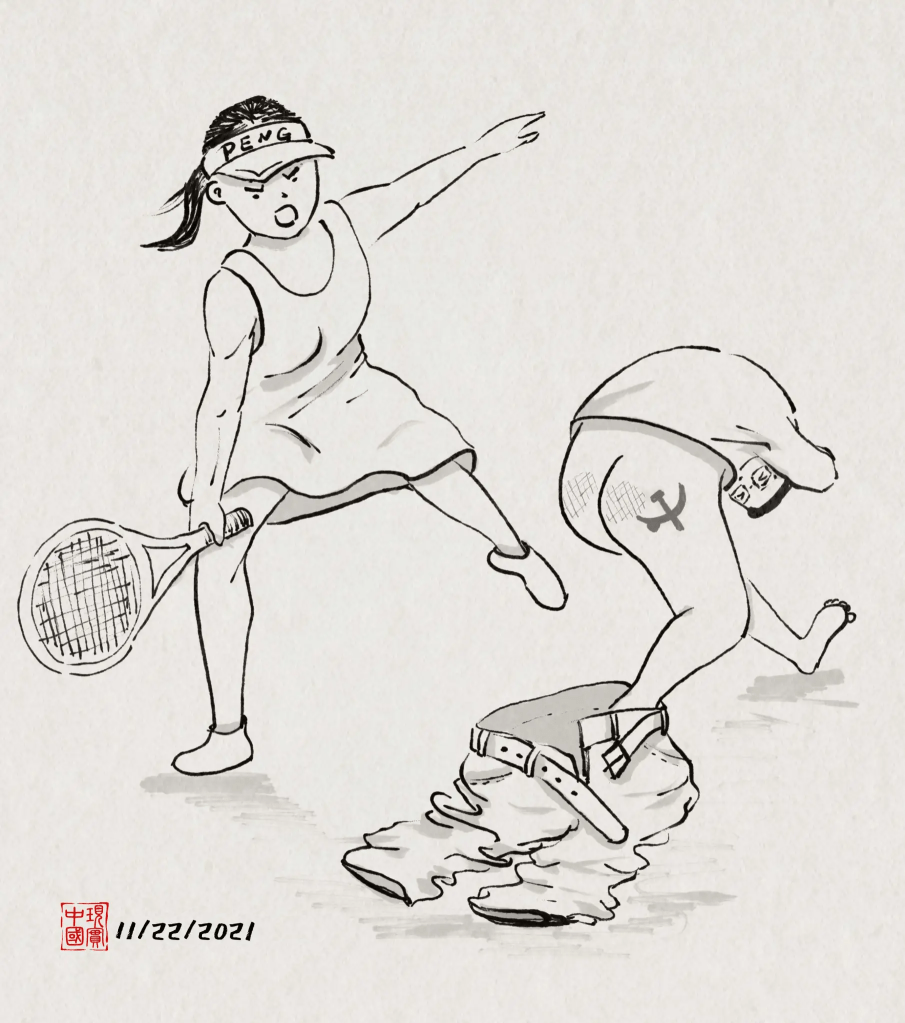
Peng Shuai, a 35-year-old Chinese tennis player and former world doubles No.1, published a long post on Weibo on Nov 2, 2021, accused Zhang Gaoli, now 75, a former high-ranking Chinese government official, of sexual assault. Zhang Gaoli is a former vice premier who served on China’s Politburo Standing Committee and was one of the country’s most powerful officials behind President Xi Jinping.
In the post, Peng Shuai wrote that Zhang had forced her to have sex despite repeated refusals, giving the timeline of her on-and-off affairs with Zhang during the past 10 years. The post was removed within 20 minutes from her verified account on Weibo, and even her name became a censored word. Since then, Peng hasn’t posted again on the site or been seen in public for 3 weeks.
Now, her safety and whereabouts have become a growing concern among her peers, the Women’s Tennis Association (WTA) and the White House. And a campaign #whereispengshuai intitiated by Chinese feminists to located the disappeared tennis star has gone global. Many of the world’s biggest tennis stars, including Serena Williams, Naomi Osaka, and Andy Murray, have posted messages on Twitter with the hashtag.
The outcry prompted Chinese state media to release a series of photographs and videos that appeared to show all was well.
Over the weekend, Peng had a video call with the head of the International Olympic Committee (IOC), after which a statement from the group said she had appeared safe and well.
But concerns over her safety and well-being remain.
Human Rights Watch criticized the IOC over the video call, saying its “collaboration” with Chinese authorities on Ms. Peng’s reappearance “undermines its expressed commitment to human rights, including the rights and safety of athletes”.
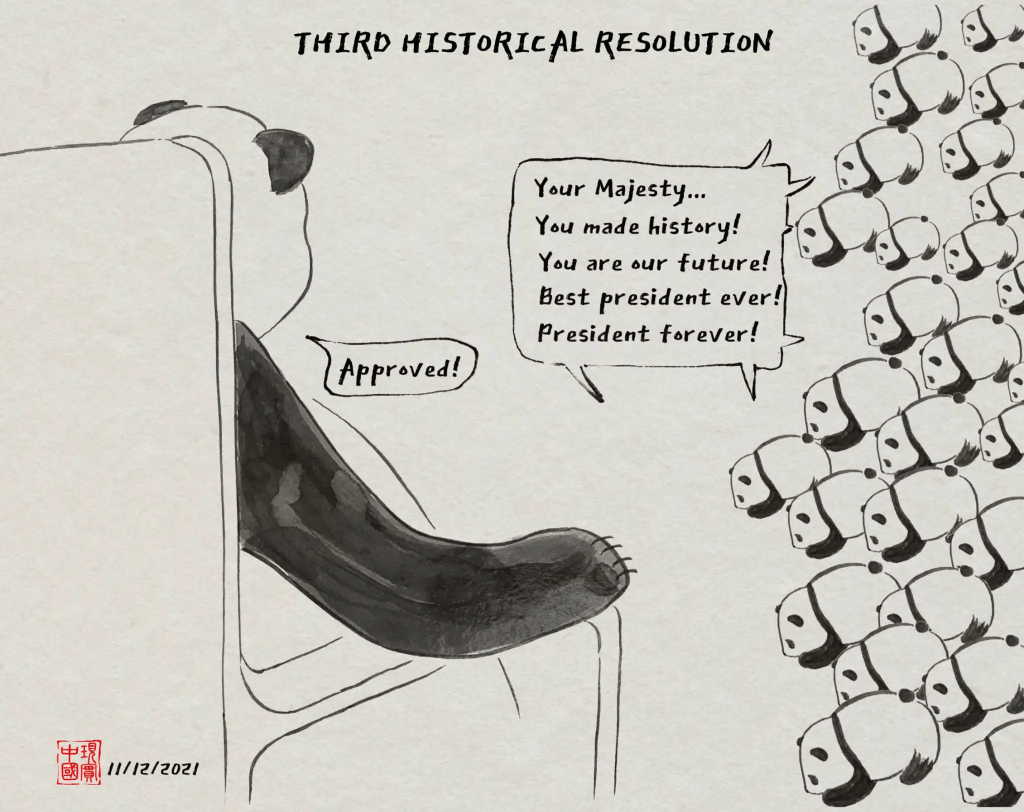
The resolution on the party’s “achievements and historical experiences” since its founding 100 years ago was passed at the end of a four-day, closed-door meeting of more than 300 top leaders on its Central Committee, state media reported.
It puts Xi on the same pedestal as Mao Zedong and Deng Xiaoping, two previous leaders who cemented their position as per-eminent leader with the only other two such resolutions passed, in 1945 and 1981 respectively.
Back in 2018, Xi made a bold power play by eliminating a term limit on the presidency, opening the way for him to lead China indefinitely. That move overturned widespread expectations that the party had been settling into a 10-year cap on leaders’ time in power.
Today’s pass of this resolution sets the stage for next year’s sweeping leadership reshuffle and paves the way for a legacy-defining third term for the president.
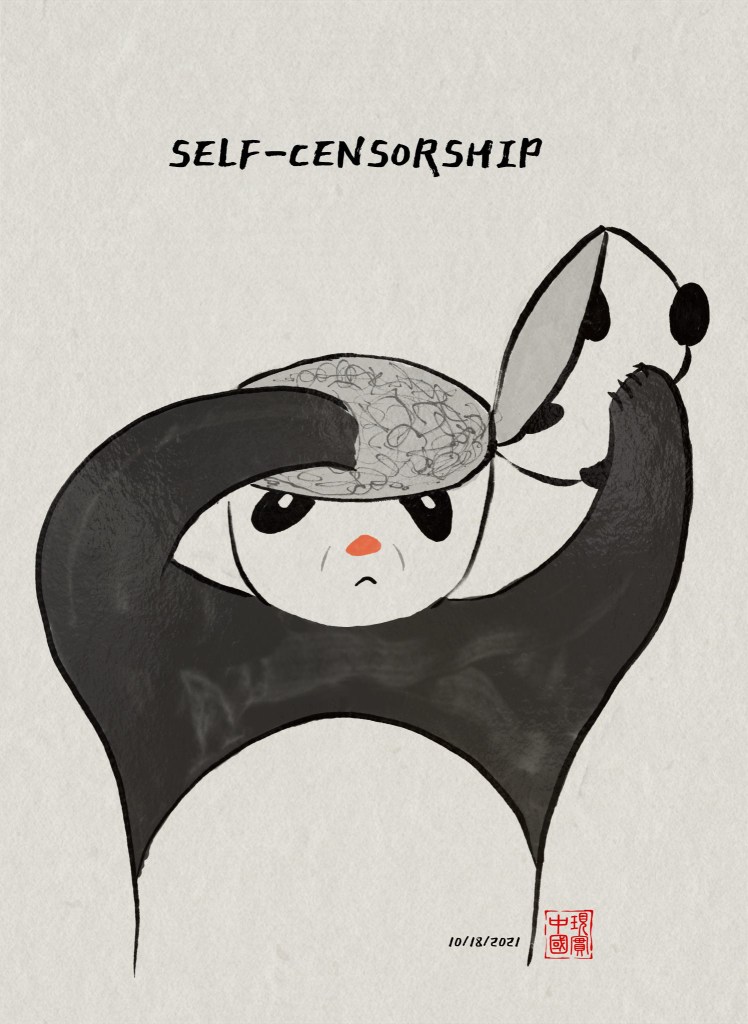
For China’s internet regulators, even a censored US-based social network was too much.
Microsoft said on Oct 14 that it would cease operating its work-oriented social network LinkedIn within China by the end of the year because of “significantly more challenging operating environment and greater compliance requirements in China.”
The announcement is a symbolic moment for US-China tech relations, and for China’s new hard-line approach to regulating its tech industry. Microsoft’s withdrawal is the most high-profile departure since Google left the country in 2010 in protest over censorship and alleged espionage.
Microsoft’s censorship has been well documented. Earlier this year, a number of academics and journalists saw their LinkedIn accounts censored. Bing, another Microsoft product, stoked censorship concerns with its image search results for “tank man” on this year’s 32nd anniversary of the Tiananmen crackdown. The company even censored its own farewell message. LinkedIn’s English language statement claimed the company “strongly [supports] freedom of expression,” but the phrase was conspicuously absent from the company’s Chinese language statement.
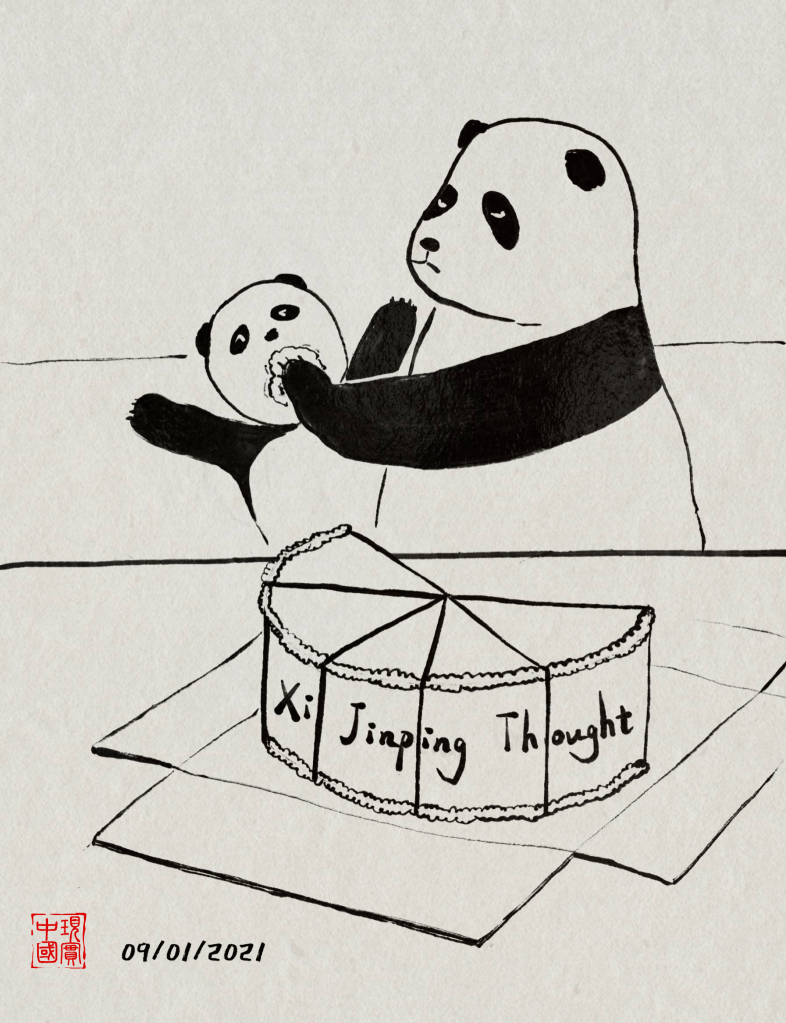
Throughout China, as the school year starts on September 1, all elementary and secondary school students face a new mandatory class — Xi Jinping’s Thought on Socialism with Chinese Characteristics for a New Era.
The new curriculum highlights how the Chinese Communist Party (CCP) and Xi are focusing on ideological control of the population as the course, referred to as “Xi Thought,” trickles down from Chinese universities, where it was introduced in 2020.
According to China’s Ministry of Education, there are four versions of the textbook, each geared to different levels of students. The new curriculum will be taught throughout the country to make sure the content will “get into the brains of students.”
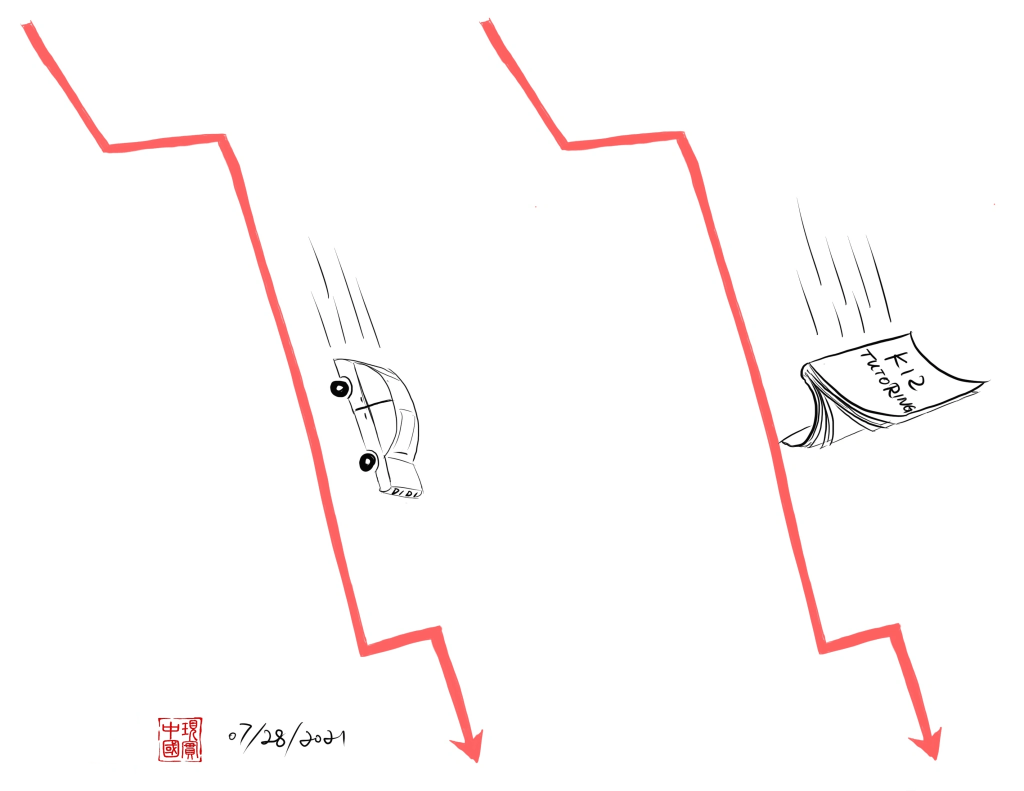
On July 23, China announced the new rules that require China’s tutoring companies to become nonprofit entities. They were banned from offering tutoring services during weekends and school breaks, and from making profits, raising capital or going public.
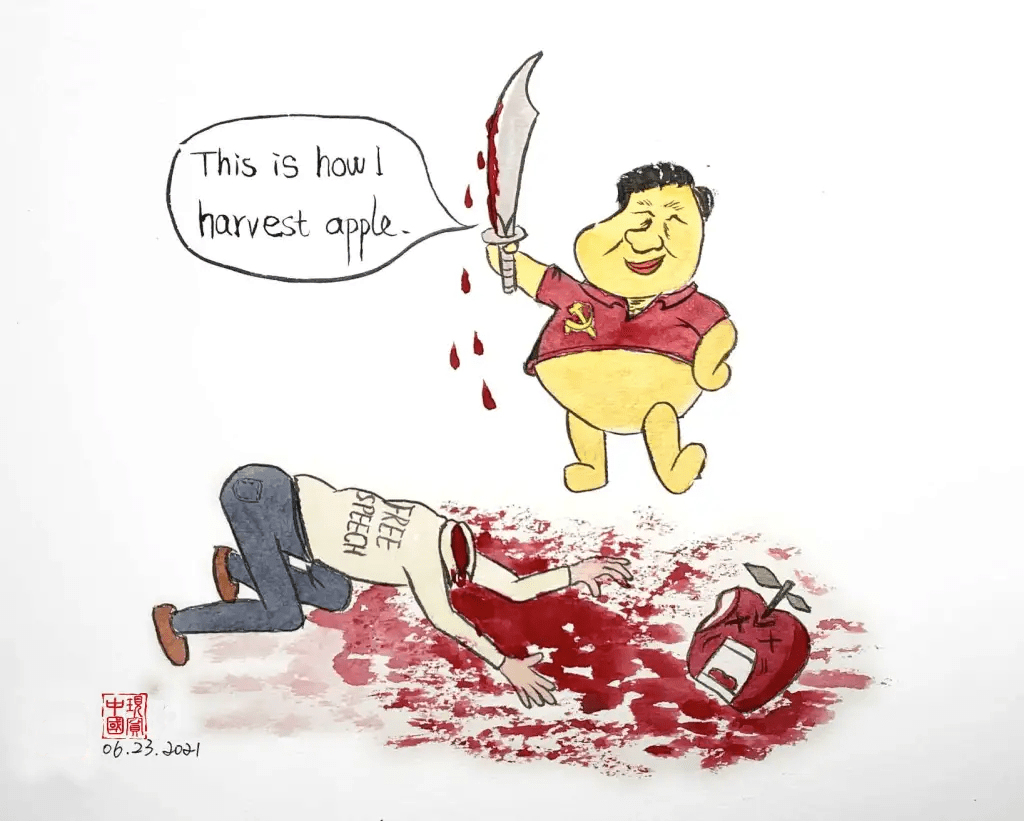
China is tightening curbs over US-listed Chinese companies. Look at what happened to DIDI, the ride-share company that was listed a few days ago, this crackdown on tutoring firms is Deja Vu all over again.
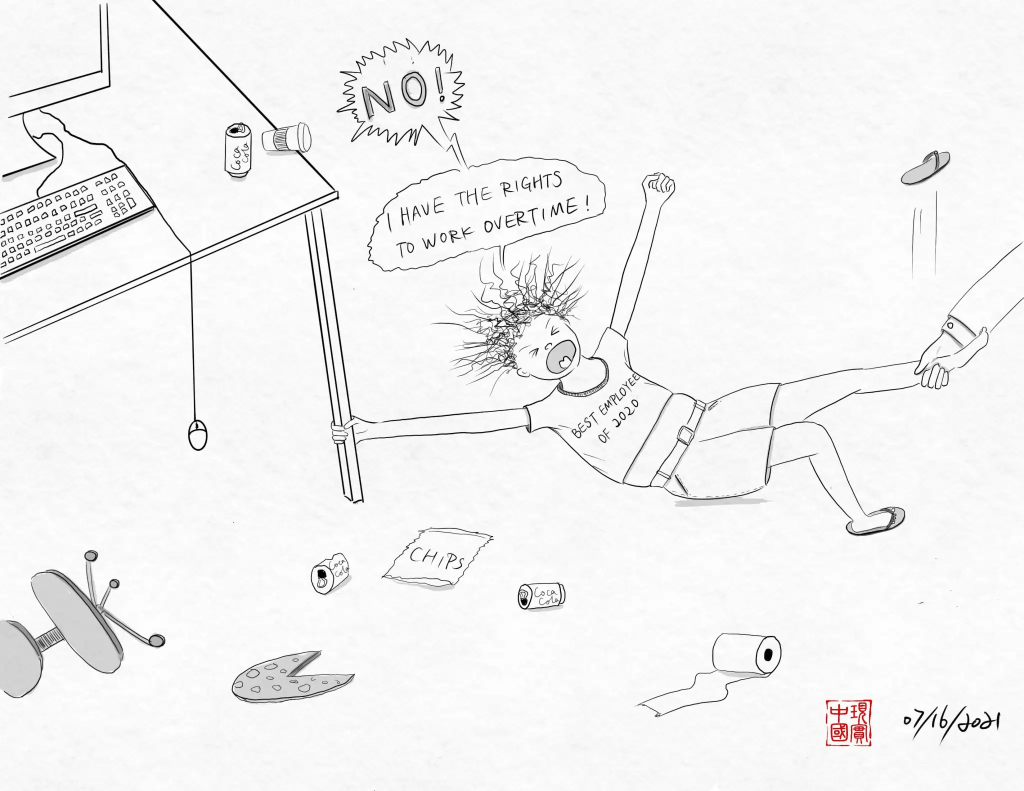
Two years ago, Chinese tech workers protested on GitHub, the worlds’s largest code host, against grueling overtime hours at some companies, aiming at the industry’s “996” work culture, which referred to the 9 a.m. to 9 p.m. workday, six days a week.
Ironically, earlier this month, ByteDance, TikTok’s parent company has announced that it will cancel its overtime policy, effective August 1st. An internal survey about whether to abolish its infamous overtime policy was sent out before the announcement. Surprisingly, about one-third of the surveyed employees opposed that abolishment and complained that they would be subject to the same amount of workload but less pay.
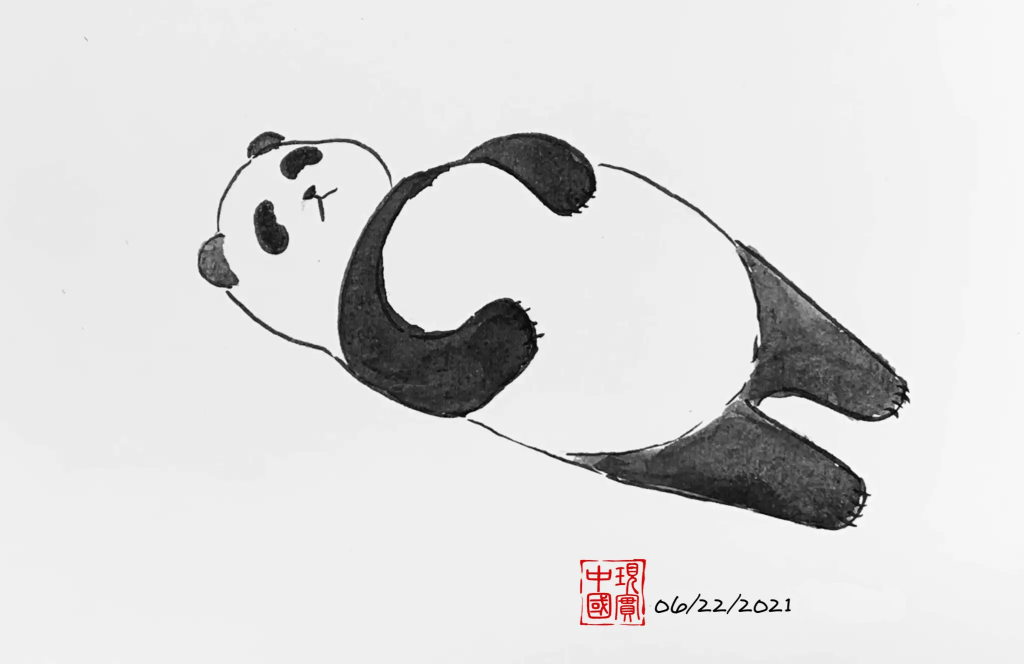
Tang Ping, meaning “giving up and lying flat” became a rage among young Chinese, as a stand against the pressures of modern life. It started with a post saying “lying flat is justice”, by a social media user called Kind-Hearted Traveller. Soon it went viral and became an online movement.
The movement of “Tang Ping” is meant to reject the culture of overwork that forces Chinese youngsters to work for longer hours with little reward. Many are frustrated with the low prospects of their jobs and their inability in the face of rising prices to afford a house ever in their lifetimes.
However, this trend was soon be repressed by censorship, and related merchandise like T shirts with “Tang Ping” designs were deleted from Taobao, the biggest e-commerce platform in China.
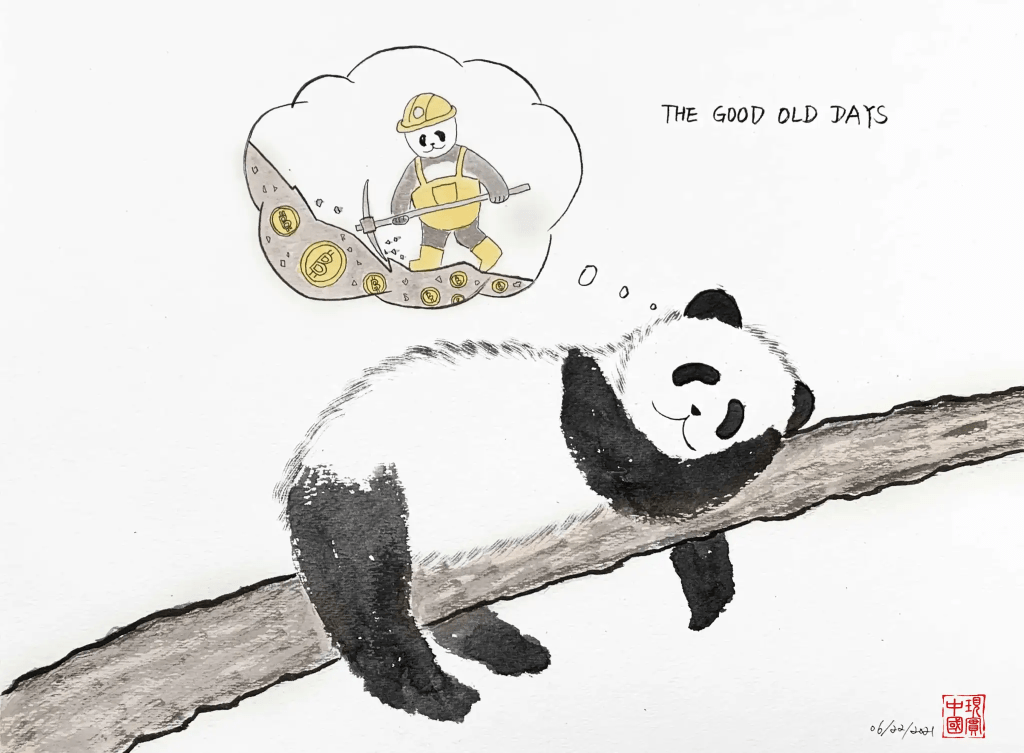
China’s sweeping ban on cryptocurrency mining has paralyzed an industry that accounts for over half of global bitcoin production, as miners dump machines in despair.
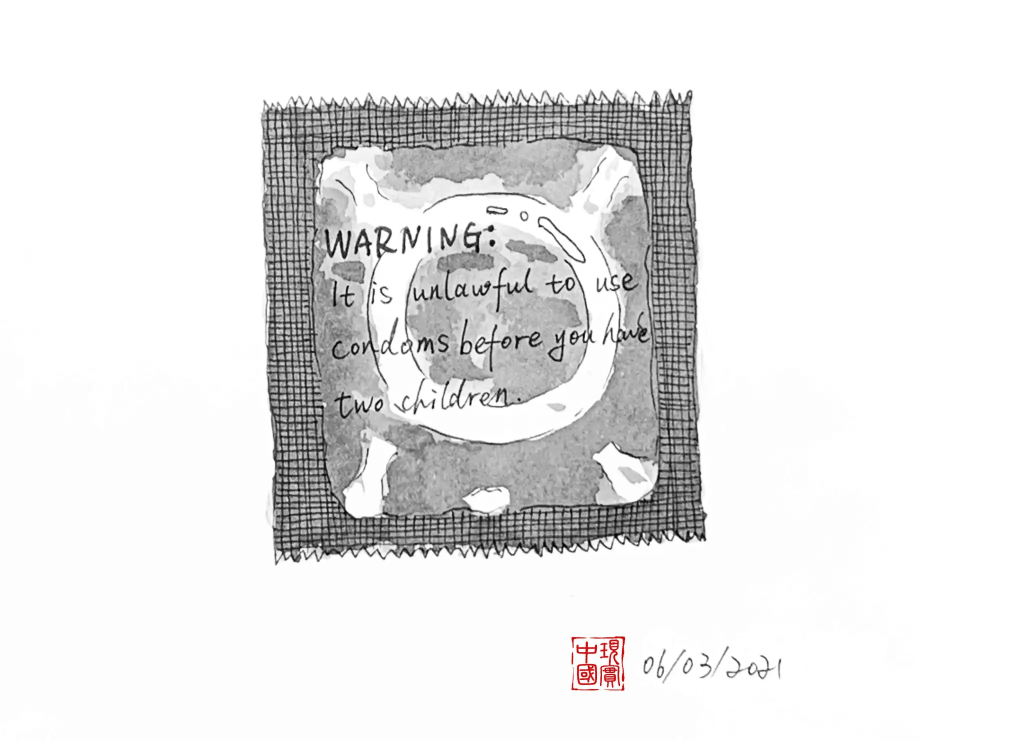
Shih Wing-ching, Chairman of Centaline Property Agency, recently wrote an article “How to solve the declining birth rate”. He said “I don’t support birth control. To take the basic birth responsibility as a human, I think people should be forbidden to use condoms unless they already have two children .”
Does that mean you may need to show your children’s birth certificates to buy condoms in China?
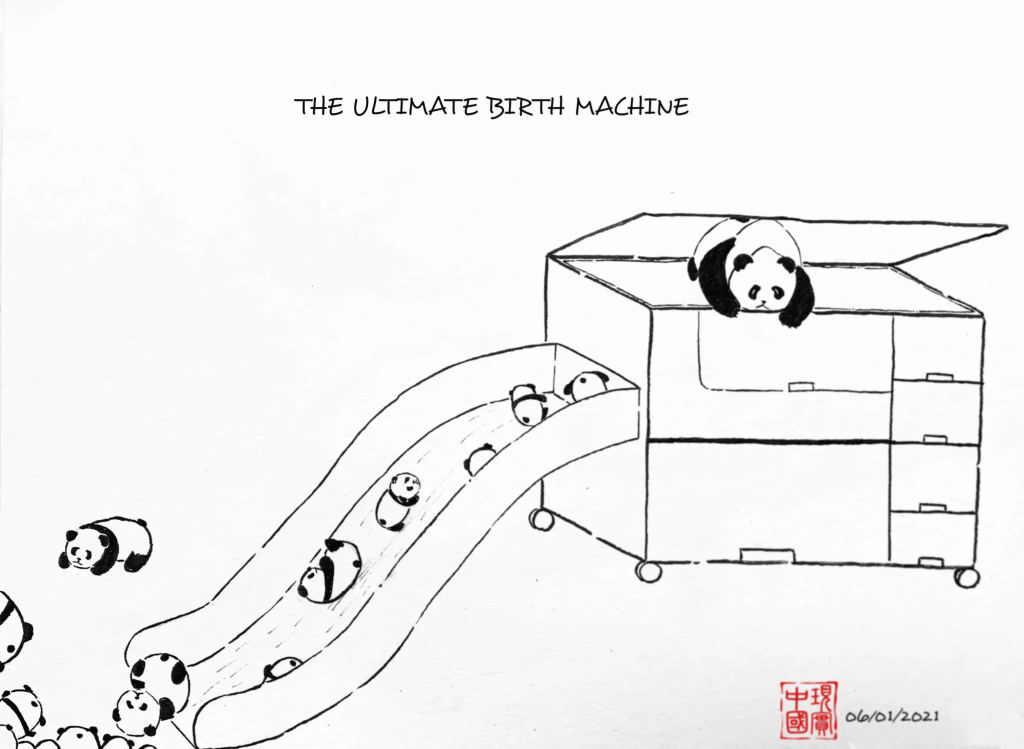
Shortly after releasing of the population census, China pivots to a 3-child policy to bring a baby boom. However, this won’t make a dent in its declining birth rate because the country’s young couples don’t want kids.
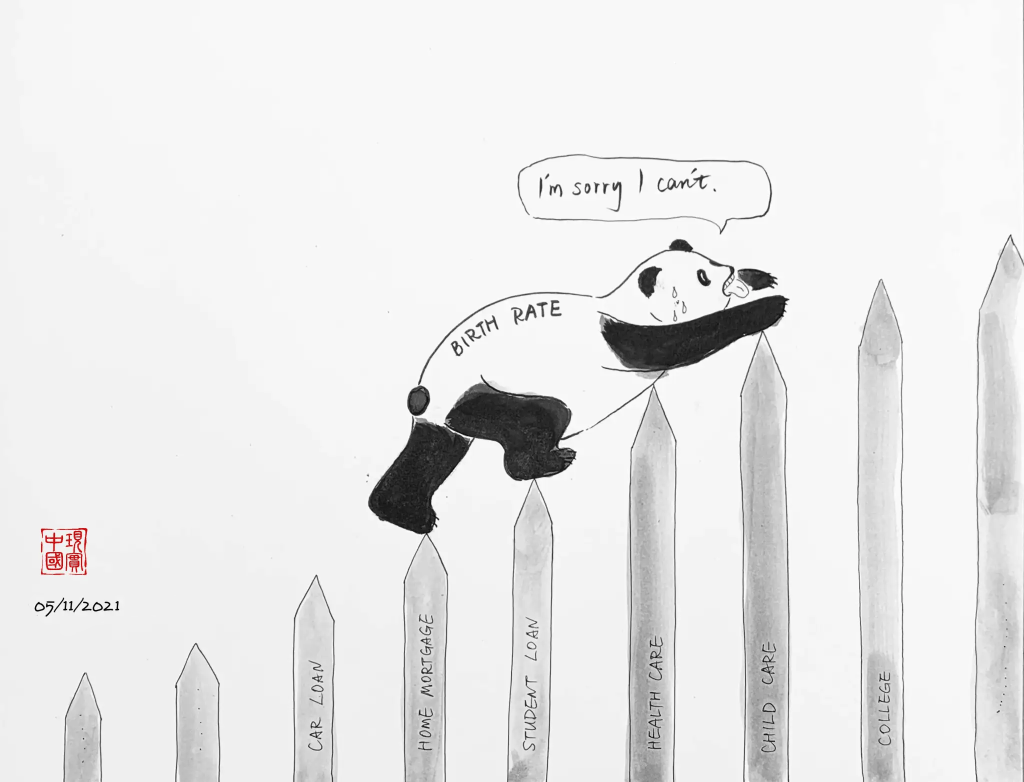
China’s birth rate was 1.3 children per woman, well below the replacement level-2.1— the rate needed to maintain a stable population. The data also showed a sharp rise in the percentage of Chinese aged 60 and above, to 18.7% of the population from 13.3% in 2010.
Experts say the slowdown birth rate is rooted in several trends, including the rise of women in the work force who are educated and don’t see marriage as necessary to achieving financial security, at least for themselves. For Chinese couples, many cannot afford to have children as living costs increase and their jobs demand more time and energy. Basically, it’s a society where nobody wants to get married and people can’t afford to have children.
Chinese President Xi Jinping called on Monday for national financial regulatory authorities to strengthen control over the internet economy. Chinese tech giants, already heavily suppressed by the government for monopolistic behavior, are likely to face more trouble.
In November, Xu Lin, Deputy Minister of the Central Propaganda Department, publicly stated that China must “resolutely prevent the weakening of the Party’s leadership in the name of integrated development,” referring to media integration, and “resolutely guard against the risk of capital manipulating public opinion.”
The message is clear: only the Party can censor and manipulate public opinion.
Authorities establish cybersecurity police units directly within major internet companies. Countless users have been arrested and imprisoned for criticizing the government on Tencent’s WeChat. ByteDance, the parent company of the video-sharing app TikTok, closely cooperates with police to push official propaganda and cover up human rights abuses in Xinjiang.
Tech company CEOs in China have little room to negotiate or resist regulatory authorities because there is no rule of law and nowhere to appeal in China. No one understands the consequences of deviating from the Party line better than Jack Ma, founder of Alibaba and its affiliate Ant Financial. In November, the initial public offering of Ant Financial was abruptly halted by Chinese regulatory authorities just days before its scheduled listing because Ma had publicly criticized China’s financial regulatory system for stifling innovation in a speech.
After that speech, Ma disappeared from public view until he reappeared in an online video in late January, discussing how to support Xi Jinping’s vigorously promoted rural poverty alleviation economic strategy through philanthropic activities.
In this era of government versus tech giants, we already know which side will prevail in China. Big tech companies are simply no match.


 The Truth Of China