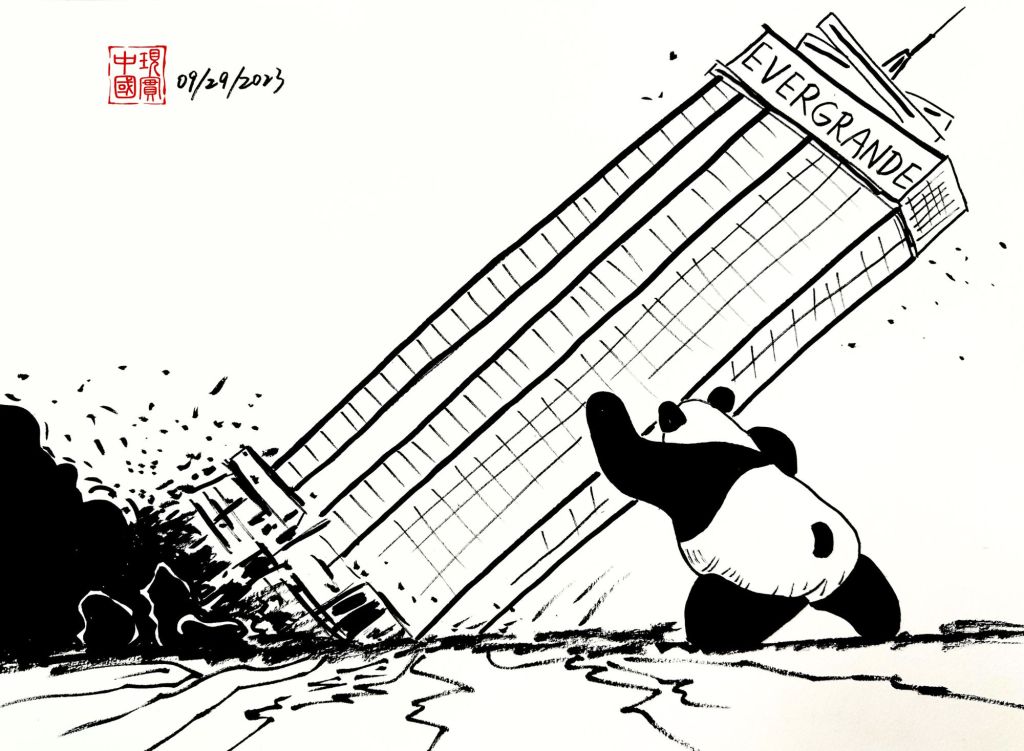
The two-year-long saga of Evergrande Group’s financial meltdown has reached a dramatic peak. On the evening of September 28, China Evergrande Group, listed in Hong Kong, announced that its Chairman, Xu Jiayin, is under investigation for suspected illegal activities and has been subjected to mandatory measures. Several other senior executives of Evergrande are also being investigated.
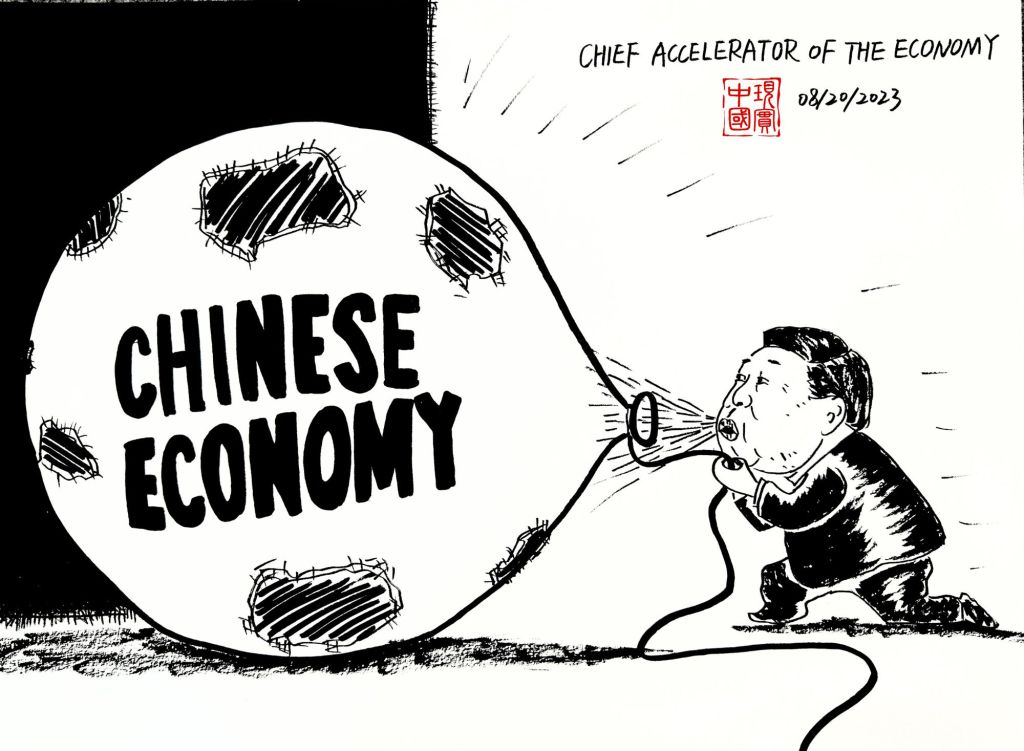
On August 10, U.S. President Biden called China’s economy a “ticking time bomb” during a political fundraising event, drawing criticism from Chinese state media. Shortly after, China’s National Bureau of Statistics announced it would no longer release youth unemployment data, sparking heated discussions online.
In June 2023, China’s youth unemployment rate was as high as 21.3%, but on August 15, the authorities announced they would stop publishing the data.
Real estate companies like Evergrande and Country Garden continue to face debt defaults, and China’s largest asset management group Zhongzhi Enterprise Group is also in trouble, with financial trust products’ defaults spreading. Foreign direct investment in China has dropped to its lowest level since 1998, and the pace of foreign capital withdrawal is accelerating. In the next ten years, China’s economy might decouple from the West, regressing to the pre-reform era.
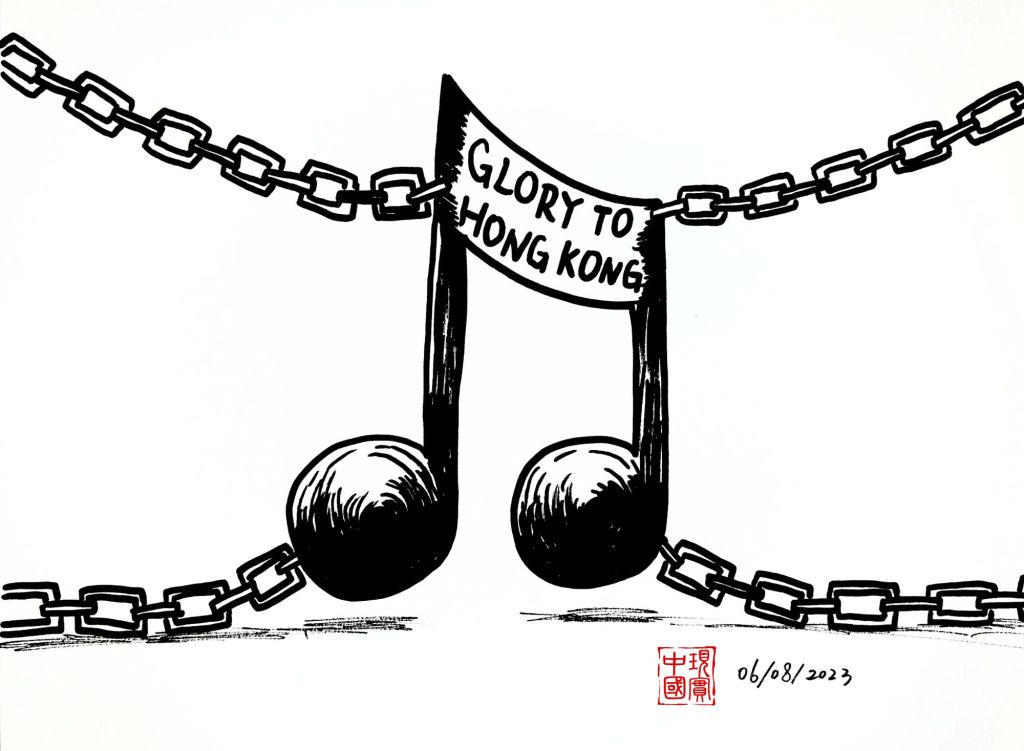
Hong Kong’s government has renewed efforts to ban “Glory to Hong Kong,” which has emerged as the unofficial anthem of pro-democracy demonstrators in 2019. After mistakenly played during an Asian rugby match in Korea last year, the song has been listed as prohibited in schools, and authorities are now seeking a court injunction to ban its public performance and online dissemination.
This move could place American tech companies like Google in a difficult position, as it marks the first legal test of Hong Kong’s control over online content. The government claims the song insults China’s national anthem and damages both the nation and the Special Administrative Region.
Hong Kong’s Security Bureau Chief criticized Google last December for not prioritizing the Chinese national anthem in search results. The new injunction request, citing the 2020 National Security Law, is part of broader efforts to eliminate political dissent in the city.
If granted, this injunction could complicate and increase the costs of content moderation for U.S. tech firms operating in Hong Kong. Critics argue that the National Security Law, which gives China broad powers to address perceived political crimes, extends its reach globally, potentially affecting anyone outside of Hong Kong.
Despite these suppression efforts, interest in “Glory to Hong Kong” has surged, with multiple versions topping Hong Kong’s iTunes charts. As Hong Kong tightens its grip on freedom of speech, it risks tarnishing its image as a business-friendly hub, with some multinational companies already relocating to other regions like Singapore.
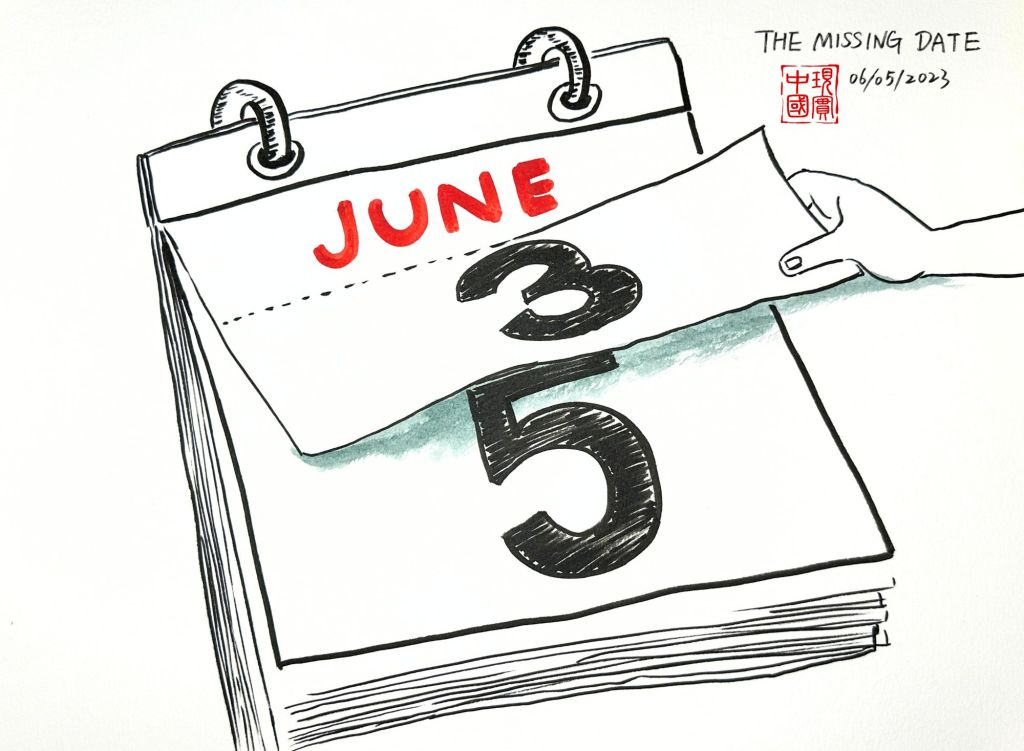
For decades, Hong Kong was the only place in China where people could openly commemorate the 1989 Tiananmen Square crackdown through candlelight vigils. This year, however, Hong Kong has taken notable steps to make people forget the massacre.
Ahead of this year’s June 4th anniversary, small shops displaying items hinting at the crackdown were closely monitored. On the weekend, thousands of police officers patrolled the streets of Causeway Bay, where vigils used to be held. They set up temporary tents and searched individuals suspected of attempting to mourn. Four people were arrested for “acts with seditious intent,” and another four were detained.
Zhou Fengsuo, a student leader of the Tiananmen Square protests, stated that Hong Kong is now under the same tyranny as mainland China. He expressed that the mission to democratize China, which began in 1989, remains incomplete as Hong Kong faces similar repression.
The 1989 democratic movement had significant support in Hong Kong, then a British colony. After the Chinese army violently suppressed the protests, some student leaders escaped to Hong Kong. In 2019, thousands gathered in Victoria Park for a candlelight vigil, marking the last large-scale commemoration of the massacre in Hong Kong.
Since the implementation of the National Security Law in 2020, nearly all forms of dissent in Hong Kong have become criminalized. Authorities have been particularly focused on erasing the memory of the Tiananmen Massacre, raiding museums and libraries and imprisoning vigil organizers.
Despite the lifting of pandemic restrictions this year, Victoria Park was occupied by a pro-Beijing group’s fair, celebrating Hong Kong’s return to China in 1997. The arrests over the weekend and heavy police presence have made it clear that public mourning of the Tiananmen victims is no longer tolerated.
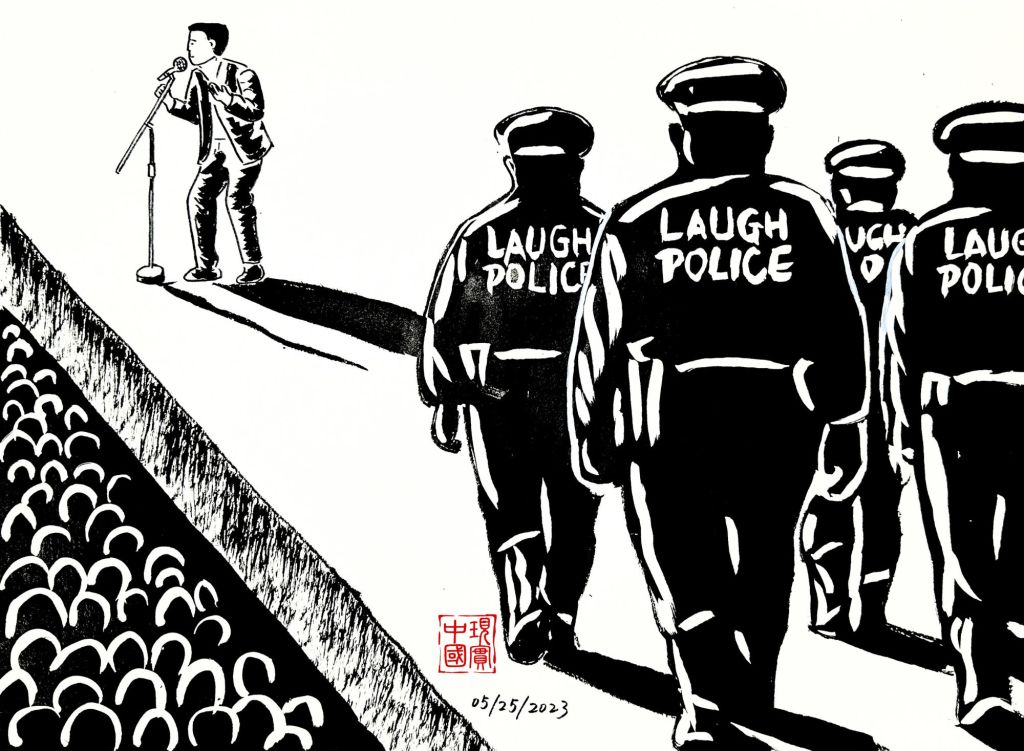
In recent days, China has witnessed a wave of performance cancellations across the country. A Japanese monk singer called off his tour, several cities halted stand-up comedy shows, and Beijing bars canceled jazz performances. Over a span of just a few days, more than a dozen shows were abruptly canceled, some mere minutes before they were scheduled to start, with little to no explanation provided.
These cancellations followed a significant fine imposed on a Chinese comedy studio in Beijing. The studio was fined 13.35 million yuan after the government accused one of its comedians of insulting soldiers in a joke. In a northern city, police also detained a woman for defending the comedian online. These actions highlight the increasing scrutiny faced by China’s creative industries.
Chinese President Xi Jinping has intensified the control over art and culture as part of an ideological campaign, urging artists to align their work with the Communist Party’s goals. Performers must submit scripts for review, and publications are closely monitored. In a letter to the National Art Museum of China on its 60th anniversary, Xi emphasized the need to “maintain the correct political direction.”
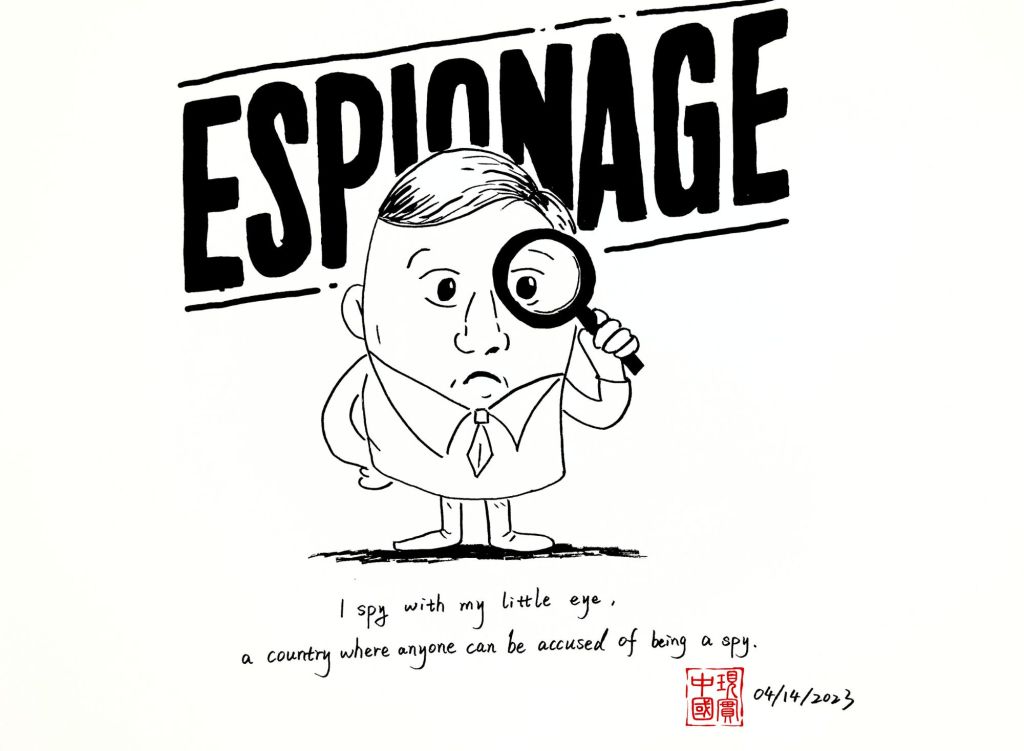
This heightened emphasis on controlling art and culture aligns with Xi’s broader focus on national security and eliminating foreign influences. Recently, authorities have raided Western consulting firms and expanded anti-espionage laws.
The crackdown also extended to live performances involving foreign artists, resulting in canceled shows for rock bands, jazz musicians, and rappers across major cities like Beijing, Shanghai, and Guangzhou. Cancellations were often attributed to “force majeure,” a term commonly used to imply government pressure.
Many observers see this as part of a larger strategy to tighten control over cultural expression amid deteriorating relations with the West. As Xi’s China becomes increasingly paranoid, cultural activities, including comedy and music, are becoming battlegrounds for ideological control.
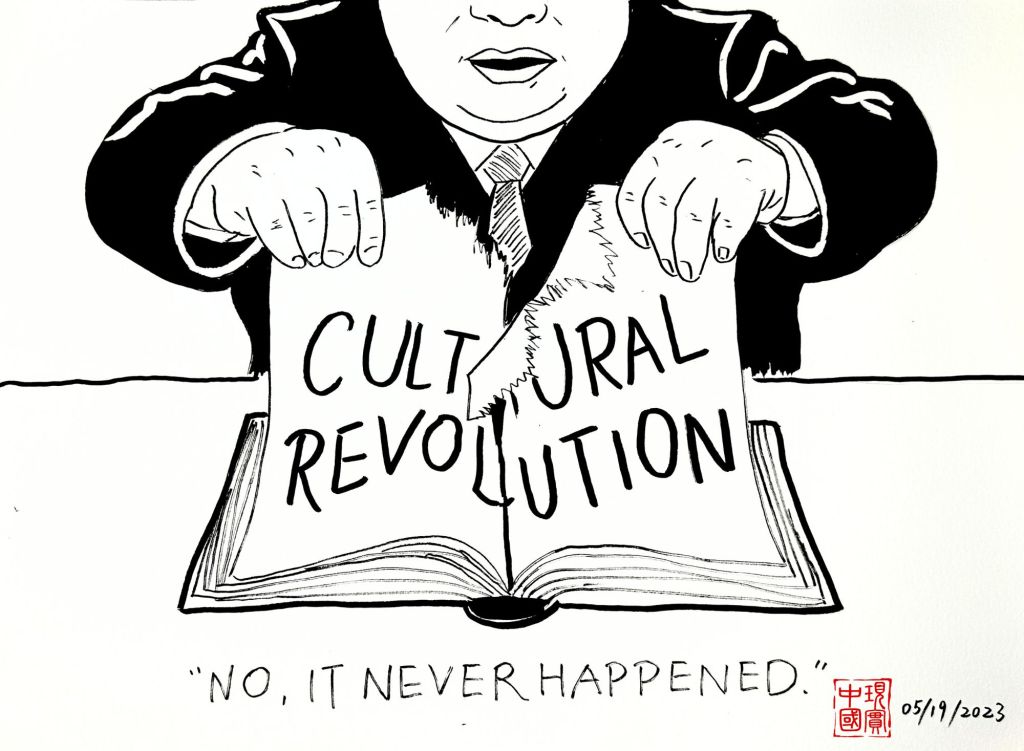
The Cultural Revolution, occurring from 1966 to 1976, caused an estimated 1.6 to 2 million deaths and left lasting trauma on generations. Under Mao Zedong, this movement aimed to eliminate non-Communist elements in Chinese society but ended up overturning revered institutions. Teachers and schools were stigmatized, books were burned, museums looted, and private art collections destroyed. Intellectuals were tortured.
In China, where information is often controlled, history is continually rewritten. Recent government actions, like censoring COVID-19 research and altering textbooks on Hong Kong’s colonial history, threaten to erase the Cultural Revolution from collective memory. This rewriting endangers the country’s future.
The Chinese government has never been keen on preserving the memory of those dark years. Museum exhibits often skipped over those years or briefly mentioned them in a muted tone.
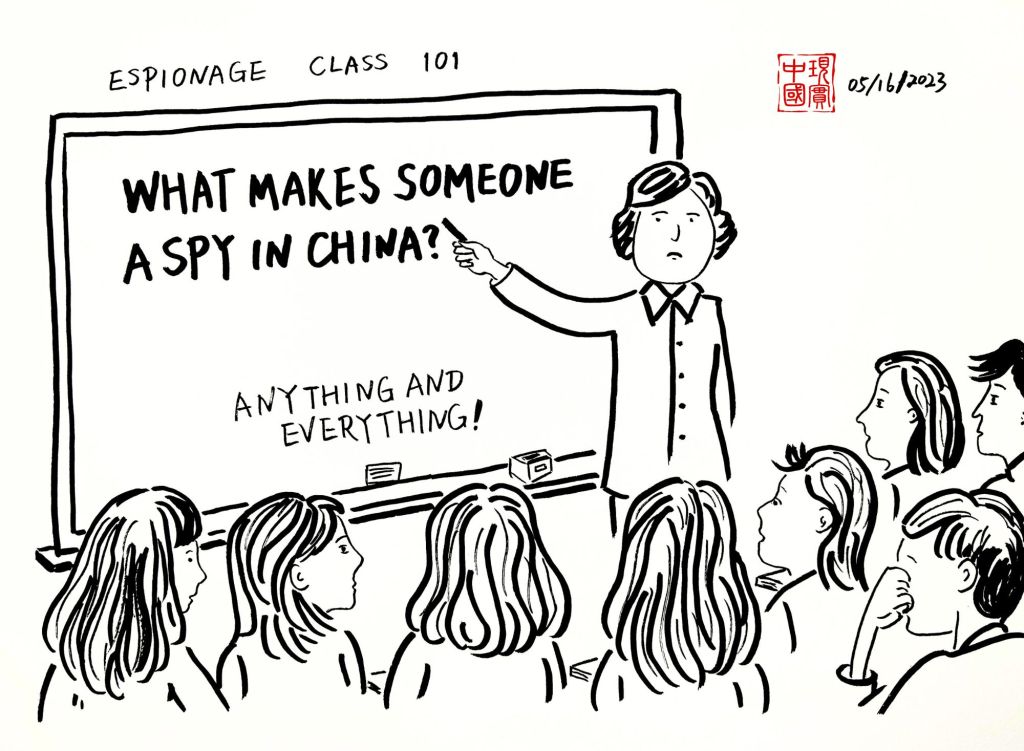
A Chinese court has sentenced a 78-year-old American citizen, Chengyun Liang, to life imprisonment on charges of espionage, according to a statement released on Monday. The specific details of the charges were not disclosed. This case is part of a broader crackdown by Chinese authorities on alleged espionage activities amid rising concerns over foreign influence.
The Suzhou Intermediate People’s Court announced the verdict in a brief statement, revealing that Liang was detained by national security officials on April 1, 2021. The court also ordered the confiscation of Liang’s personal property worth 500,000 Chinese Yuan (~USD 68,8000). Liang, who holds a U.S. passport and is a permanent resident of Hong Kong, faced charges in a trial that lacked transparency, as is typical for politically sensitive cases in China.
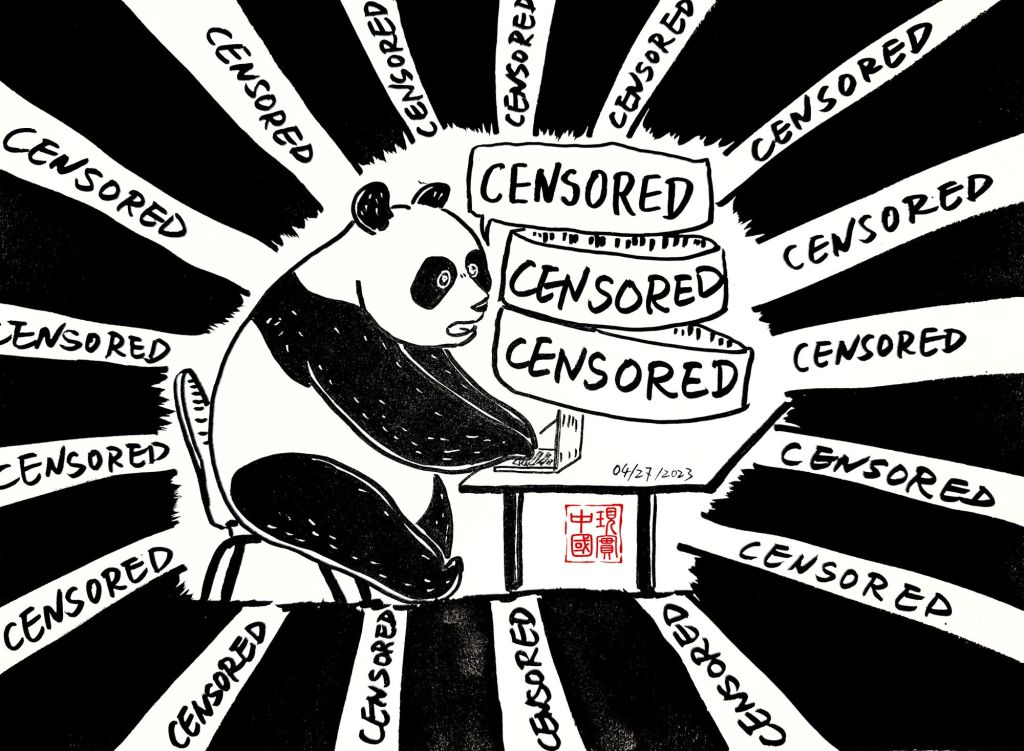
A recent report by the University of Toronto’s Citizen Lab reveals the extent of China’s internet censorship, identifying over 66,000 rules controlling search engine content.
Chinese search engines, including Bing, have developed algorithms to “hard censor” politically sensitive topics, either by providing no results or limiting them to government-approved sources. This makes censorship more pervasive and subtle, giving the illusion of normal search results.
Researchers examined eight platforms, including search engines like Baidu and social media sites like Weibo, finding that all are subject to strict legal restrictions. These platforms censor content related to crime, obscenity, and politically sensitive topics that might threaten the Communist Party’s rule.
Allowing foreign tech companies to operate in China does not mitigate censorship or human rights issues, as these companies must comply with China’s stringent laws.
Hideji Suzuki, a Japanese citizen, was sentenced to six years in prison in China for espionage charges and was recently released from prison.
He said the conviction stemmed from a dinner party where he did nothing more than try to chat with a Chinese scholar about North Korean issues.
Since 2015, 17 Japanese citizens have been detained on similar charges, with Suzuki being one of them and the only one to publicly speak about his experience.
While it is difficult to determine the exact number of foreigners imprisoned in China, Beijing seems to have detained an unusually high number of Japanese citizens on espionage charges. Suzuki, a former chairman of a Japan-China friendship organization, was arrested during a trip to China in 2016. Since his first visit to China in 1983, he had visited over 200 times. He said he made many friends among Chinese scholars and senior officials during these visits and even met former Premier Li Keqiang twice. He also taught university courses on China and translated books on the normalization of Sino-Japanese relations after World War II.
However, he said that as China’s vigilance towards foreigners increased, these relationships and experiences made him a suspect. He believes he became a target because the Chinese government is tightening control over academic research on China, leading to the arrest of nearly 20 professors who returned to China after working at Japanese universities.
Suzuki said he was preparing to fly home from Beijing when plainclothes men forcibly pushed him into a van. He was informally detained and interrogated for seven months. During that time, the lights in his room were never turned off, even when he was sleeping; the guards only let him see the sun once for 15 minutes, he said.
When Suzuki was finally tried, the trial was not public and lasted only two days: the charges were read on the first day, and the verdict was announced on the second day. Although he was allowed to appeal, his appeal was rejected.
Japanese analysts attribute the surge in arrests to new national security laws introduced by China in 2014 and 2015. These laws target those seen as foreign spies and their local collaborators, expanding the scope of espionage charges.
The espionage charges against Japanese citizens vary but often seem arbitrary. Chinese law defines what constitutes state secrets broadly, including some information considered harmless in other countries.
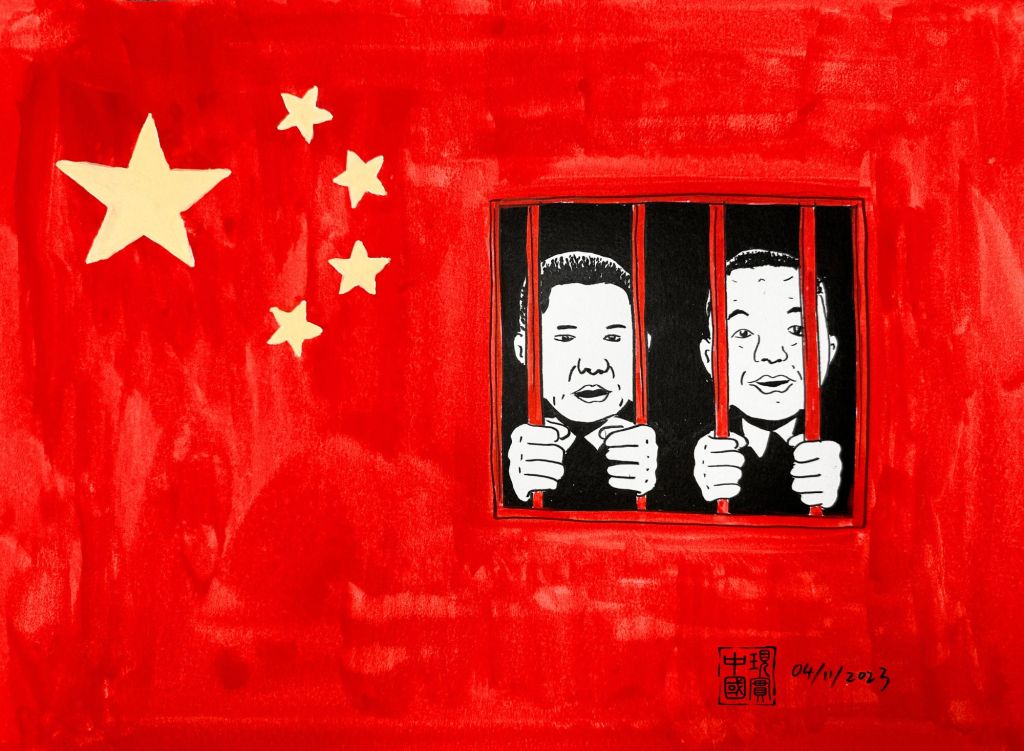
On Monday, two of China’s most prominent human rights lawyers were sentenced to 14 and 12 years in prison, respectively. These are the harshest sentences in such cases in recent years, indicating that the space for free expression has vanished under the leadership of President Xi Jinping. Lawyers Xu Zhiyong and Ding Jiaxi were convicted of subverting state power due to their advocacy for the so-called “New Citizens’ Movement,” which encourages ordinary Chinese citizens to exercise their constitutional rights to freedom of speech and other liberties, at least in theory. They were detained after organizing a gathering of about 20 lawyers and activists in the coastal city of Xiamen in 2019, where they discussed plans to achieve these goals and the future of China’s rights movement.
During his first decade as China’s top leader, Xi Jinping has effectively suppressed the remaining dissent. He has targeted not only activists but also business tycoons, intellectuals, and elite members of the party, with some receiving prison sentences of nearly 20 years. Xi has also expanded internet censorship and demanded loyalty from the media.
The trial was conducted in secret at a court in eastern Shandong province.
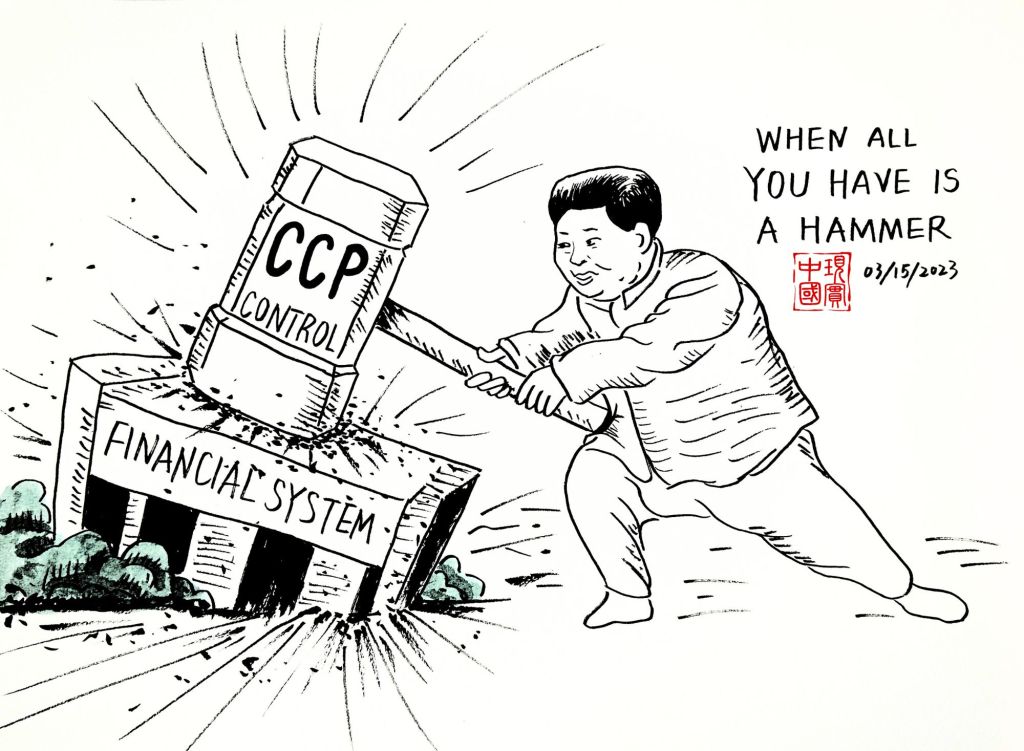
To a man with a hammer, everything looks like a nail. Now, as China faces economic slowdowns, a real estate crisis, and heavy local government debt, Xi is once again wielding his hammer.
At the recent National People’s Congress (NPC), Xi introduced sweeping reforms to China’s regulatory framework, giving the CCP more direct control over financial policy and banking regulation. In the coming days, Xi’s loyalists are expected to be appointed to key regulatory positions, further solidifying CCP’s grip on the financial system.
These reforms align with Xi’s approach over the past decade: centralizing power within the CCP. As China’s economic growth slows, ensuring the financial sector aligns with his vision is crucial. Xi needs bankers to allocate funds according to government directives, prevent capital from flowing abroad, and avoid excessive lending that could jeopardize the financial system.
Last month, China’s top anti-corruption body issued a stern warning to bankers about ignoring the CCP’s leadership in financial work. This warning hints at structural reforms in financial regulation. The establishment of the new National Financial Regulatory Administration to oversee China’s massive financial system marks a significant shift in governance.
Heads are already starting to roll. Bao Fan, a prominent investment banker and chief executive of China Renaissance Holdings, vanished last month. After initially saying that it was unable to contact Mr. Bao, China Renaissance said it had learned that the banker was cooperating with an investigation being carried out by certain Chinese authorities.
By tightening control over the financial sector, Xi is guiding China further away from the market-driven economy that fueled its rise, towards a model where the CCP has an unchallenged influence over all aspects of the economy.
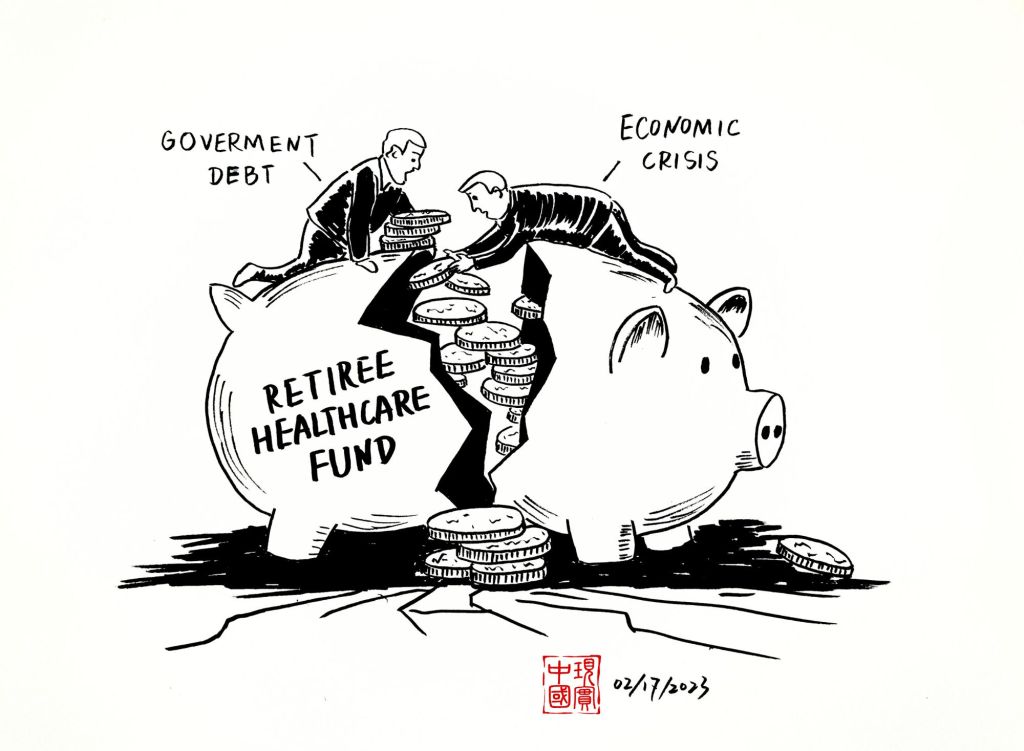
In a surprising turn of events, thousands of retirees in Wuhan gathered outside a well-known park to voice their frustration over recent cuts to their medical insurance. These senior citizens, facing significant changes to their healthcare benefits, took to the streets to confront local officials and police, highlighting the growing financial strain on China’s local governments.
The scene was a testament to the retirees’ determination: elderly citizens chanting revolutionary anthems like “The Internationale” while police set up barricades to manage the crowds. Despite efforts to disperse them, the retirees stood their ground, refusing to be silenced. One eyewitness described police detaining protestors, showing the intensity of the situation.
Local government officials in Wuhan assured the public that these reforms would ultimately lower personal medical expenses by shifting costs to collective funds. However, this means less money in individual accounts, raising concerns about financial security in old age. These changes are part of a broader strategy, but retirees are understandably worried about their future healthcare finances.
With the real estate market in decline and local governments facing financial challenges, the retirees’ protest underscores the growing social tensions in China. Their demand for fair healthcare benefits is a poignant reminder of the struggles many face in their golden years. And if their demands aren’t met, they’ve already vowed to return next week, showcasing their unwavering spirit and determination.
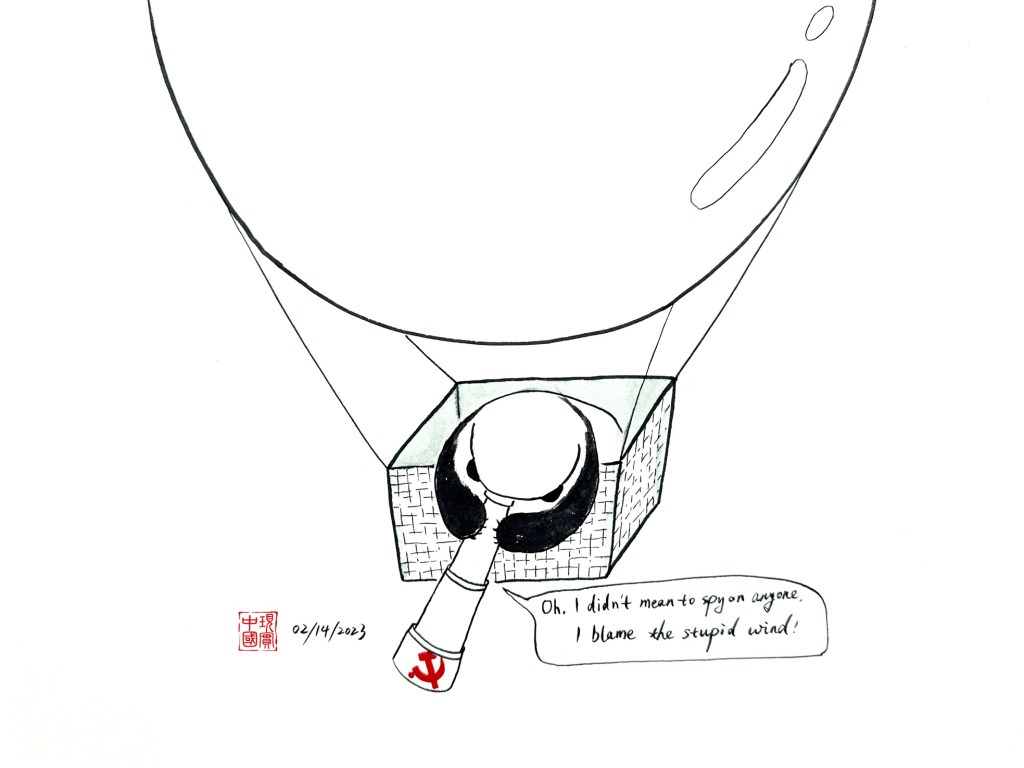
From January 28 to February 4, 2023, a Chinese-operated high-altitude balloon was seen in North American airspace. On Feb 4, it was shot down by U.S. Air Force.
The U. S. government said that balloon carried antennas and other equipment clearly for intelligence surveillance, yet Chinese government insisted it was a civilian meteorological research airship that had blown off course.
Over the past weekend, four more unidentified objects were spotted U.S. and Canadian airspace and were shot down as well. Whether they’re also operated by China is unclear so far.
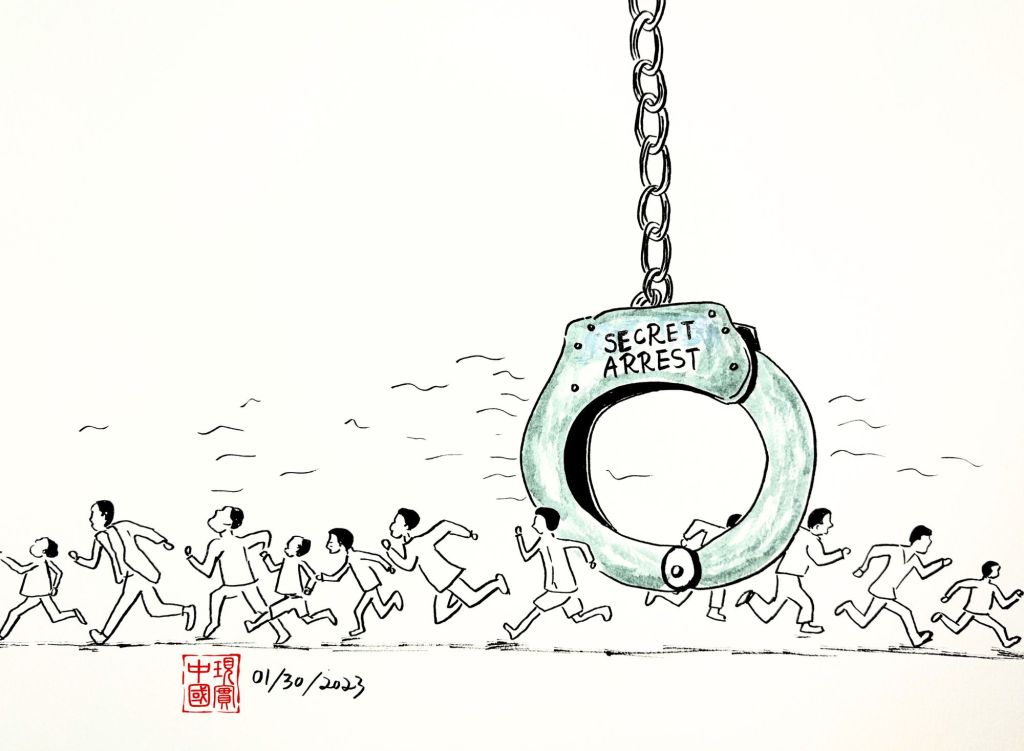
In late November 2022, Beijing saw rare protests against the strict “zero-COVID” policy. The Chinese Communist Party (CCP) quickly responded with its usual tactic of silencing dissent through secret arrests and intimidation, all while attempting to discredit protesters by alleging foreign influence.
The first to be detained were a finance firm employee, a freelance writer, a teacher with a degree in British literature, and an editor at a Beijing publishing house. These four women, friends who shared interests in social issues like feminism and LGBTQ rights, participated in the November protests and were swiftly arrested.
These arrests are part of a broader strategy by the CCP to intimidate and warn those who might be inspired by the recent surge of public discontent. The protests posed a significant challenge to the CCP’s rule and embarrassed President Xi Jinping.
Despite the government’s efforts to keep these actions under wraps, news of the arrests has spread among those involved in the protests. The CCP has avoided officially announcing these arrests to prevent further public outrage but has ensured that the message is clear: even peaceful expression of dissent will not be tolerated, and those who challenge the government face severe personal risks.
The Beijing protests began as a vigil for victims of a deadly fire in Xinjiang, which many blamed on the restrictive “zero-COVID” measures. While initial police response during the protests was relatively restrained, it soon escalated. In the following days, police summoned or visited demonstrators, questioning their participation and connections.
One of the detained women, Cao Zhixin, recorded a video before her arrest, expressing her belief in the right to express opinions even in China. Her case, along with the other three women, has highlighted the personal risks of challenging the government.
Authorities have accused these women of using foreign communication platforms and participating in feminist activities, framing their actions as influenced by foreign forces. The charge of “picking quarrels and provoking trouble,” a vague but commonly used accusation, carries a potential five-year prison sentence.
The CCP’s crackdown on these protesters serves as a stark reminder of the risks of dissent in China. The government’s actions aim to ensure that the recent wave of protests does not inspire further public outcry, using fear and repression to maintain control.
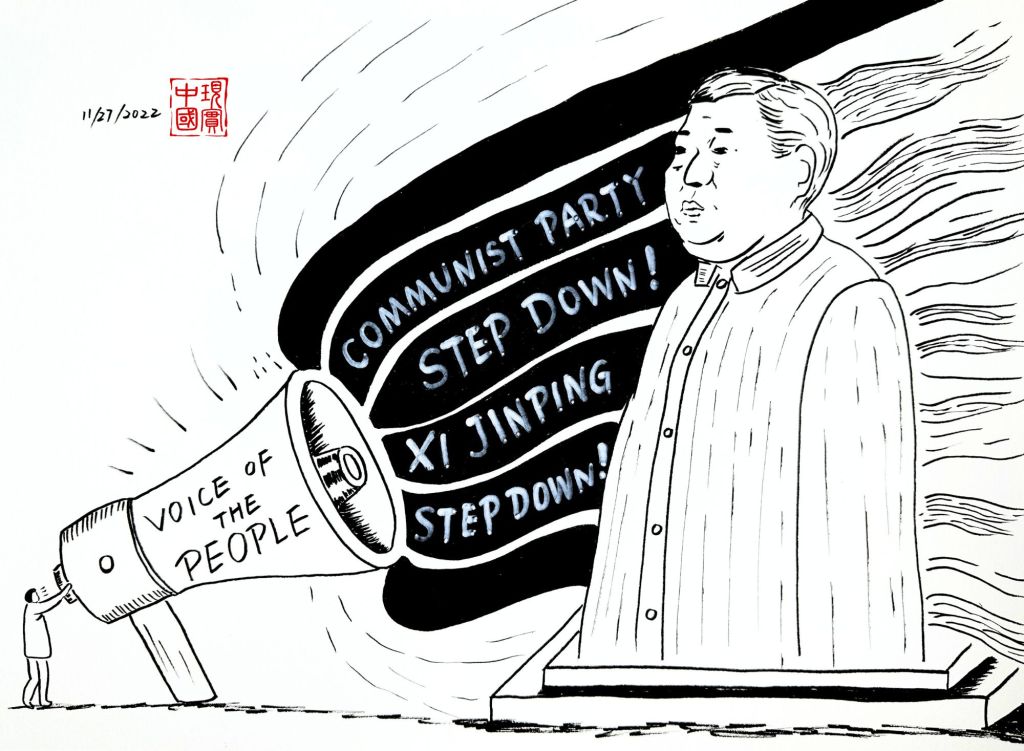
During the spring and summer lockdowns in Shanghai, a young couple refused to go to a quarantine center. When a health worker threatened that it would affect their family for three generations, the young man replied, “We are the last generation.” This statement was seen as an expression of despair. Now, Shanghai’s youth are chanting “We want freedom, we want human rights,” and “Xi Jinping step down, Communist Party step down.” This transformation of grievances into political demands is rare since the 1989 Tiananmen Square protests. The harsh zero-COVID policy of Xi Jinping’s regime has accelerated public resistance.
On November 24, a deadly fire in Urumqi trapped and killed over ten people in their homes. Fire trucks couldn’t get close to the building to extinguish the fire, fueling anger over the zero-COVID policy. The tragedy in Urumqi sparked nationwide protests, led by the youth. In Lanzhou, people overturned COVID testing vehicles, and Nanjing Communication University students gathered to support Xinjiang. The most prominent scene occurred in Shanghai, the economic hub devastated by the lockdown. Videos show that on the night of November 26, predominantly young people gathered on Urumqi Street, laying flowers and candles to mourn the victims. The police confronted them, leading to a standoff. When the police tried to disperse the crowd, the protesters sang “The March of the Volunteers,” China’s national anthem, and chanted “Communist Party, step down! Xi Jinping, step down!”
This scene was unprecedented in China, where anti-government street protests are extremely rare. Despite Xi Jinping reaching the peak of his power at the recent 20th Party Congress, where he eliminated all internal opposition and secured a third term, the Shanghai people demanded his resignation.
The police eventually cleared the area, and videos show people protecting each other and rescuing fellow protesters. Photos shared by the Associated Press show a bus taking away a group of protesters. Although dispersed, their calls for “human rights, freedom” were echoed by students at Peking University and Tsinghua University. In Beijing, protesters at Liangmaqiao chanted slogans in support of Shanghai, and on Sunday, Shanghai residents returned to protest again.
Many wonder why, in such a large country with so many people, there has been compliance with a scientifically unfounded policy solely to satisfy the leader’s will. The answer is fear. Numerous tragedies have occurred this year alone: a nurse in Shanghai was denied emergency treatment at her own hospital, a three-year-old child in Lanzhou died of gas poisoning because his family couldn’t take him to the hospital, and two young women in Guangdong were publicly humiliated for not wearing masks. However, more and more people are refusing to be slaves. The “Superman” hero of Chongqing famously declared, “We have neither freedom nor wealth. We are still struggling with a mild illness.”
In September, a quarantine bus accident in Guizhou killed 27 people, prompting the cry, “We are all on that bus.” The Urumqi fire, which killed ten people, made many realize they could no longer “sit on the train of enslavement.” Three years of violent zero-COVID policies have led to economic decline and hardship. Many migrant workers are homeless, small businesses bankrupt, and youths have wasted their prime years, suffering humiliation and abuse from health workers.
Observers believe the Chinese people are aware of who is behind the cruel zero-COVID policies. By calling for the Communist Party and Xi Jinping to step down, Shanghai residents have shown their intolerable anger towards tyranny. Protests for human rights and freedom are common in most countries, even in autocratic ones like Russia and Iran. However, in China, these actions come with severe consequences, as evidenced by the continuous arrests by the police.
Shanghai’s protests were not isolated, as videos showed solidarity demonstrations in dozens of cities across China on Sunday. In Chengdu, people gathered on Wangping Street and chanted slogans against dictatorship and lifelong rule. Across many places in China, protesters held up blank sheets of paper in silent protest. Some said, “This is our generation’s revolution. We insist on saying what they forbid, insisting on freedom, dignity, and a China that belongs to us!” The blank paper has thus become a symbol of resistance against tyranny.

 The Truth Of China