
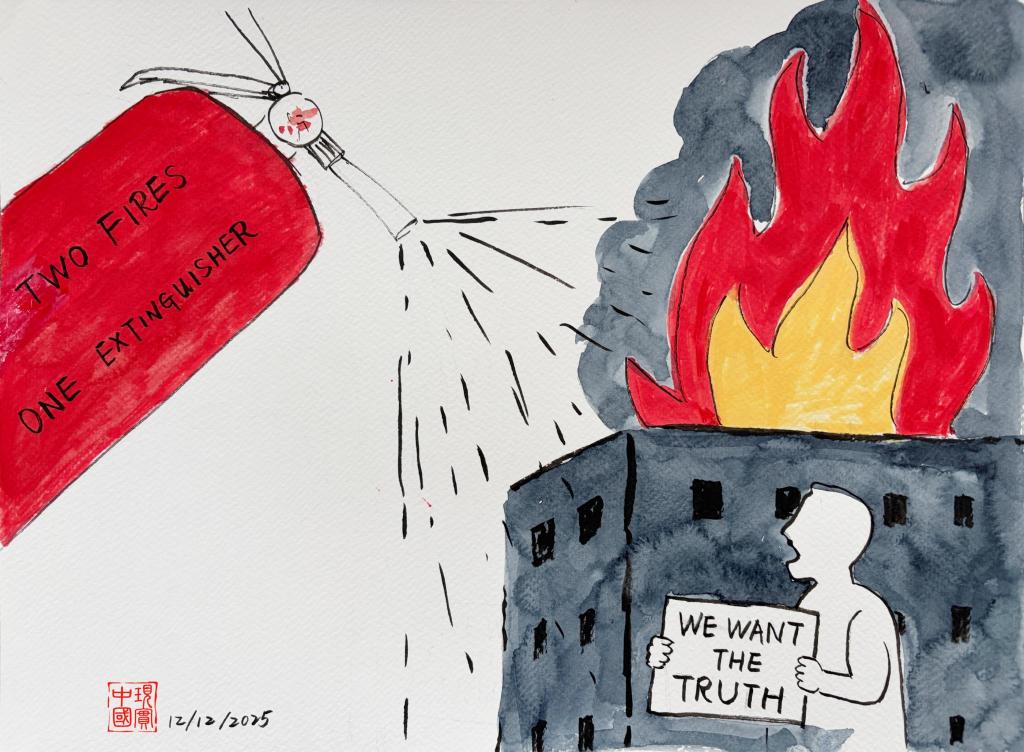
On November 26, 2025, a five-alarm fire tore through Hong Kong’s Tai Po estate, MacPherson Court (Hung Fuk Estate), engulfing seven residential blocks. At least 160 people died, dozens were injured, and the city was left in shock. The physical fire burned for more than 43 hours. Another fire — political and institutional — was extinguished far more quickly.
As residents mourned and volunteers mobilized aid, some asked uncomfortable but reasonable questions: Why were flammable materials used? Why did the fire spread so fast? Could this tragedy have been prevented? The official response focused less on answers than on control. Calls for independent investigation, leaflets, and online criticism were treated as security risks.
This is where the second fire appeared. Shared grief, if allowed to gather, can become shared accountability. For the authorities, that possibility was more dangerous than the blaze itself. One extinguisher was deployed for both fires: a national security mindset designed to smother not only unrest, but also collective mourning.
 The Truth Of China