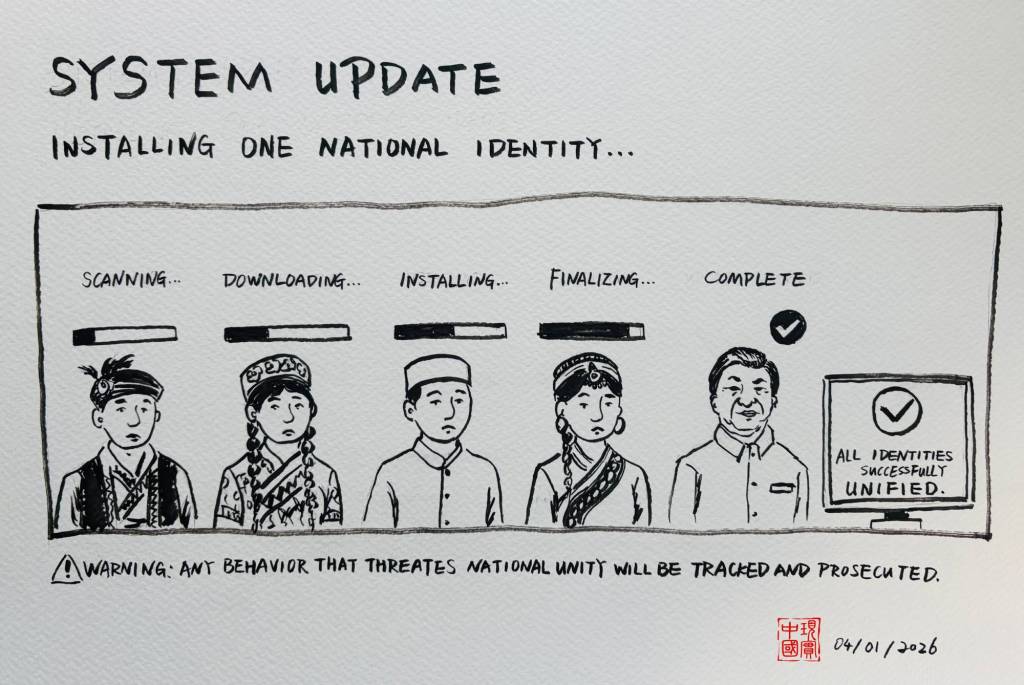
China has formally codified its long-running campaign to reshape ethnic identity into law, marking a major step in President Xi Jinping’s push for a unified national consciousness.
The new “ethnic unity” legislation was passed by China’s national legislature on March 12, 2026, and will take effect on July 1, 2026. It makes promoting national unity a responsibility of all levels of society, including government agencies, businesses, schools, and families.
The law reflects Xi’s broader goal of strengthening a single Chinese identity centered on loyalty to the Communist Party. It spans education, housing, media, and public life. It requires Mandarin Chinese to be the primary language of instruction in schools and official communication, and directs authorities to guide citizens toward “correct views” on history, culture, and religion.
Parents are also instructed to raise children to “love the Communist Party,” while ethnic and religious objections to marriage are prohibited.
Although Beijing says the law protects China’s 56 officially recognized ethnic groups, critics argue it accelerates assimilation into Han cultural norms. The policy builds on earlier restrictions in regions such as Xinjiang and Tibet, where language and cultural autonomy have already been significantly reduced.
Scholars say the legislation formalizes years of policy shifts aimed at strengthening national cohesion, but at the cost of cultural and linguistic diversity. Human rights researchers also warn it expands the state’s authority to pursue individuals abroad deemed to threaten national unity, reflecting a broader trend of transnational repression.