Hong Kong’s National Security Trial: A Turning Point in Democratic Dissent

In a landmark ruling on Thursday, a Hong Kong court sentenced dozens of prominent democracy activists and leaders to potential life imprisonment, marking a severe crackdown under Beijing’s imposed national security law. The charges stem from organizing primary elections to enhance their chances in city-wide elections, deemed by authorities as a conspiracy to subvert state power.

Among the convicted are figures like legal scholar Benny Tai and protest leader Joshua Wong, whose activism symbolized Hong Kong’s vibrant political landscape. The verdict underscores Beijing’s use of broad powers to suppress dissent, turning these activists into political prisoners, some of whom were lawmakers since Hong Kong’s handover to China in 1997.

Most of the defendants have spent at least the last three years in detention ahead of and during the 118-day trial. It highlight a fundamental shift in Hong Kong’s political environment, where even mild opposition activities are no longer tolerated. Critics argue that the government’s prosecution of nonviolent electoral preparations undermines the city’s once-celebrated judicial independence and freedom of elections.

As Hong Kong faces its most significant political challenge in decades, international observers view these trials as a litmus test for Hong Kong’s judicial independence and fear a chilling effect on free speech and dissent.
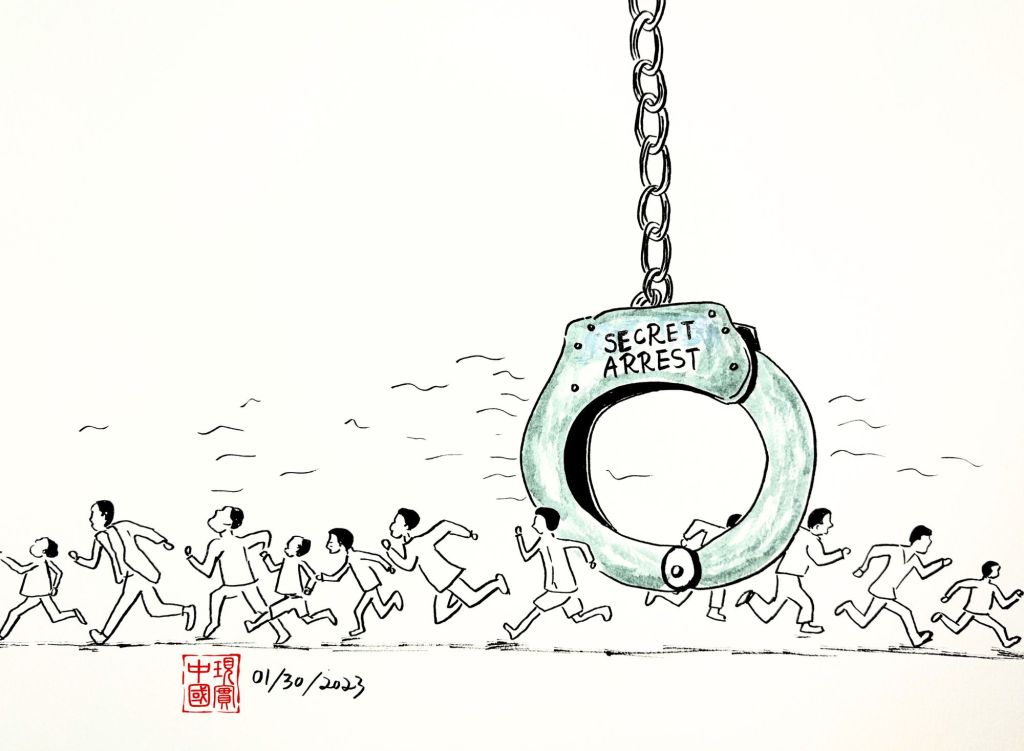
The Chinese Government’s Silent Crackdown on White Paper Movement Protesters

In late November 2022, Beijing saw rare protests against the strict “zero-COVID” policy. The Chinese Communist Party (CCP) quickly responded with its usual tactic of silencing dissent through secret arrests and intimidation, all while attempting to discredit protesters by alleging foreign influence.

The first to be detained were a finance firm employee, a freelance writer, a teacher with a degree in British literature, and an editor at a Beijing publishing house. These four women, friends who shared interests in social issues like feminism and LGBTQ rights, participated in the November protests and were swiftly arrested.

These arrests are part of a broader strategy by the CCP to intimidate and warn those who might be inspired by the recent surge of public discontent. The protests posed a significant challenge to the CCP’s rule and embarrassed President Xi Jinping.

Despite the government’s efforts to keep these actions under wraps, news of the arrests has spread among those involved in the protests. The CCP has avoided officially announcing these arrests to prevent further public outrage but has ensured that the message is clear: even peaceful expression of dissent will not be tolerated, and those who challenge the government face severe personal risks.

The Beijing protests began as a vigil for victims of a deadly fire in Xinjiang, which many blamed on the restrictive “zero-COVID” measures. While initial police response during the protests was relatively restrained, it soon escalated. In the following days, police summoned or visited demonstrators, questioning their participation and connections.

One of the detained women, Cao Zhixin, recorded a video before her arrest, expressing her belief in the right to express opinions even in China. Her case, along with the other three women, has highlighted the personal risks of challenging the government.

Authorities have accused these women of using foreign communication platforms and participating in feminist activities, framing their actions as influenced by foreign forces. The charge of “picking quarrels and provoking trouble,” a vague but commonly used accusation, carries a potential five-year prison sentence.

The CCP’s crackdown on these protesters serves as a stark reminder of the risks of dissent in China. The government’s actions aim to ensure that the recent wave of protests does not inspire further public outcry, using fear and repression to maintain control.

点此查看相关中文报道