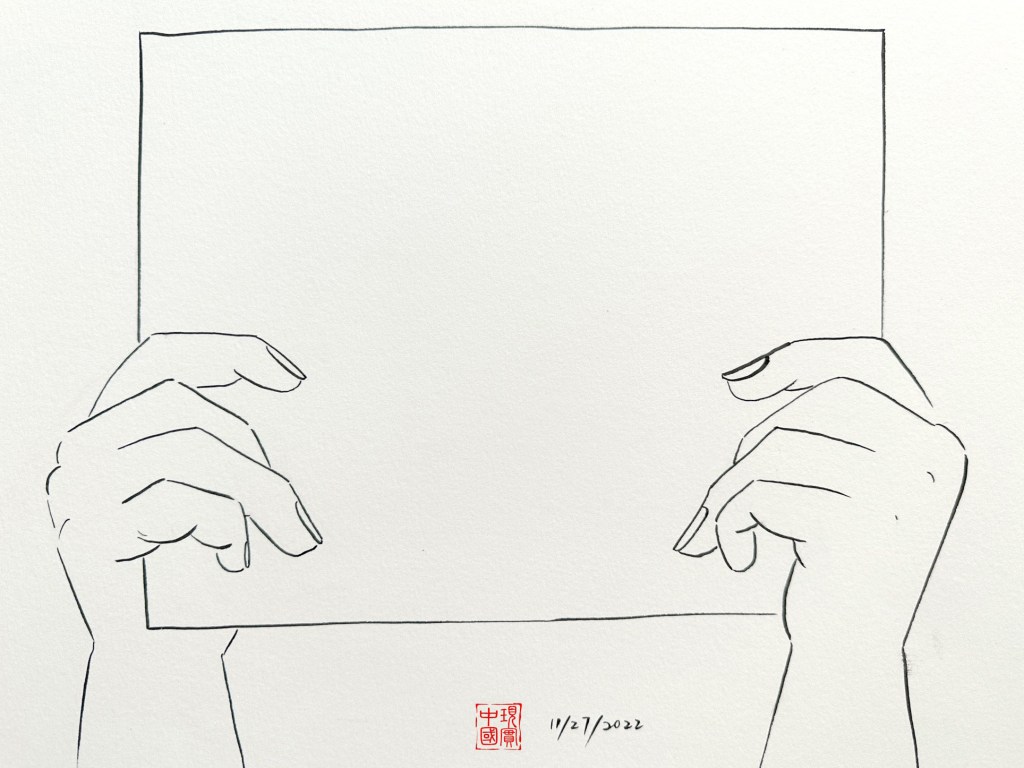
Blank paper speaks louder than a thousand words

Blank-paper Protest

On November 24th, at least 10 people died in a high-rise fire in Urumqi, the regional capital of Xinjiang. It was widely believed that Covid restrictions prevented the victims from escaping.

As China’s harsh Covid rules extend into the third year, frustration and desperation with lockdowns, quarantines and mass testings that have upended everyday life, have caused anger and defiance across china. This fire in Urumqi has pushed people’s anger even deeper. For the past a few days, demonstrators appeared in cities and on college campuses, most of them holding a blank sheet of A4 paper, a symbol of protest against Covid policies or even denouncing the Communist Party and its leader, Xi Jinping.

There is definitely nothing on the paper, but we know what’s on there. Leaving things unsaid, a sheet of blank paper expresses even more than words can do. It represents everything we want to say but cannot say.
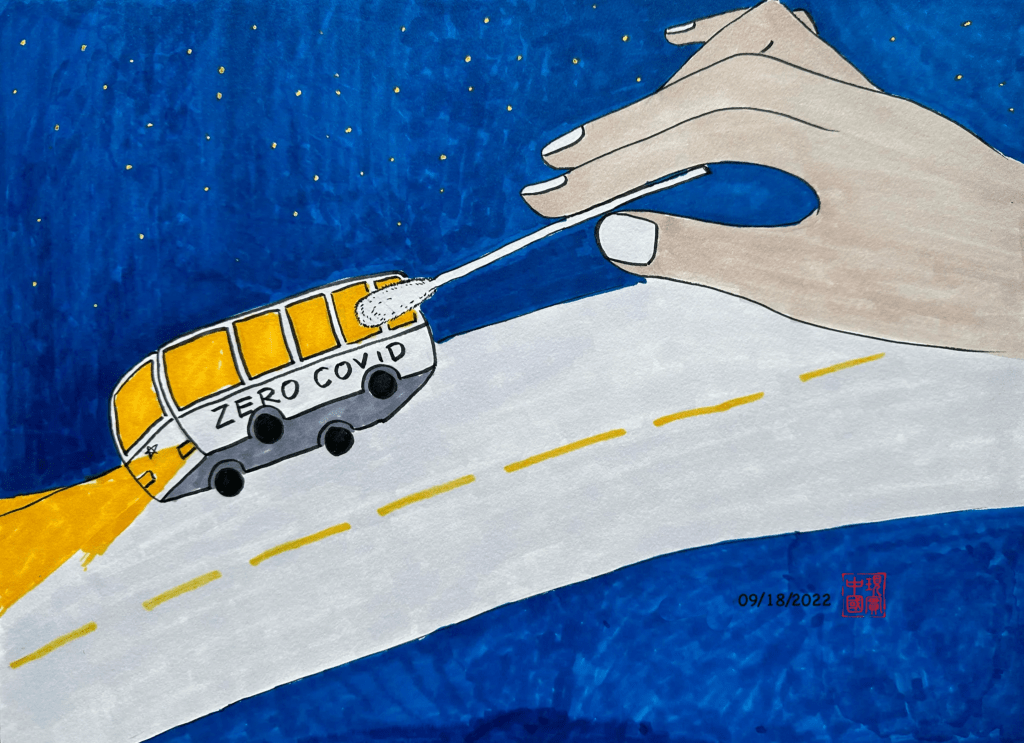
The Bus to Hell

The Bus to Hell

A bus transporting 47 people from the city of Guiyang to a quarantine facility rolled over around 2:40 am on September 18th, killing at least 27 of them.
While the rest of the world moves toward living with the virus, China still have mass quarantines lockdowns under its “Zero Covid” policy which ordinary Chinese people are powerless to resist.
Angry comments and large outpourings of public grief were censored.

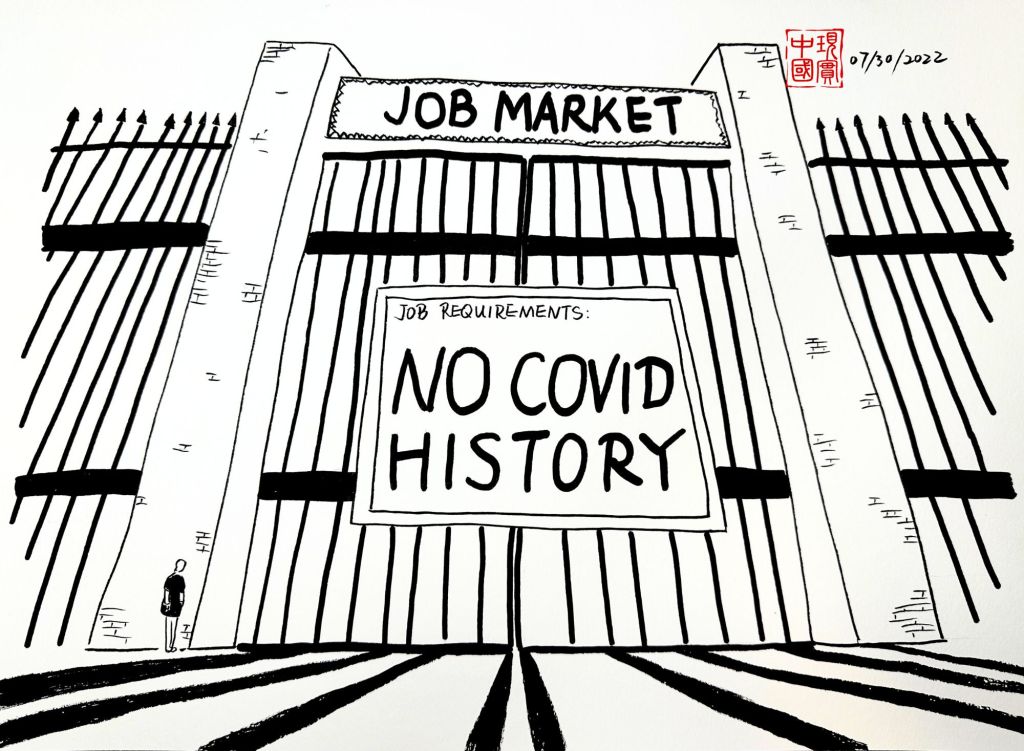
China COVID Survivors Face Discrimination in Job Market

In the aftermath of the COVID-19 pandemic, various discriminatory practices have emerged worldwide, but few are as stark as the “No COVID History” policies seen in China. In a bid to control the spread of COVID-19, some institutions in China have implemented a policy requiring individuals to have no history of COVID-19 infection.

The widespread implementation of the “No COVID History” policy has resulted in mass discrimination in job market, especially within industries such as the service sector in Shanghai. This means that even those who have recovered from the virus are denied employment opportunities. Many recovered patients find themselves in a precarious position, unable to secure basic employment despite being otherwise qualified.

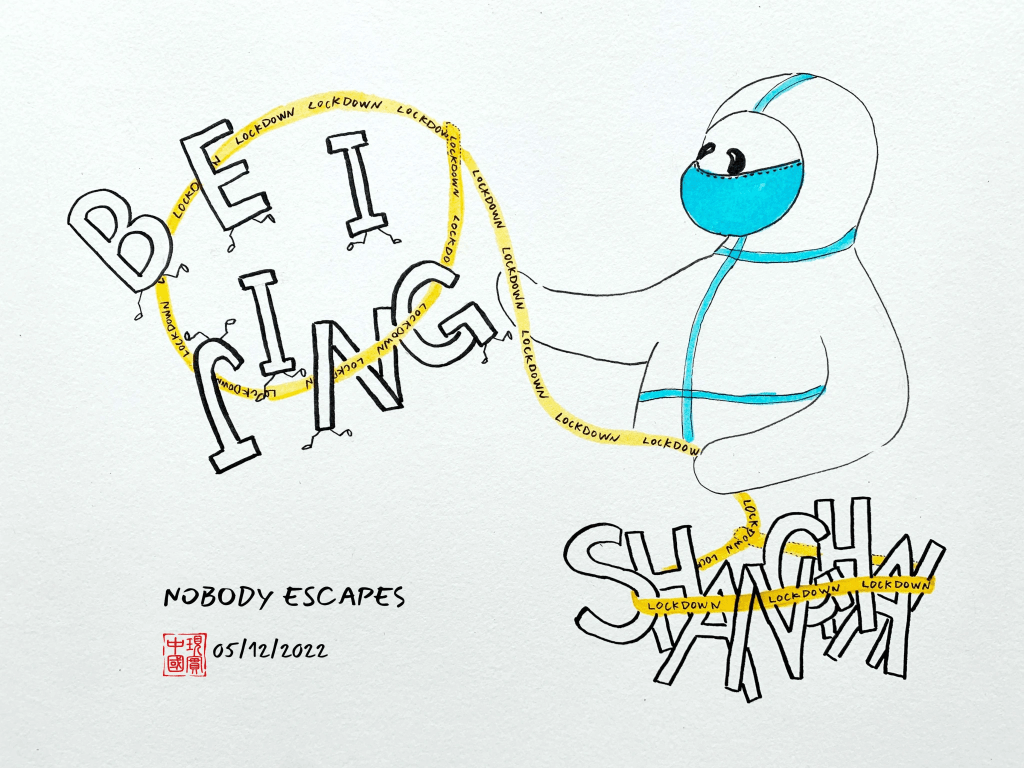
Nobody Escapes-China bans on “unnecessary” overseas travel

Nobody Escapes

China has stopped renewing passports and issuing new ones to Chinese citizens since July 30, 2021. However, that’s not enough for the government to crack down on people escaping the country. Today China just announced it will strict limit unnecessary overseas travel for Chinese citizens to prevent the virus being brought into the country.

“Don’t go out unless necessary, don’t leave the country unless necessary, don’t be born unless necessary,” one popular comment in reaction to the news on Weibo, a Chinese social media like Twitter.

While witnessing the chaos and dysfunction in the lockdown of Shanghai, fears rise over new government-enforced lockdowns — especially in the capital Beijing, where Covid cases are rising.

Today’s announcement of travel ban extinguished the hope to escape for those who still hold valid passports.

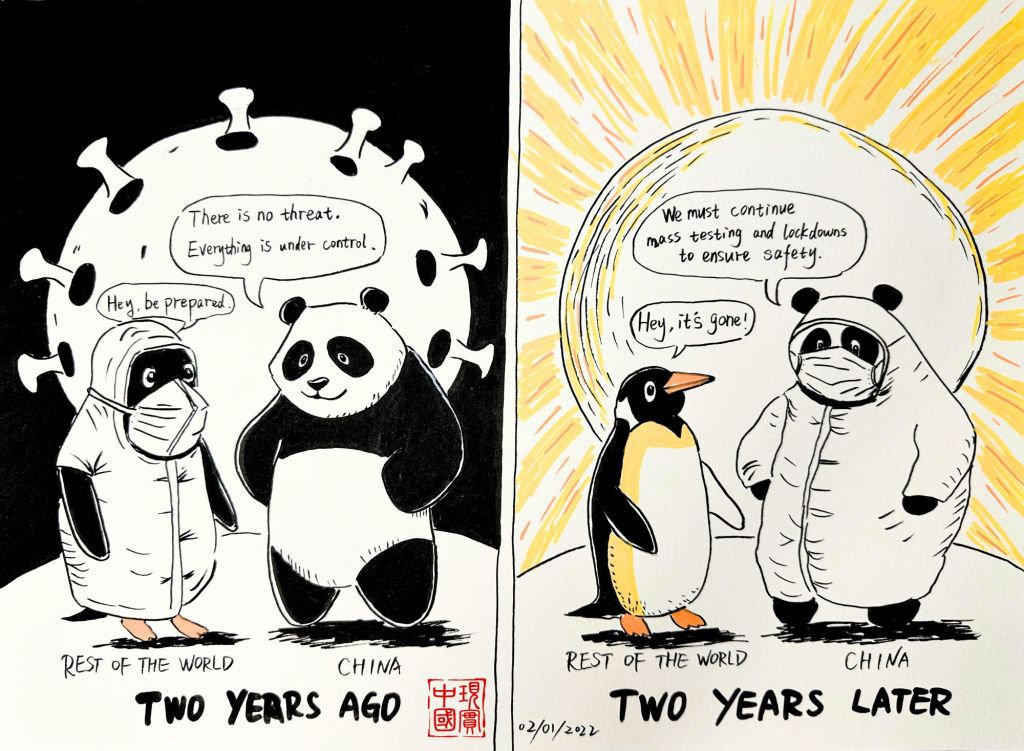
Two Years Ago, You Denied Its Arrival; Two Years Later, You Deny Its Departure

Two Years of Covid-19

I wish I could say “Happy New Year” to my friends in China, but I know they’re not happy under the oppressive regime of mass testing and forced quarantine that keeps them from being together with their families. It’s hard to believe it’s been two years since Wuhan was first locked down on January 23, 2020, just two days before the Chinese New Year. Yet, most of China remains under stringent restrictions.

In the early days of COVID-19, when the world was grappling with the unknowns of a mysterious pneumonia, the Chinese government stood firm in its denial. The virus, according to official statements, was under control, posing no significant threat. Yet, the world watched as the truth seeped through the cracks of censorship, revealing a different, grimmer reality.

Fast forward two years. While most countries have moved past stringent lockdowns, eased social distancing, and lifted mask mandates, China remains an outlier. The once rigid zero-COVID policy has evolved into a relentless regime of mass testing and forced quarantines. The irony is palpable: the same government that initially downplayed the virus now clings to extreme measures, unwilling to acknowledge the global shift towards coexistence with COVID-19.

This persistence in denial, both at the onset and now, illustrates a troubling pattern. It’s a testament to a government’s refusal to adapt, to admit mistakes, or to change course. As the rest of the world breathes a cautious sigh of relief, China’s citizens are left suffocating under a blanket of outdated policies and endless PCR tests.

Two years ago, the virus’s arrival was denied. Two years later, its departure is met with the same resistance. The tragedy lies not only in the missteps but in the stubborn refusal to learn from them.

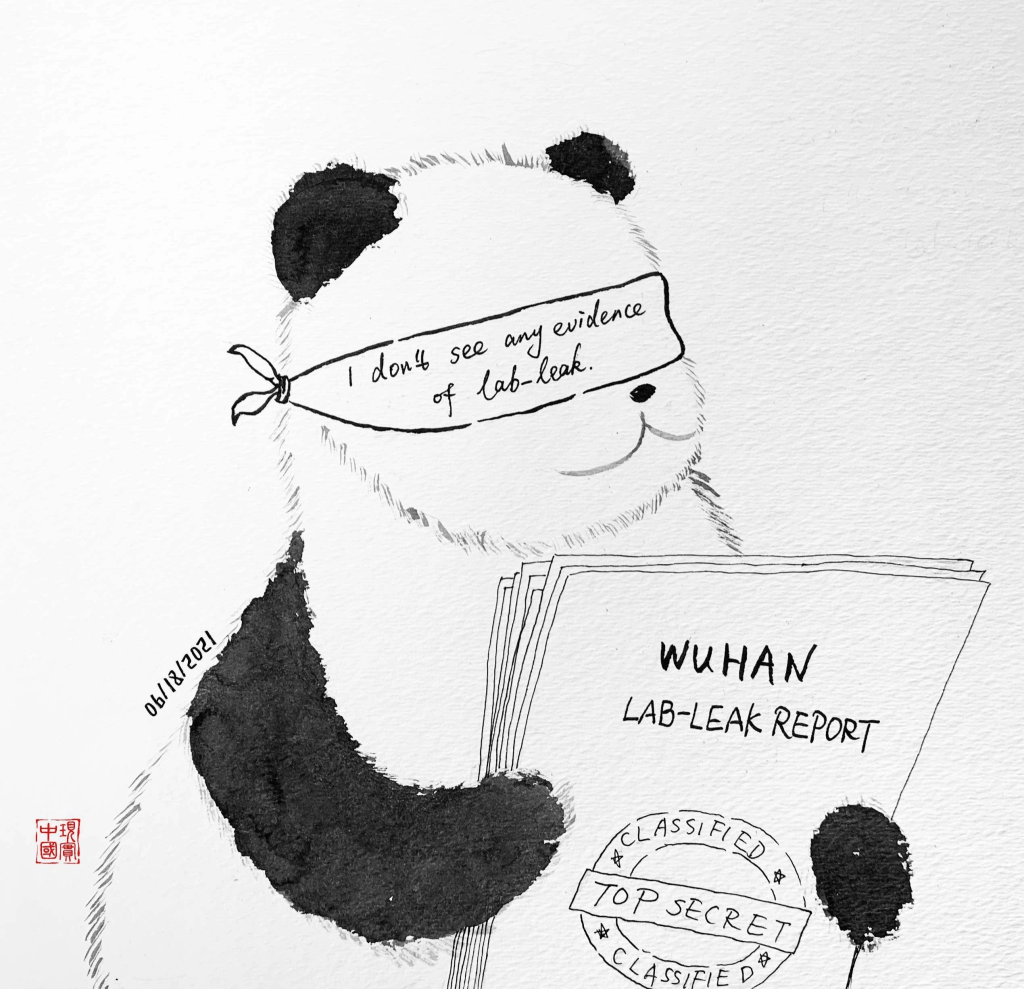
Cartoon: I don’t see any evidence of lab-leak

I don’t see any evidence of lab-leak

The debate over the origin of COVID-19 is now burning hot, with increasing demand for an international investigation into the possibility of a lab leak. However, a top scientist at the Wuhan Institute of Virology denied and told the New York Times there is no evidence, “I don’t know how the world has come to this, constantly pouring filth on an innocent scientist”.