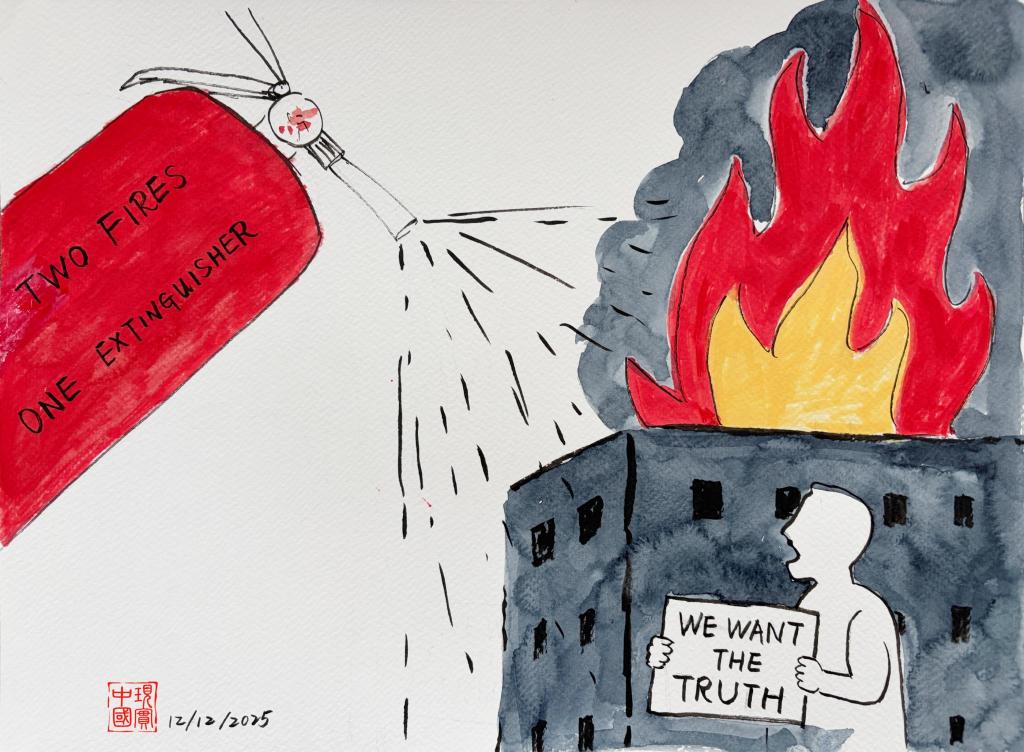
Two Fires, One Extinguisher

On November 26, 2025, a five-alarm fire tore through Hong Kong’s Tai Po estate, MacPherson Court (Hung Fuk Estate), engulfing seven residential blocks. At least 160 people died, dozens were injured, and the city was left in shock. The physical fire burned for more than 43 hours. Another fire — political and institutional — was extinguished far more quickly.

As residents mourned and volunteers mobilized aid, some asked uncomfortable but reasonable questions: Why were flammable materials used? Why did the fire spread so fast? Could this tragedy have been prevented? The official response focused less on answers than on control. Calls for independent investigation, leaflets, and online criticism were treated as security risks.

This is where the second fire appeared. Shared grief, if allowed to gather, can become shared accountability. For the authorities, that possibility was more dangerous than the blaze itself. One extinguisher was deployed for both fires: a national security mindset designed to smother not only unrest, but also collective mourning.
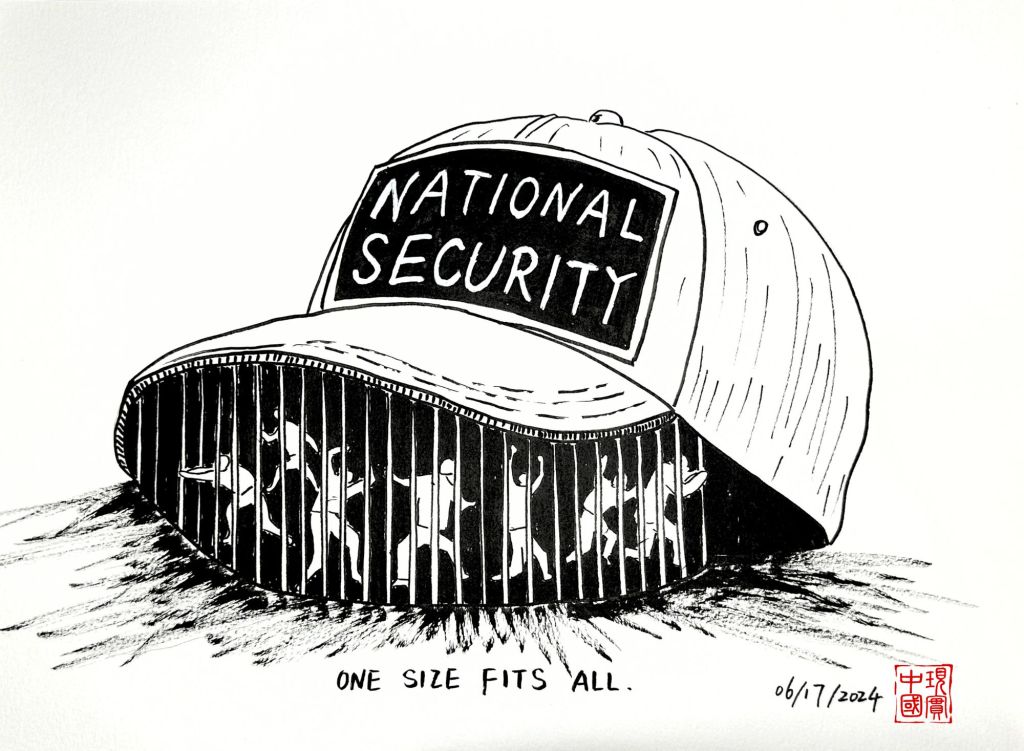
Click Here for detailed reports.

Verdict Against Chinese Activists Empowering #MeToo Voices

On Friday, a court in southern China sentenced prominent feminist journalist Huang Xueqin to five years in prison for inciting subversion of state power, marking Beijing’s latest crackdown on civil society. Labor activist Wang Jianbing received a three-year, six-month sentence on the same charge. Their activities leading to arrest and conviction included organizing discussions, supporting other activists, and receiving overseas training. Experts note the severity of these legal actions, even by Chinese standards, signaling a shrinking space for independent social discourse. Huang, once a vocal figure in China’s #MeToo movement and later a writer on Hong Kong protests, and Wang, an advocate for worker and disability rights, faced prolonged detention before a brief trial last September. Critics argue these cases reflect broader suppression of topics like women’s and workers’ rights under increasingly expansive interpretations of “threats to public order.”

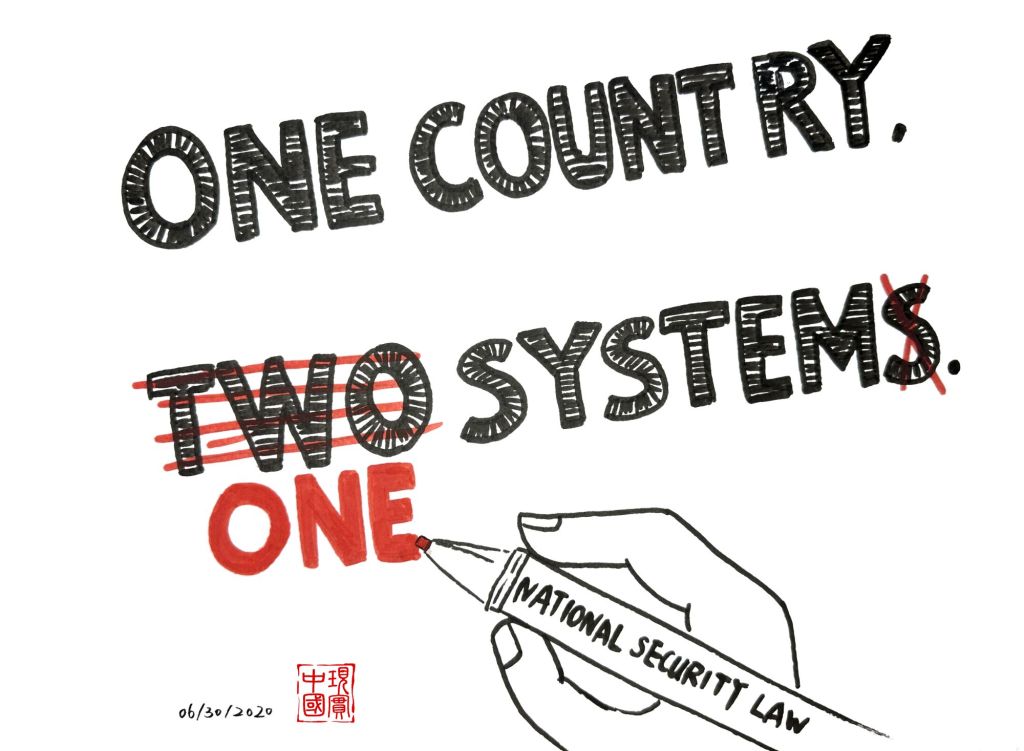
One Country, One System

On June 30, 2020, the Standing Committee of the National People’s Congress of China passed and implemented the “Law of the People’s Republic of China on Safeguarding National Security in the Hong Kong Special Administrative Region,” commonly referred to as the Hong Kong National Security Law (NSL). The introduction of this law in Hong Kong has sparked intense controversy, as it is widely seen as a severe breach of the “one country, two systems” principle that was meant to guarantee Hong Kong’s high degree of autonomy and its own legal system for 50 years following the 1997 handover.

The implementation of the Hong Kong National Security Law marks a significant turning point in the city’s history, raising profound concerns about the future of its freedoms, autonomy, and the rule of law.