The Expansion of Surveillance in Chinese Communities

In a Beijing police station, walls are covered with papers, each representing a building in a large residential area. These papers list residents’ names, phone numbers, and other details, with color codes indicating their risk levels. Green means safe, yellow means to be watched, and orange signifies strict monitoring. A police officer marked a third-floor apartment in yellow, noting its high turnover and labeling it as “high risk” for follow-up.

This meticulous surveillance is a cornerstone of Xi Jinping’s grassroots governance strategy: more visible, invasive, and vigilant against real or perceived threats. Police officers immerse themselves in communities, understanding neighborhood disputes and recruiting retirees as extra eyes and ears. Employers are required to appoint “security advisors” to report regularly to the police.

Historically, the Chinese Communist Party (CCP) has implemented extensive surveillance on activists and dissenters. During the COVID-19 pandemic, this surveillance expanded to track nearly every urban resident. Xi Jinping aims to make this control permanent, embedding the Party deeply into daily life to prevent any disruptions, no matter how minor or non-political.

This approach, known as the “New Era Fengqiao Experience,” revives a method from Mao’s era where citizens were mobilized to publicly shame and control class enemies. Xi frequently references Fengqiao to highlight the Party’s commitment to addressing people’s needs, despite suppressing free speech and dissent.

This strategy aims to strengthen Beijing’s ability to quash dissent amid growing economic challenges and social unrest, solidifying the Party’s control and extending its reach into every aspect of citizens’ lives.
The Chinese Government’s Silent Crackdown on White Paper Movement Protesters

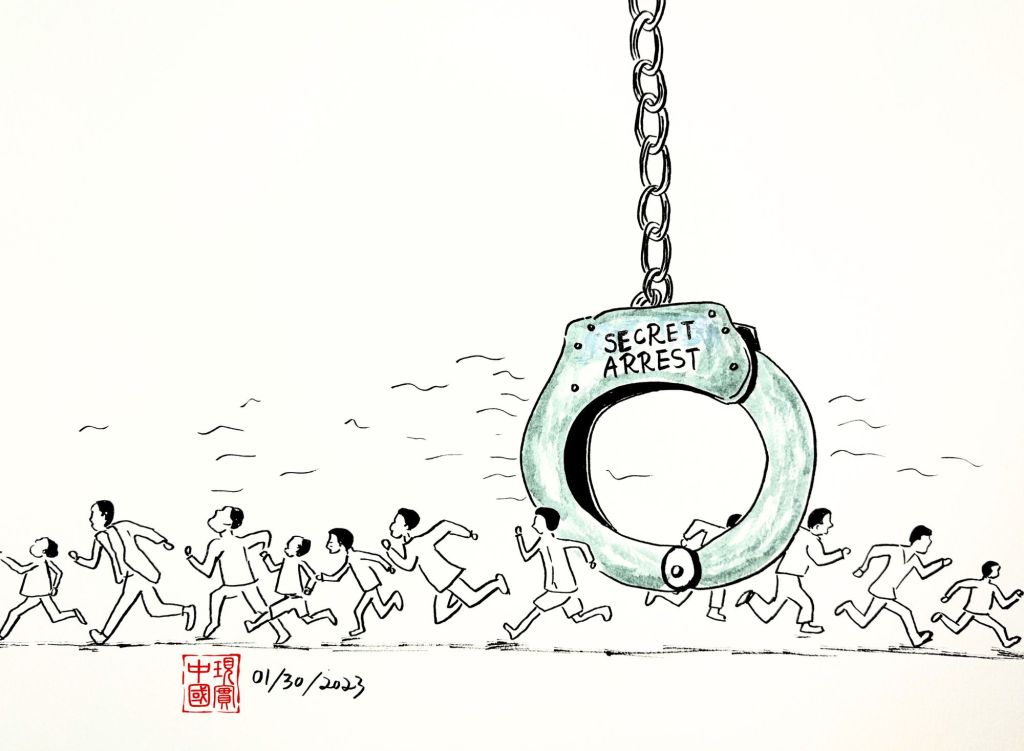
In late November 2022, Beijing saw rare protests against the strict “zero-COVID” policy. The Chinese Communist Party (CCP) quickly responded with its usual tactic of silencing dissent through secret arrests and intimidation, all while attempting to discredit protesters by alleging foreign influence.

The first to be detained were a finance firm employee, a freelance writer, a teacher with a degree in British literature, and an editor at a Beijing publishing house. These four women, friends who shared interests in social issues like feminism and LGBTQ rights, participated in the November protests and were swiftly arrested.

These arrests are part of a broader strategy by the CCP to intimidate and warn those who might be inspired by the recent surge of public discontent. The protests posed a significant challenge to the CCP’s rule and embarrassed President Xi Jinping.

Despite the government’s efforts to keep these actions under wraps, news of the arrests has spread among those involved in the protests. The CCP has avoided officially announcing these arrests to prevent further public outrage but has ensured that the message is clear: even peaceful expression of dissent will not be tolerated, and those who challenge the government face severe personal risks.

The Beijing protests began as a vigil for victims of a deadly fire in Xinjiang, which many blamed on the restrictive “zero-COVID” measures. While initial police response during the protests was relatively restrained, it soon escalated. In the following days, police summoned or visited demonstrators, questioning their participation and connections.

One of the detained women, Cao Zhixin, recorded a video before her arrest, expressing her belief in the right to express opinions even in China. Her case, along with the other three women, has highlighted the personal risks of challenging the government.

Authorities have accused these women of using foreign communication platforms and participating in feminist activities, framing their actions as influenced by foreign forces. The charge of “picking quarrels and provoking trouble,” a vague but commonly used accusation, carries a potential five-year prison sentence.

The CCP’s crackdown on these protesters serves as a stark reminder of the risks of dissent in China. The government’s actions aim to ensure that the recent wave of protests does not inspire further public outcry, using fear and repression to maintain control.

点此查看相关中文报道

Child Abduction for “Social Adjustment” by the Chinese Government

Baby reassignment
Baby Reassignment

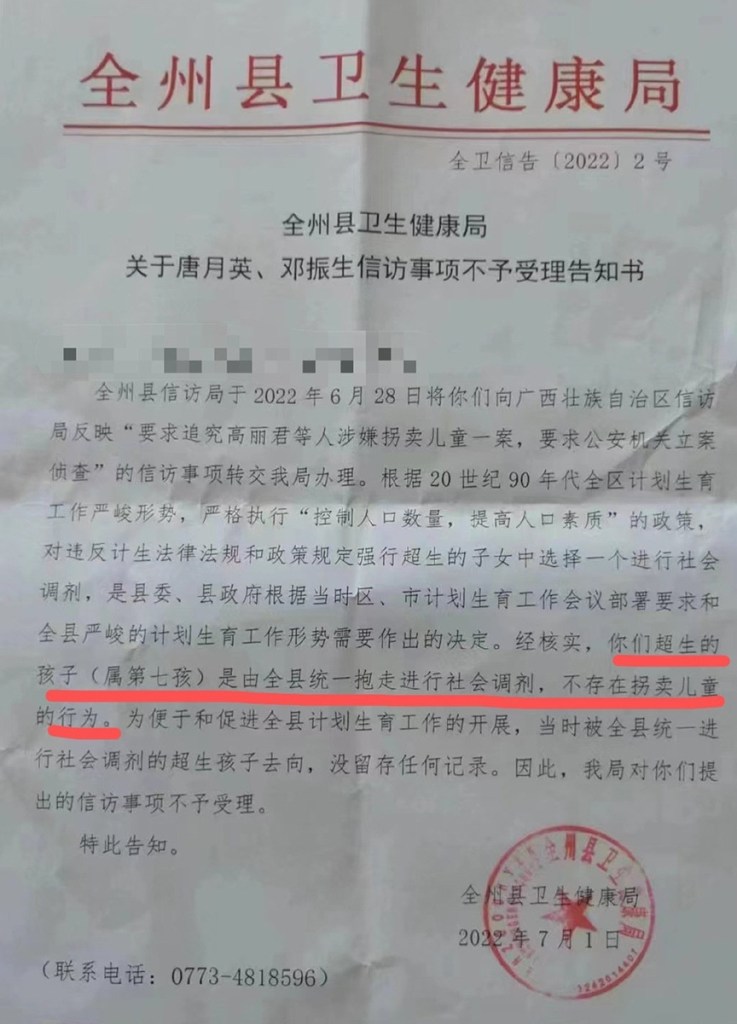
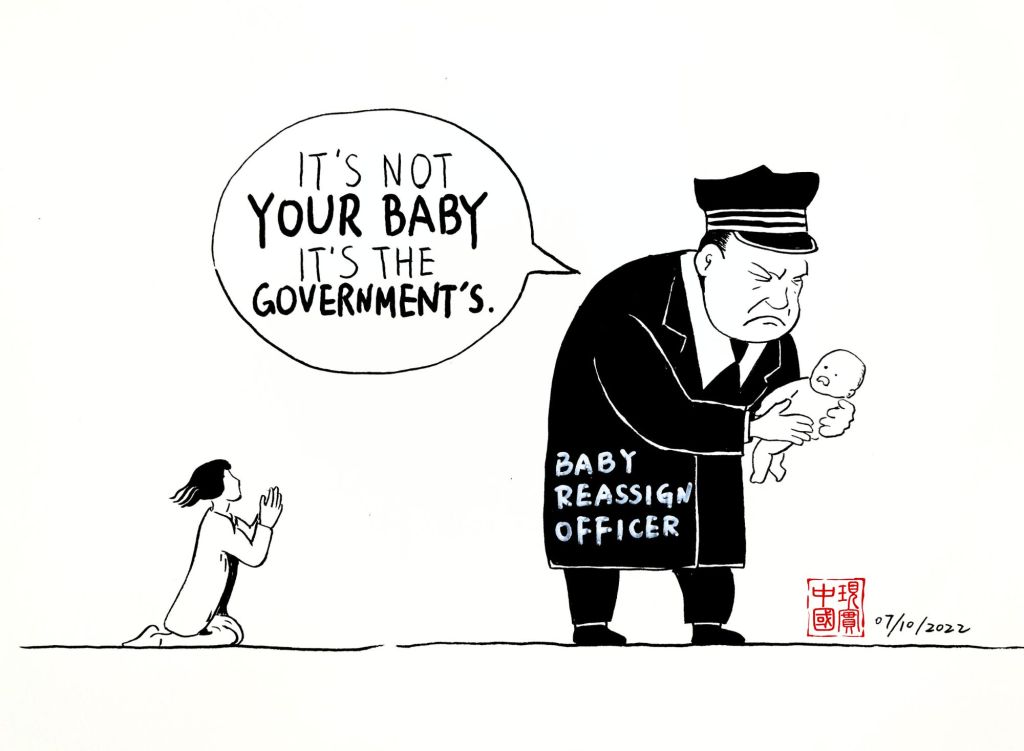
“Exam adjustment, job adjustment, even children can be reassigned under the name of ‘social adjustment’ by the authorities. In 1990, a couple from Quanzhou, Guangxi, had their 1-year-old son taken away. Thirty-two years later, a notice from the local Health Commission responded by saying that the child had been taken away for ‘social adjustment,’ causing an uproar on the internet.

Tang Yueying, now 69, and her husband Deng Zhensheng had four sons and three daughters. Their youngest child, born in 1989, would be 33 years old if still alive. Tang Yueying told Huashang News that she was staying in a hotel in Quanzhou County with her 15-year-old daughter and 1-year-old son when three women and two men suddenly took her son from her. The couple searched for 32 years but found no results. They went to the local government’s petition department to request an investigation into the abduction. On July 5 this year, a notice from the Quanzhou County Health Commission titled ‘Notice of Non-Acceptance of Petition Matters’ circulated online. It stated that the couple’s child, being the seventh child which violated the population control policy, was taken away for ‘social adjustment’ by the county, and that there was no child trafficking involved. The notice also mentioned that no records were kept regarding the whereabouts of the children taken for social adjustment and that the petition matter would not be processed.

Moreover, the notice mentioned that given the severe population control situation in the 1990s, the policy of ‘controlling population quantity and improving population quality’ was strictly enforced. The decision to reassign one of the children was made by the county committee and government based on the severe family planning work situation at the time.

Treating children as commodities, is openly illegal under the guise of a county committee and government decision, legitimizing human trafficking behavior.

Here is the link to the news 原报道链接

Desperate Kids crying for Mommy: Inhumanity of Shanghai’s Quarantine Policy

Desperate Kids crying for Mommy: Inhumanity of Shanghai's  Quarantine Policy

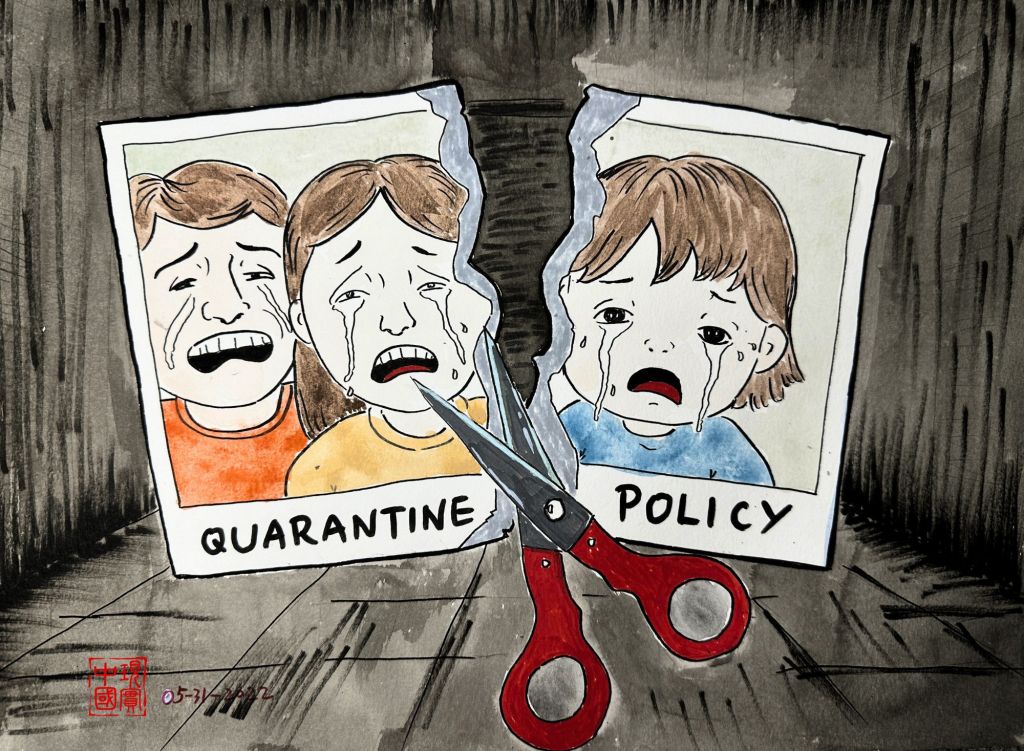
During the lockdown in Shanghai, thousands of families were cruelly separated, with parents and children forcibly isolated from each other.

These policies are not only cold and heartless but also a blatant violation of basic human rights. Under the guise of “public health safety,” the government implemented inhumane quarantine measures, completely disregarding family bonds and the psychological well-being of children. Countless children endured fear and loneliness without their parents, crying out every night: who is this “safety” really for?

This disaster laid bare the government’s incompetence and cruelty. The so-called “scientific control” became a grotesque mockery of humanity. Pandemic control is necessary, but not at the cost of destroying families. The Chinese government must take responsibility for these innocent children and families and immediately rectify these brutal policies.

Two Years Ago, You Denied Its Arrival; Two Years Later, You Deny Its Departure

Two Years of Covid-19

I wish I could say “Happy New Year” to my friends in China, but I know they’re not happy under the oppressive regime of mass testing and forced quarantine that keeps them from being together with their families. It’s hard to believe it’s been two years since Wuhan was first locked down on January 23, 2020, just two days before the Chinese New Year. Yet, most of China remains under stringent restrictions.

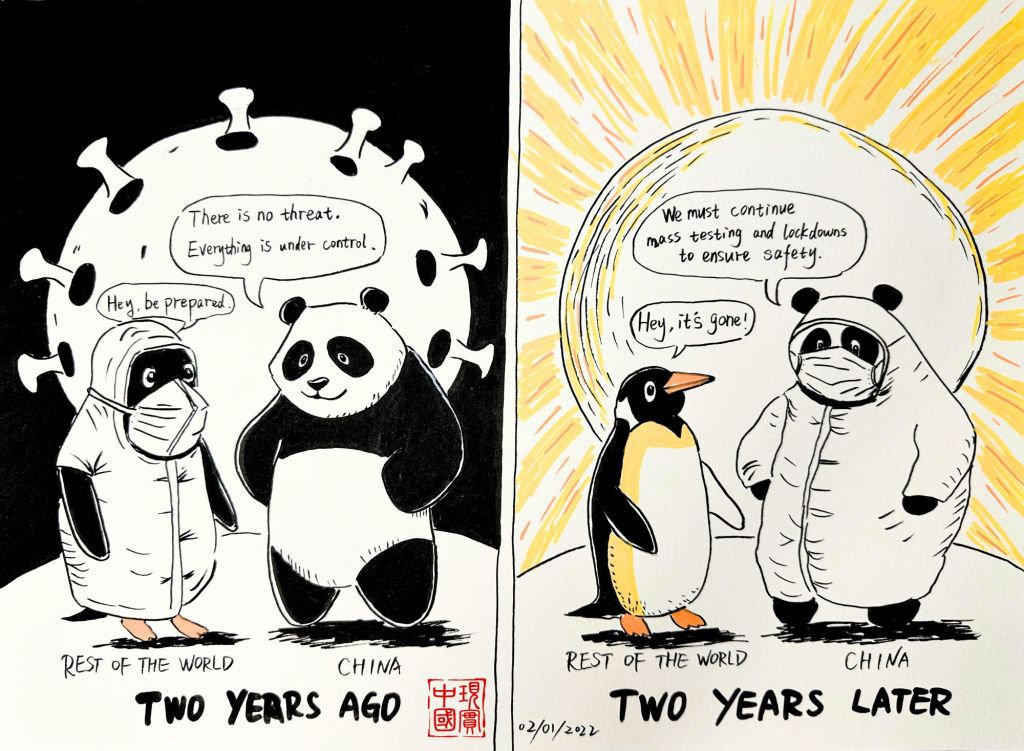
In the early days of COVID-19, when the world was grappling with the unknowns of a mysterious pneumonia, the Chinese government stood firm in its denial. The virus, according to official statements, was under control, posing no significant threat. Yet, the world watched as the truth seeped through the cracks of censorship, revealing a different, grimmer reality.

Fast forward two years. While most countries have moved past stringent lockdowns, eased social distancing, and lifted mask mandates, China remains an outlier. The once rigid zero-COVID policy has evolved into a relentless regime of mass testing and forced quarantines. The irony is palpable: the same government that initially downplayed the virus now clings to extreme measures, unwilling to acknowledge the global shift towards coexistence with COVID-19.

This persistence in denial, both at the onset and now, illustrates a troubling pattern. It’s a testament to a government’s refusal to adapt, to admit mistakes, or to change course. As the rest of the world breathes a cautious sigh of relief, China’s citizens are left suffocating under a blanket of outdated policies and endless PCR tests.

Two years ago, the virus’s arrival was denied. Two years later, its departure is met with the same resistance. The tragedy lies not only in the missteps but in the stubborn refusal to learn from them.