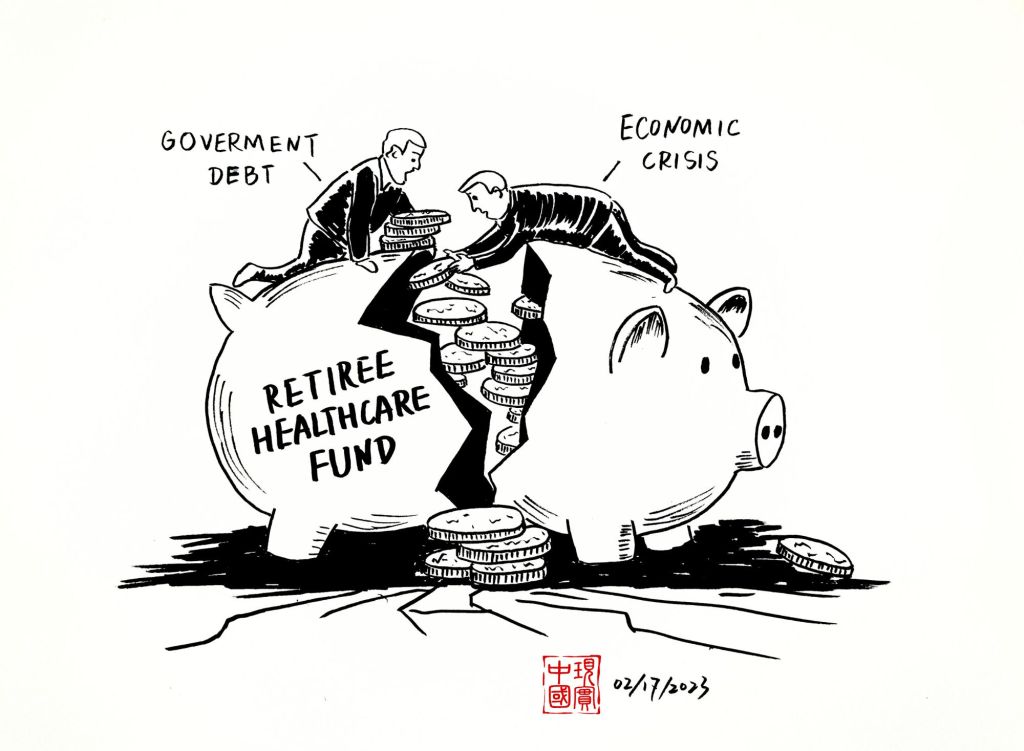
In a surprising turn of events, thousands of retirees in Wuhan gathered outside a well-known park to voice their frustration over recent cuts to their medical insurance. These senior citizens, facing significant changes to their healthcare benefits, took to the streets to confront local officials and police, highlighting the growing financial strain on China’s local governments.
The scene was a testament to the retirees’ determination: elderly citizens chanting revolutionary anthems like “The Internationale” while police set up barricades to manage the crowds. Despite efforts to disperse them, the retirees stood their ground, refusing to be silenced. One eyewitness described police detaining protestors, showing the intensity of the situation.
Local government officials in Wuhan assured the public that these reforms would ultimately lower personal medical expenses by shifting costs to collective funds. However, this means less money in individual accounts, raising concerns about financial security in old age. These changes are part of a broader strategy, but retirees are understandably worried about their future healthcare finances.
With the real estate market in decline and local governments facing financial challenges, the retirees’ protest underscores the growing social tensions in China. Their demand for fair healthcare benefits is a poignant reminder of the struggles many face in their golden years. And if their demands aren’t met, they’ve already vowed to return next week, showcasing their unwavering spirit and determination.
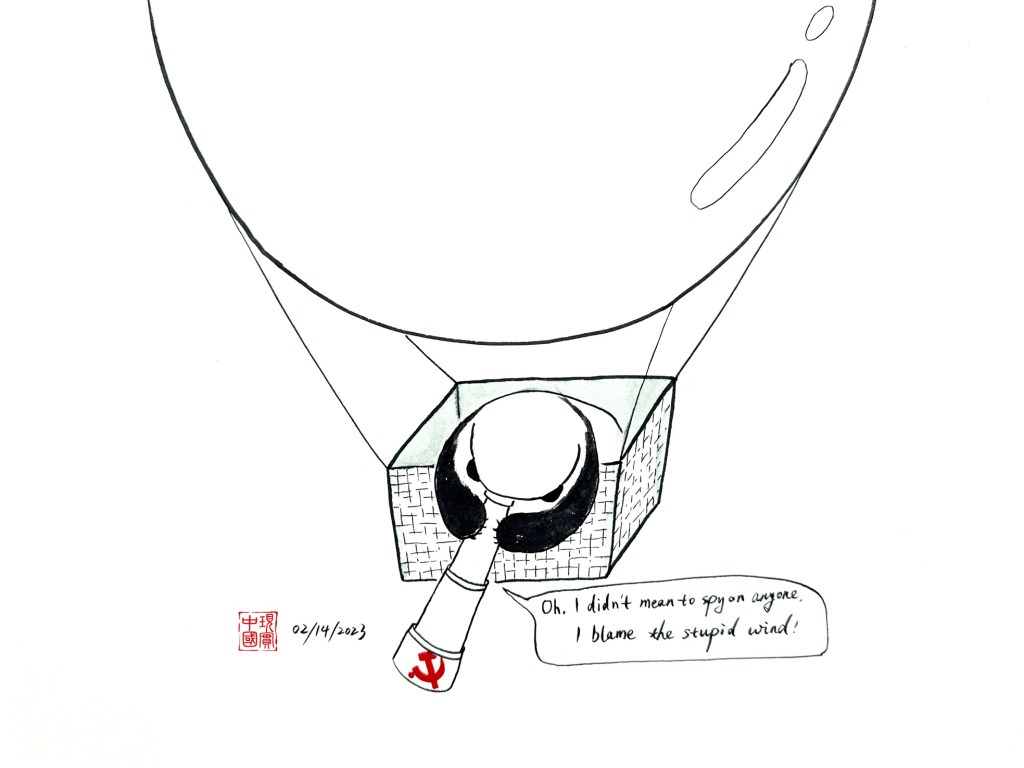
From January 28 to February 4, 2023, a Chinese-operated high-altitude balloon was seen in North American airspace. On Feb 4, it was shot down by U.S. Air Force.
The U. S. government said that balloon carried antennas and other equipment clearly for intelligence surveillance, yet Chinese government insisted it was a civilian meteorological research airship that had blown off course.
Over the past weekend, four more unidentified objects were spotted U.S. and Canadian airspace and were shot down as well. Whether they’re also operated by China is unclear so far.
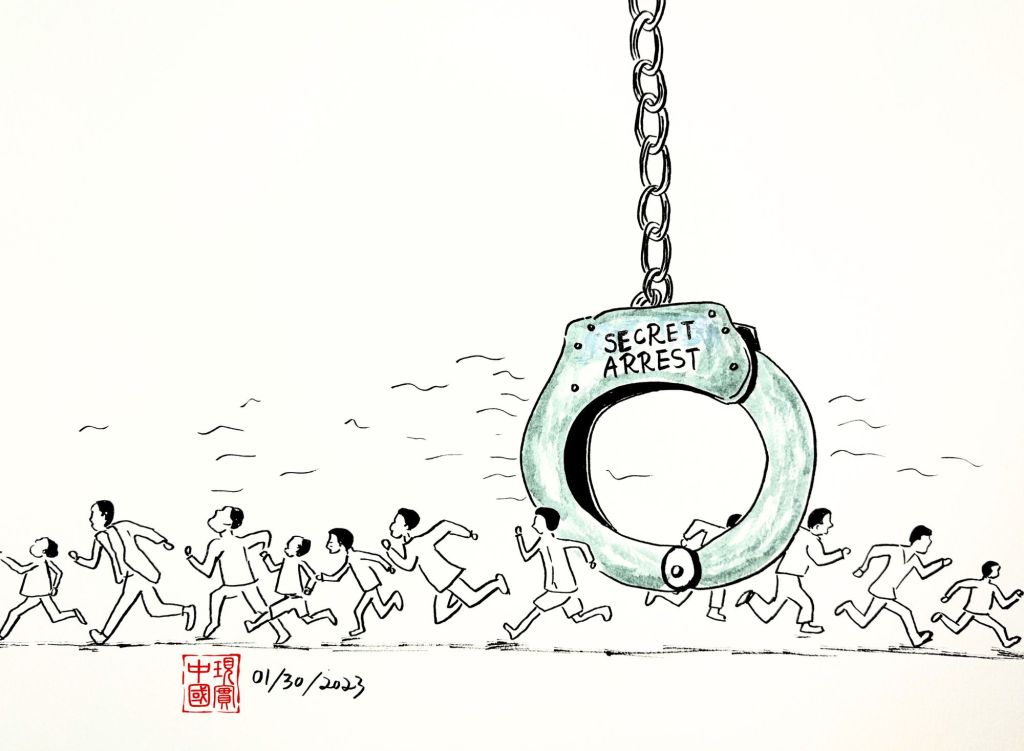
In late November 2022, Beijing saw rare protests against the strict “zero-COVID” policy. The Chinese Communist Party (CCP) quickly responded with its usual tactic of silencing dissent through secret arrests and intimidation, all while attempting to discredit protesters by alleging foreign influence.
The first to be detained were a finance firm employee, a freelance writer, a teacher with a degree in British literature, and an editor at a Beijing publishing house. These four women, friends who shared interests in social issues like feminism and LGBTQ rights, participated in the November protests and were swiftly arrested.
These arrests are part of a broader strategy by the CCP to intimidate and warn those who might be inspired by the recent surge of public discontent. The protests posed a significant challenge to the CCP’s rule and embarrassed President Xi Jinping.
Despite the government’s efforts to keep these actions under wraps, news of the arrests has spread among those involved in the protests. The CCP has avoided officially announcing these arrests to prevent further public outrage but has ensured that the message is clear: even peaceful expression of dissent will not be tolerated, and those who challenge the government face severe personal risks.
The Beijing protests began as a vigil for victims of a deadly fire in Xinjiang, which many blamed on the restrictive “zero-COVID” measures. While initial police response during the protests was relatively restrained, it soon escalated. In the following days, police summoned or visited demonstrators, questioning their participation and connections.
One of the detained women, Cao Zhixin, recorded a video before her arrest, expressing her belief in the right to express opinions even in China. Her case, along with the other three women, has highlighted the personal risks of challenging the government.
Authorities have accused these women of using foreign communication platforms and participating in feminist activities, framing their actions as influenced by foreign forces. The charge of “picking quarrels and provoking trouble,” a vague but commonly used accusation, carries a potential five-year prison sentence.
The CCP’s crackdown on these protesters serves as a stark reminder of the risks of dissent in China. The government’s actions aim to ensure that the recent wave of protests does not inspire further public outcry, using fear and repression to maintain control.
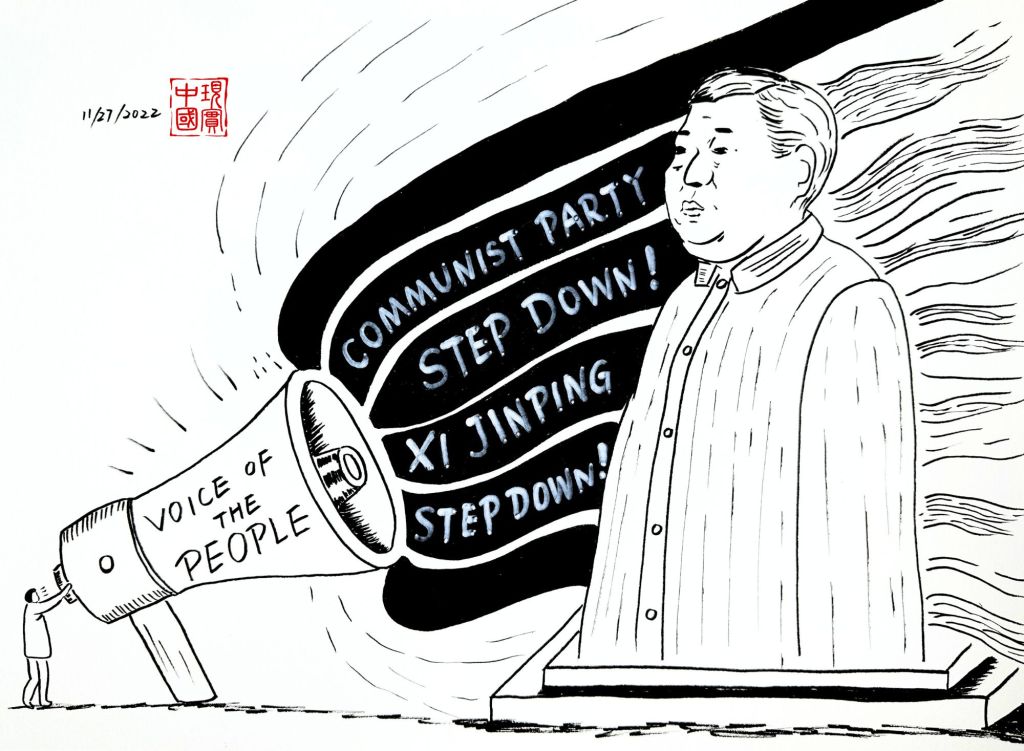
During the spring and summer lockdowns in Shanghai, a young couple refused to go to a quarantine center. When a health worker threatened that it would affect their family for three generations, the young man replied, “We are the last generation.” This statement was seen as an expression of despair. Now, Shanghai’s youth are chanting “We want freedom, we want human rights,” and “Xi Jinping step down, Communist Party step down.” This transformation of grievances into political demands is rare since the 1989 Tiananmen Square protests. The harsh zero-COVID policy of Xi Jinping’s regime has accelerated public resistance.
On November 24, a deadly fire in Urumqi trapped and killed over ten people in their homes. Fire trucks couldn’t get close to the building to extinguish the fire, fueling anger over the zero-COVID policy. The tragedy in Urumqi sparked nationwide protests, led by the youth. In Lanzhou, people overturned COVID testing vehicles, and Nanjing Communication University students gathered to support Xinjiang. The most prominent scene occurred in Shanghai, the economic hub devastated by the lockdown. Videos show that on the night of November 26, predominantly young people gathered on Urumqi Street, laying flowers and candles to mourn the victims. The police confronted them, leading to a standoff. When the police tried to disperse the crowd, the protesters sang “The March of the Volunteers,” China’s national anthem, and chanted “Communist Party, step down! Xi Jinping, step down!”
This scene was unprecedented in China, where anti-government street protests are extremely rare. Despite Xi Jinping reaching the peak of his power at the recent 20th Party Congress, where he eliminated all internal opposition and secured a third term, the Shanghai people demanded his resignation.
The police eventually cleared the area, and videos show people protecting each other and rescuing fellow protesters. Photos shared by the Associated Press show a bus taking away a group of protesters. Although dispersed, their calls for “human rights, freedom” were echoed by students at Peking University and Tsinghua University. In Beijing, protesters at Liangmaqiao chanted slogans in support of Shanghai, and on Sunday, Shanghai residents returned to protest again.
Many wonder why, in such a large country with so many people, there has been compliance with a scientifically unfounded policy solely to satisfy the leader’s will. The answer is fear. Numerous tragedies have occurred this year alone: a nurse in Shanghai was denied emergency treatment at her own hospital, a three-year-old child in Lanzhou died of gas poisoning because his family couldn’t take him to the hospital, and two young women in Guangdong were publicly humiliated for not wearing masks. However, more and more people are refusing to be slaves. The “Superman” hero of Chongqing famously declared, “We have neither freedom nor wealth. We are still struggling with a mild illness.”
In September, a quarantine bus accident in Guizhou killed 27 people, prompting the cry, “We are all on that bus.” The Urumqi fire, which killed ten people, made many realize they could no longer “sit on the train of enslavement.” Three years of violent zero-COVID policies have led to economic decline and hardship. Many migrant workers are homeless, small businesses bankrupt, and youths have wasted their prime years, suffering humiliation and abuse from health workers.
Observers believe the Chinese people are aware of who is behind the cruel zero-COVID policies. By calling for the Communist Party and Xi Jinping to step down, Shanghai residents have shown their intolerable anger towards tyranny. Protests for human rights and freedom are common in most countries, even in autocratic ones like Russia and Iran. However, in China, these actions come with severe consequences, as evidenced by the continuous arrests by the police.
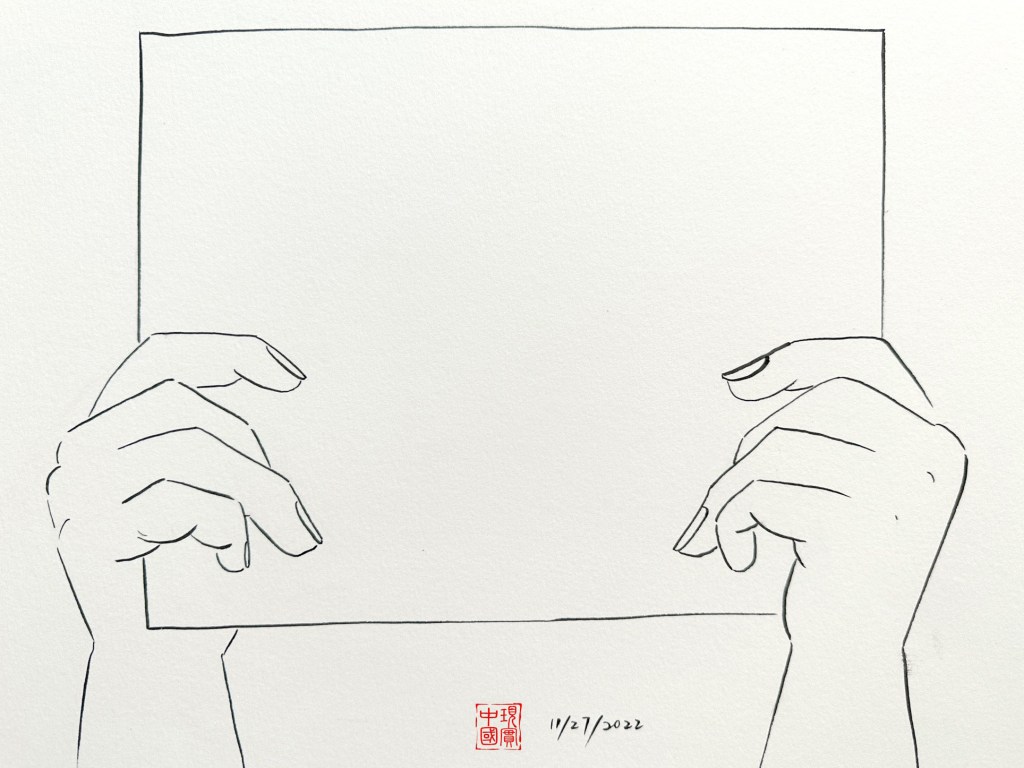
Shanghai’s protests were not isolated, as videos showed solidarity demonstrations in dozens of cities across China on Sunday. In Chengdu, people gathered on Wangping Street and chanted slogans against dictatorship and lifelong rule. Across many places in China, protesters held up blank sheets of paper in silent protest. Some said, “This is our generation’s revolution. We insist on saying what they forbid, insisting on freedom, dignity, and a China that belongs to us!” The blank paper has thus become a symbol of resistance against tyranny.
On November 24th, at least 10 people died in a high-rise fire in Urumqi, the regional capital of Xinjiang. It was widely believed that Covid restrictions prevented the victims from escaping.
As China’s harsh Covid rules extend into the third year, frustration and desperation with lockdowns, quarantines and mass testings that have upended everyday life, have caused anger and defiance across china. This fire in Urumqi has pushed people’s anger even deeper. For the past a few days, demonstrators appeared in cities and on college campuses, most of them holding a blank sheet of A4 paper, a symbol of protest against Covid policies or even denouncing the Communist Party and its leader, Xi Jinping.
There is definitely nothing on the paper, but we know what’s on there. Leaving things unsaid, a sheet of blank paper expresses even more than words can do. It represents everything we want to say but cannot say.
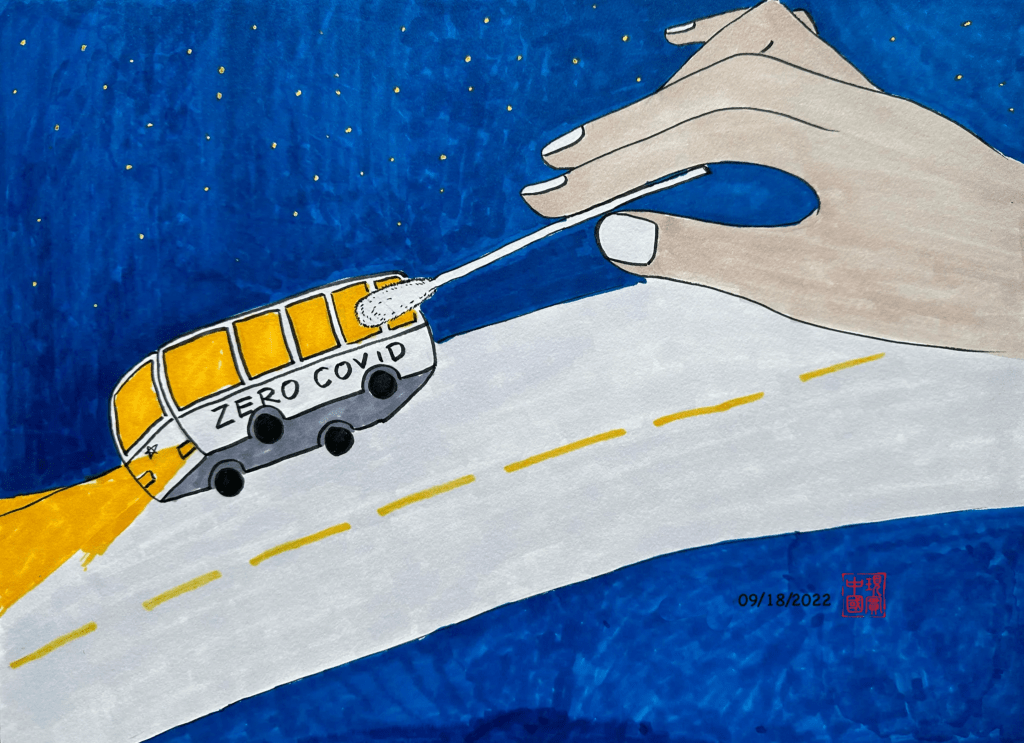
A bus transporting 47 people from the city of Guiyang to a quarantine facility rolled over around 2:40 am on September 18th, killing at least 27 of them. While the rest of the world moves toward living with the virus, China still have mass quarantines lockdowns under its “Zero Covid” policy which ordinary Chinese people are powerless to resist. Angry comments and large outpourings of public grief were censored.
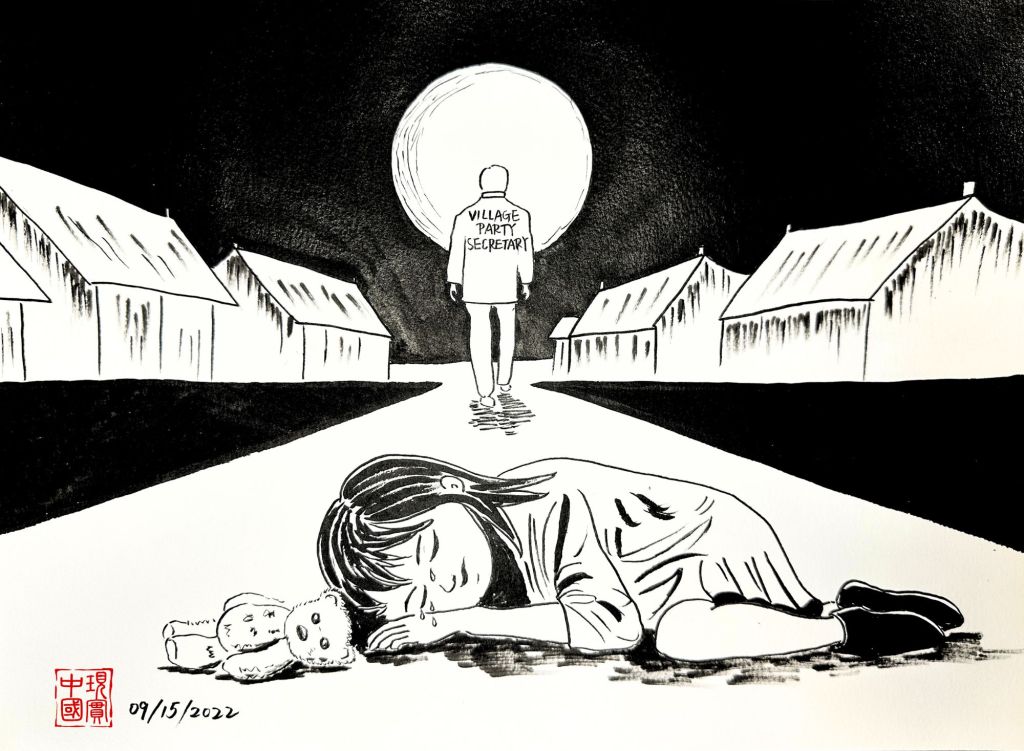
September 10th, Mid-Autumn Festival! A time when families gather to admire the moon, share mooncakes, and bask in the warmth of togetherness. However, for a 12-year-old girl in Liuqiao Village of Tianlu Town, Jiangxi Province, it turned into a nightmare orchestrated by none other than the Village Party Secretary, Liu Liangzong. Yes, you read that right – the very same Liu Liangzong who has been lauded as an anti-pandemic hero. How fitting that he chose this sacred holiday to reveal his true colors.
At that time Liu Liangzong raping the young girl, her parents, ever so dutiful citizens, were diligently following pandemic protocols and were quarantined far from home. Meanwhile, the neighbors were under strict “silent management,”
The best part? The initial whistleblower tried to report this ghastly event to the proper authorities, only to be met with the bureaucratic equivalent of a shrug. No story here, folks! Move along! It took the persistent efforts of self-media to bring this atrocity to light, ensuring that Liu Liangzong’s “contributions” to the village would not go unnoticed.
Liu Liangzong was eventually arrested. Yet, one can’t help but wonder how many more “heroes” like him are lurking in the shadows, protected by the very systems designed to uphold justice and order.
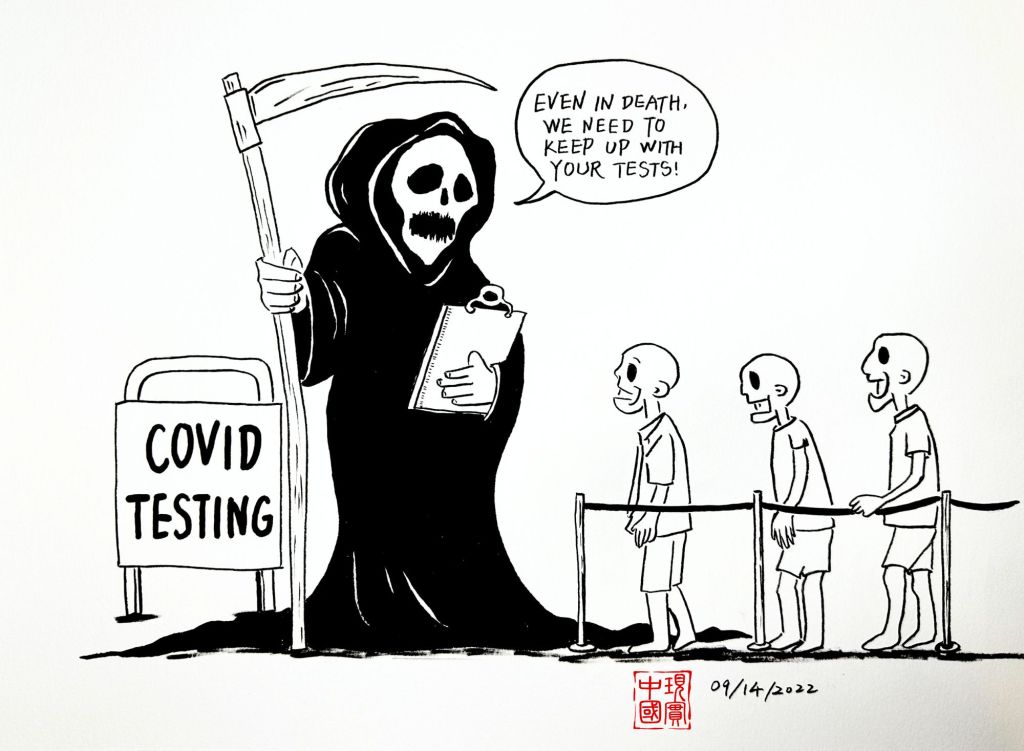
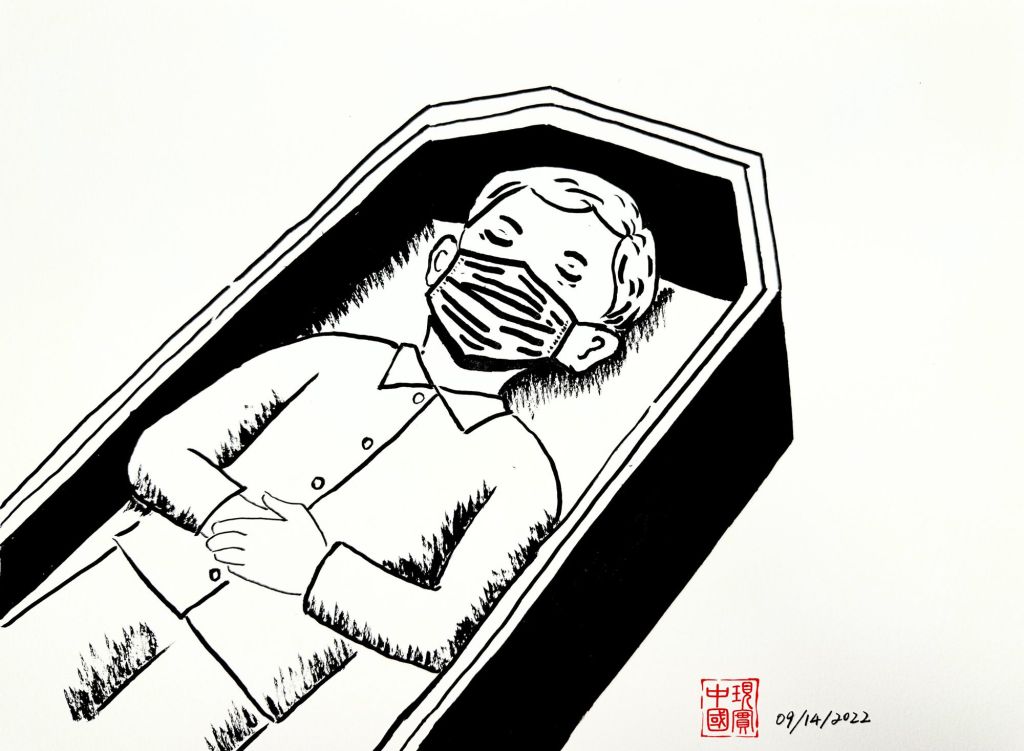
In September 2022, a news story garnered widespread attention. According to the report, a deceased resident in Nantong City, Jiangsu Province, China, had his health code and COVID-19 test records continue to update even after their death. This incident quickly sparked discussions on social media, with people questioning the reliability and accuracy of the COVID-19 testing system.
In the days following the resident’s death, his health code still showed green, and his COVID-19 test records were still being updated. The family expressed confusion and anger over this, questioning the negligence of the relevant authorities. After the media exposed the incident, the authorities promptly launched an investigation and claimed that it was an isolated case caused by a system error, not a widespread issue.
While the rest of the world breathes the sweet air of freedom, in China, face masks stay as the latest fashion statement with no expiration date. It’s as if the government is channeling its inner trendsetter, adamant that face masks are here to stay forever. Who needs facial expressions anyway?
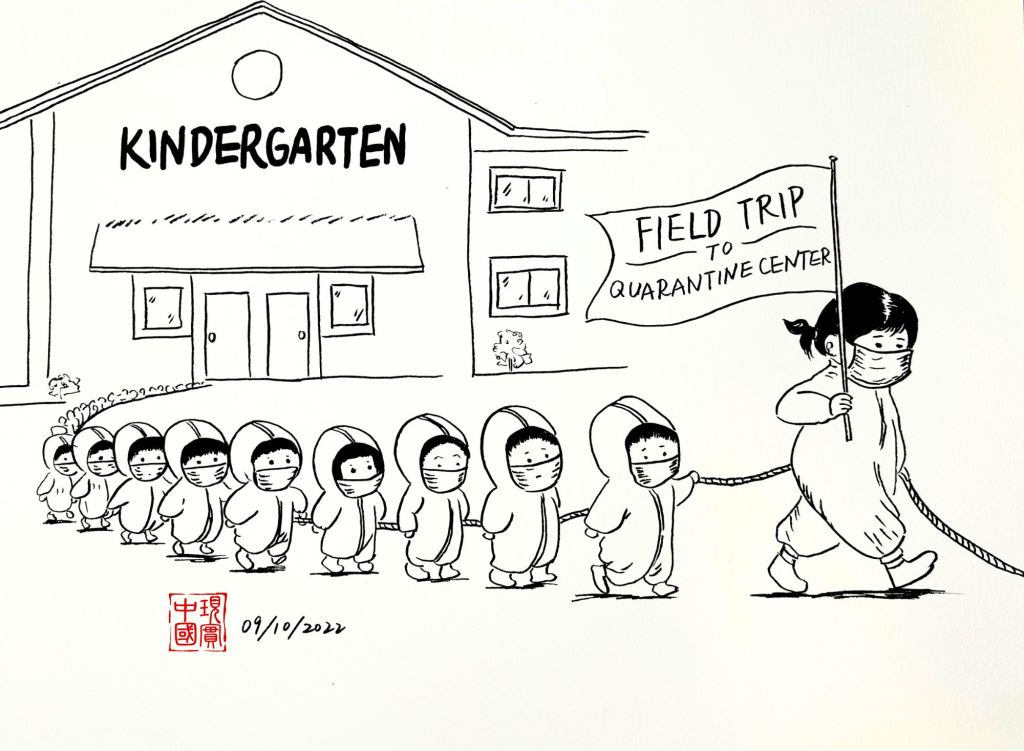
On September 7th, Enshi City in Hubei Province recorded a modest four new COVID-19 cases, the local government swiftly declared “temporary control measures.”
In a video that went viral on September 9th, Enshi’s youngest citizens—yes, the little ones from a local kindergarten—made their grand debut in full protective gear. Picture it: tiny humans swathed in oversized hazmat suits, resembling mini astronauts ready for a space mission, but alas, their destination was far less glamorous. They were being whisked away to isolation because three of their peers tested positive. Naturally, the entire kindergarten was escorted to quarantine, because why not?
Instead of nap time and story sessions, these kids get to experience the joys of quarantine—an opportunity to develop resilience, perhaps? Or maybe it’s just another chapter in their prematurely stressful lives.
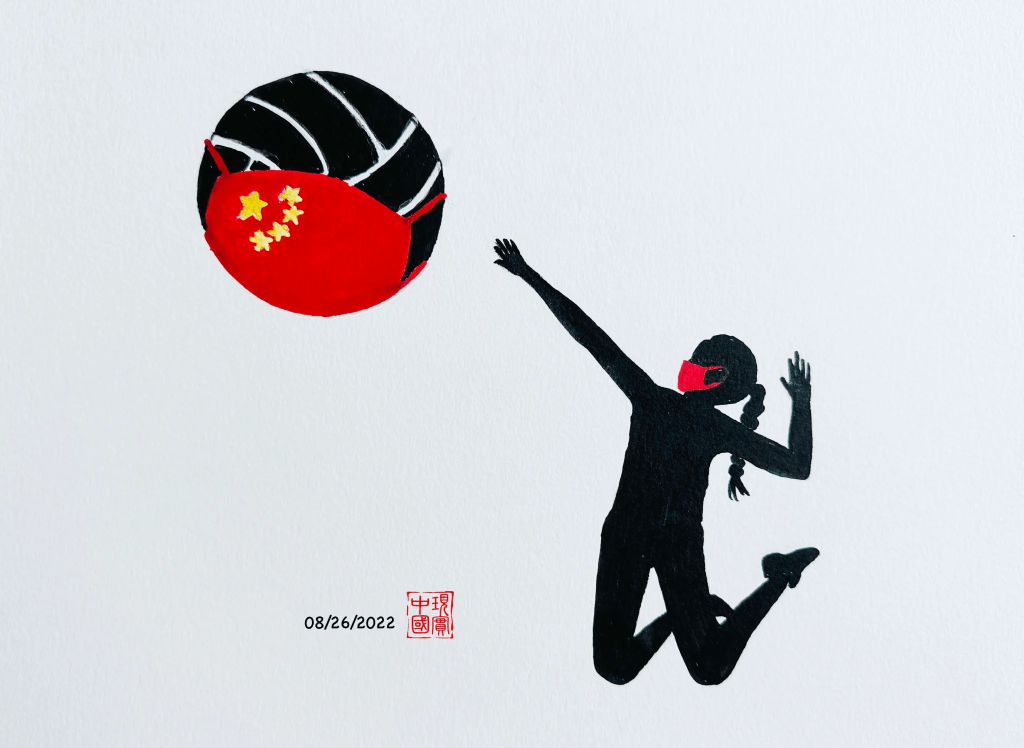
China’s national women’s volleyball team were wearing N95 masks in the opening set of their match against Iran at the Asian Volleyball Confederation Cup, being held in the Philippines. They lost the first set. After taking masks off for the second set, they went on to win. Sacrificing the health of players for the sake of the country’s “Zero Covid” policy, this ridiculous scene has caused a stir on Chinese social media. People couldn’t help asking: Who lost his mind and made the decision? Don’t you have any common sense?
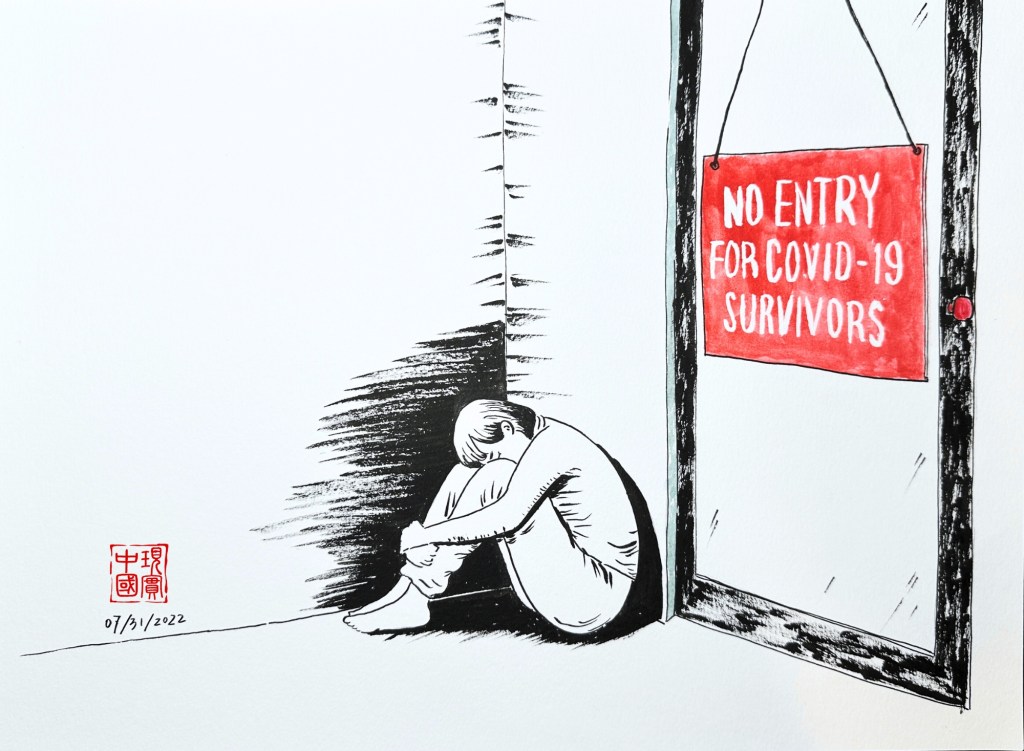
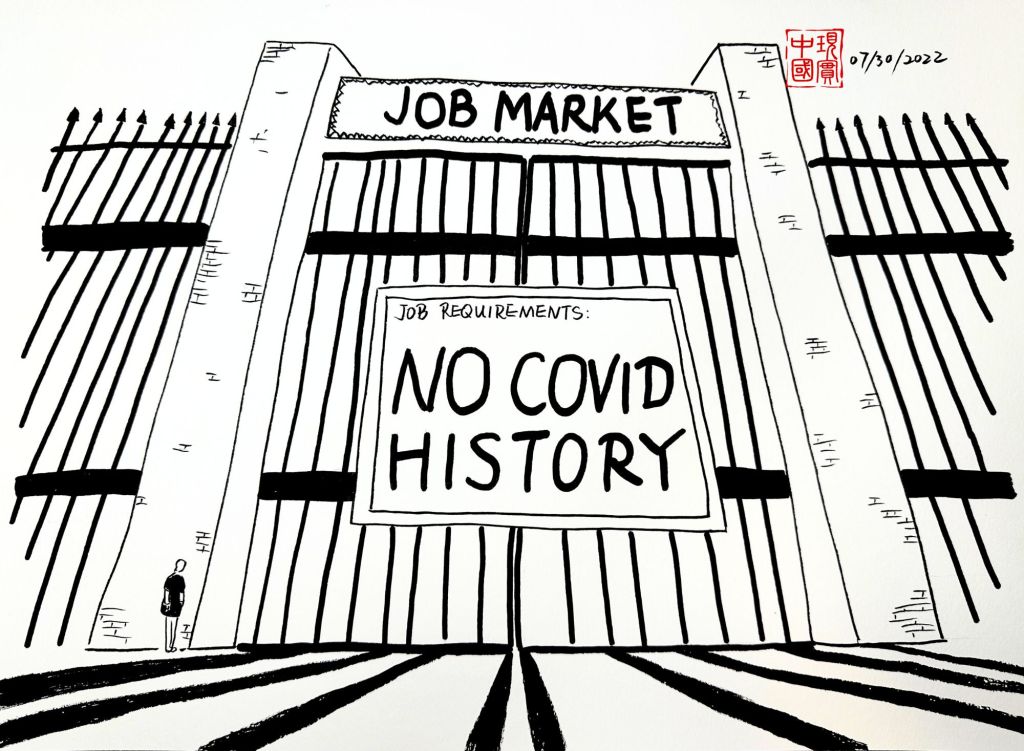
In the aftermath of the COVID-19 pandemic, various discriminatory practices have emerged worldwide, but few are as stark as the “No COVID History” policies seen in China. In a bid to control the spread of COVID-19, some institutions in China have implemented a policy requiring individuals to have no history of COVID-19 infection. This means that even those who have recovered from the virus are denied entry to certain public spaces or employment opportunities. For instance, a museum in Hangzhou explicitly stated that visitors must not have been previously diagnosed with COVID-19.
The discrimination goes beyond policy. COVID-19 survivors have been labeled with dehumanizing terms such as “Yang Ren” (阳人), “Little Sheep” (小羊人), and simply “Sheep” (羊). These labels strip individuals of their dignity and reinforce negative stereotypes. Moreover, the personal details of COVID-19 patients have been publicly disclosed, leading to online harassment and further stigmatization.
Afen’s story is a poignant example of the impact of these discriminatory policies. After recovering from COVID-19, Afen struggled to find employment due to the “No COVID History” requirement. Despite numerous attempts to secure a job, she faced repeated rejections solely based on her past infection. Her situation became so dire that she ended up living in Hongqiao Railway Station, reflecting the harsh reality faced by many in similar circumstances.
The widespread implementation of the “No COVID History” policy has resulted in mass discrimination within industries such as the service sector in Shanghai. Many recovered patients, like Afen, find themselves in a precarious position, unable to secure basic employment despite being otherwise qualified.
One of the underlying reasons for this discrimination is the fear of “re-positive” cases—instances where recovered patients test positive for COVID-19 again. However, scientific evidence suggests that these cases are typically due to the presence of non-infectious viral fragments. Despite this, the fear persists, fueled by sensational media reports and public misunderstanding.
Educational efforts are crucial in combating the stigma associated with COVID-19 recovery. Clear communication about the nature of “re-positive” cases and the actual risks involved can help alleviate public fear. Additionally, policies must be revised to align with scientific understanding and to protect the rights of those who have recovered from COVID-19.
In conclusion, the “No COVID History” policy in China is a glaring example of how fear and misinformation can lead to widespread discrimination. It is a call to action for policymakers, educators, and the public to stand against such practices and support the rights and dignity of all individuals, regardless of their health history.
In the aftermath of the COVID-19 pandemic, various discriminatory practices have emerged worldwide, but few are as stark as the “No COVID History” policies seen in China. In a bid to control the spread of COVID-19, some institutions in China have implemented a policy requiring individuals to have no history of COVID-19 infection.
The widespread implementation of the “No COVID History” policy has resulted in mass discrimination in job market, especially within industries such as the service sector in Shanghai. This means that even those who have recovered from the virus are denied employment opportunities. Many recovered patients find themselves in a precarious position, unable to secure basic employment despite being otherwise qualified.
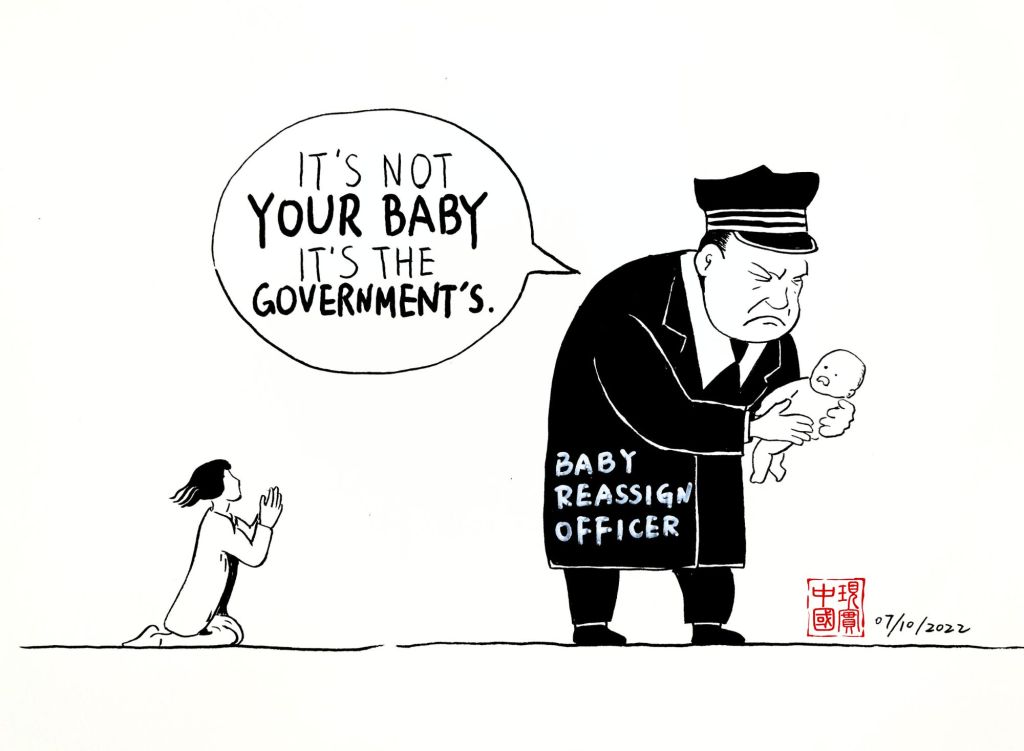
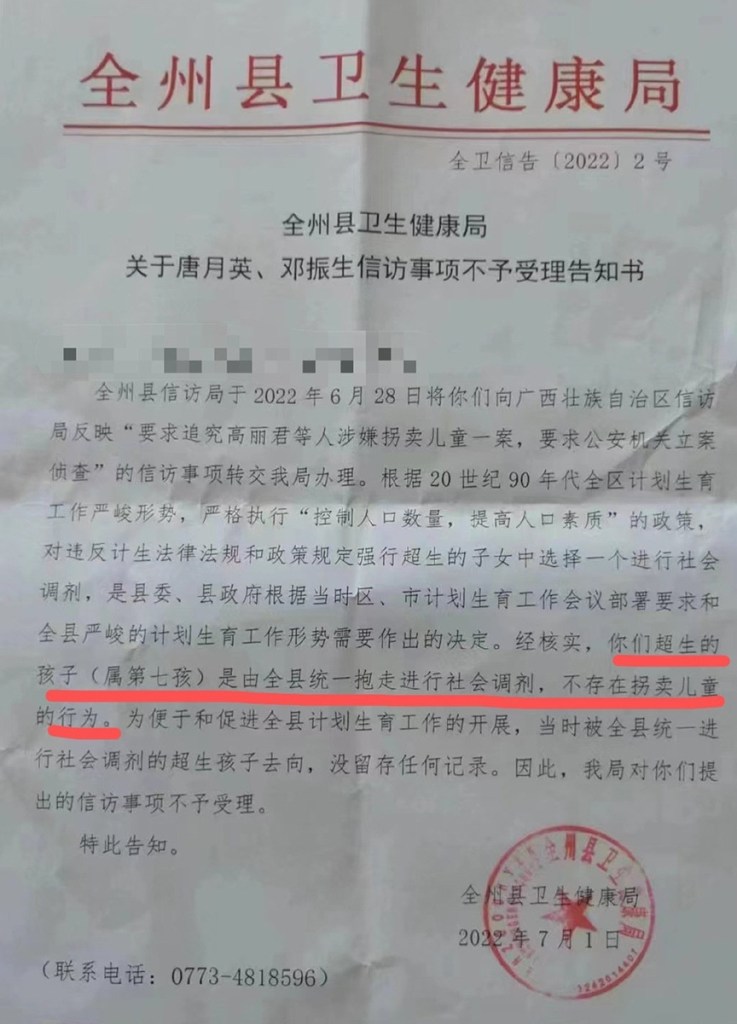
“Exam adjustment, job adjustment, even children can be reassigned under the name of ‘social adjustment’ by the authorities. In 1990, a couple from Quanzhou, Guangxi, had their 1-year-old son taken away. Thirty-two years later, a notice from the local Health Commission responded by saying that the child had been taken away for ‘social adjustment,’ causing an uproar on the internet.
Tang Yueying, now 69, and her husband Deng Zhensheng had four sons and three daughters. Their youngest child, born in 1989, would be 33 years old if still alive. Tang Yueying told Huashang News that she was staying in a hotel in Quanzhou County with her 15-year-old daughter and 1-year-old son when three women and two men suddenly took her son from her. The couple searched for 32 years but found no results. They went to the local government’s petition department to request an investigation into the abduction. On July 5 this year, a notice from the Quanzhou County Health Commission titled ‘Notice of Non-Acceptance of Petition Matters’ circulated online. It stated that the couple’s child, being the seventh child which violated the population control policy, was taken away for ‘social adjustment’ by the county, and that there was no child trafficking involved. The notice also mentioned that no records were kept regarding the whereabouts of the children taken for social adjustment and that the petition matter would not be processed.
Moreover, the notice mentioned that given the severe population control situation in the 1990s, the policy of ‘controlling population quantity and improving population quality’ was strictly enforced. The decision to reassign one of the children was made by the county committee and government based on the severe family planning work situation at the time.
Treating children as commodities, is openly illegal under the guise of a county committee and government decision, legitimizing human trafficking behavior.
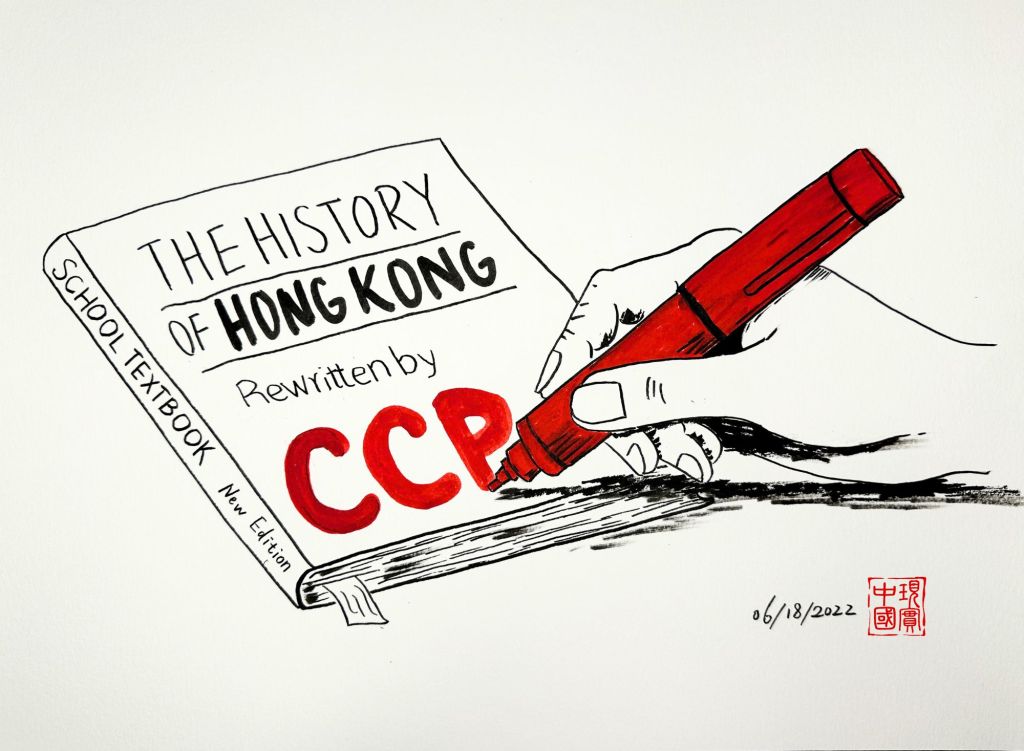
Hong Kong—For a long time, the history learned by many schoolchildren around the world was that Hong Kong was a colony of the British Empire. But students in Hong Kong will soon be learning a different lesson: Hong Kong was not a colony.
As Hong Kong prepares to commemorate the 25th anniversary of its return to China on July 1, 1997, this narrative, which denies the British view of its relationship with Hong Kong, will be explicitly taught to Hong Kong high school students through at least four new textbooks to be introduced this fall. These textbooks are part of a broader campaign by China’s top leader Xi Jinping to comprehensively reform Hong Kong’s schools, “protect the minds of young people,” and cultivate loyal, patriotic citizens.

 The Truth Of China