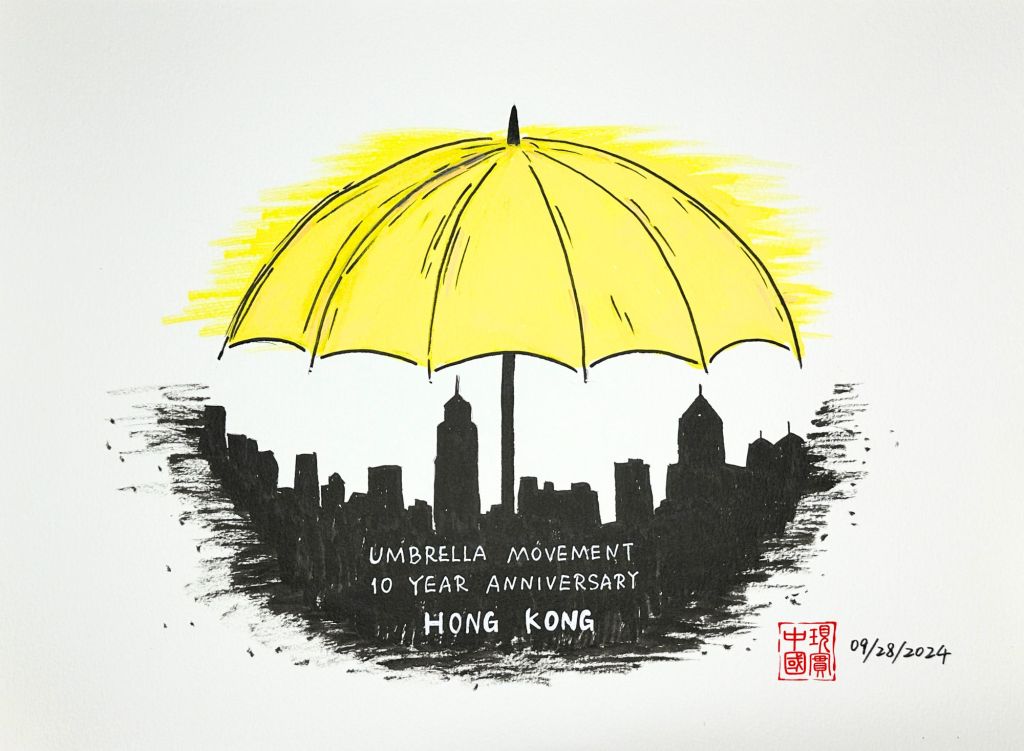
Reflecting on 10 Years: The Umbrella Movement’s Legacy

Ten years ago, Hong Kong witnessed a remarkable chapter in its history—the Umbrella Movement. What began as a call for democratic reforms and universal suffrage swiftly grew into a powerful symbol of peaceful resistance. Thousands of citizens, armed only with umbrellas to shield against tear gas, united in a non-violent stand for their rights.

The spirit of the movement has left an indelible mark on the city. Though the physical barricades have long been dismantled, the ideals of democracy, freedom, and autonomy continue to inspire. The Movement’s legacy lives on through the resilience of Hong Kongers who strive for justice, despite facing increasing challenges and suppression.

As we commemorate this anniversary, we honor the courage and determination of those who stood on the front lines and reflect on the ongoing struggle for democracy. The Umbrella Movement reminds us that the fight for freedom is enduring, and the hope for a brighter, more democratic future remains alive in the hearts of many.

Here’s to remembering the past, acknowledging the present, and hoping for a future where the spirit of the Umbrella Movement thrives.

China Announces Gradual Increase in Retirement Age

China has approved a plan to raise its statutory retirement age for the first time since the 1950s, addressing the challenges of its aging population. Starting on January 1, 2025, the retirement age will increase gradually. Men, who could previously retire at 60, will see their age rise incrementally to 63 by 2040. For women in white-collar jobs, the retirement age will increase from 55 to 58. Women in blue-collar jobs, previously able to retire at 50, will now work until 55. Although necessary, the changes have been met with resistance from the public.

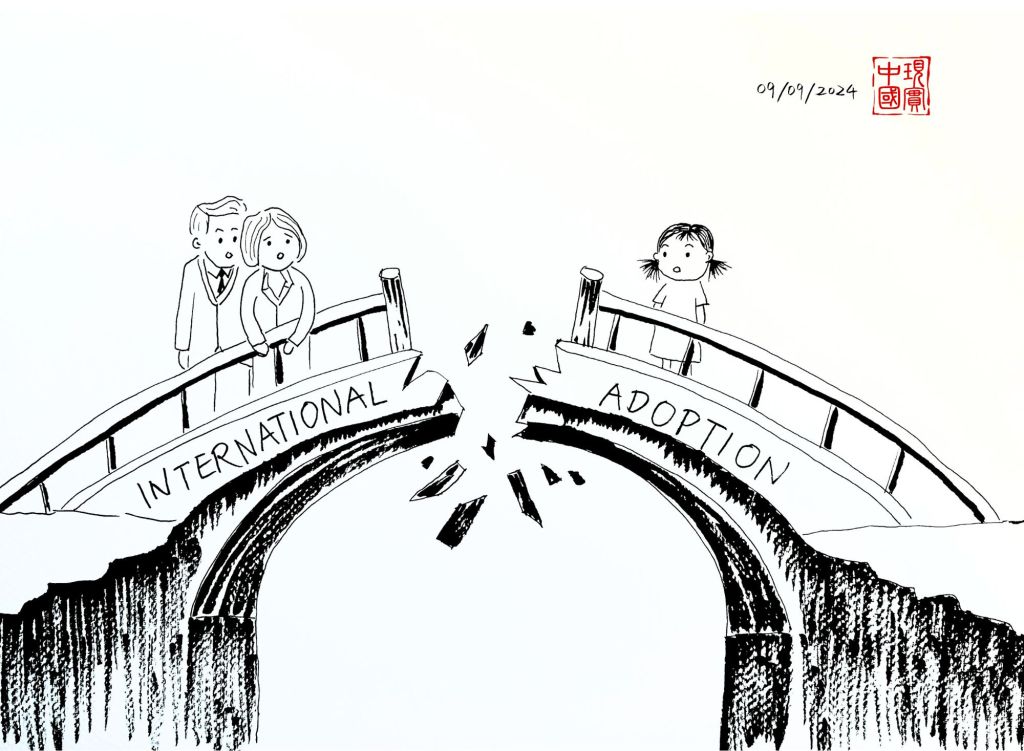
China Halts Foreign Adoptions After Decades of International Placements

China has officially ended most foreign adoptions, closing a significant chapter that spanned over three decades. During this time, tens of thousands of children were sent overseas for adoption, largely due to the country’s one-child policy, which led many families to abandon their babies. The Chinese government stated that this decision aligns with global trends, signaling a shift in the country’s approach to international adoption.

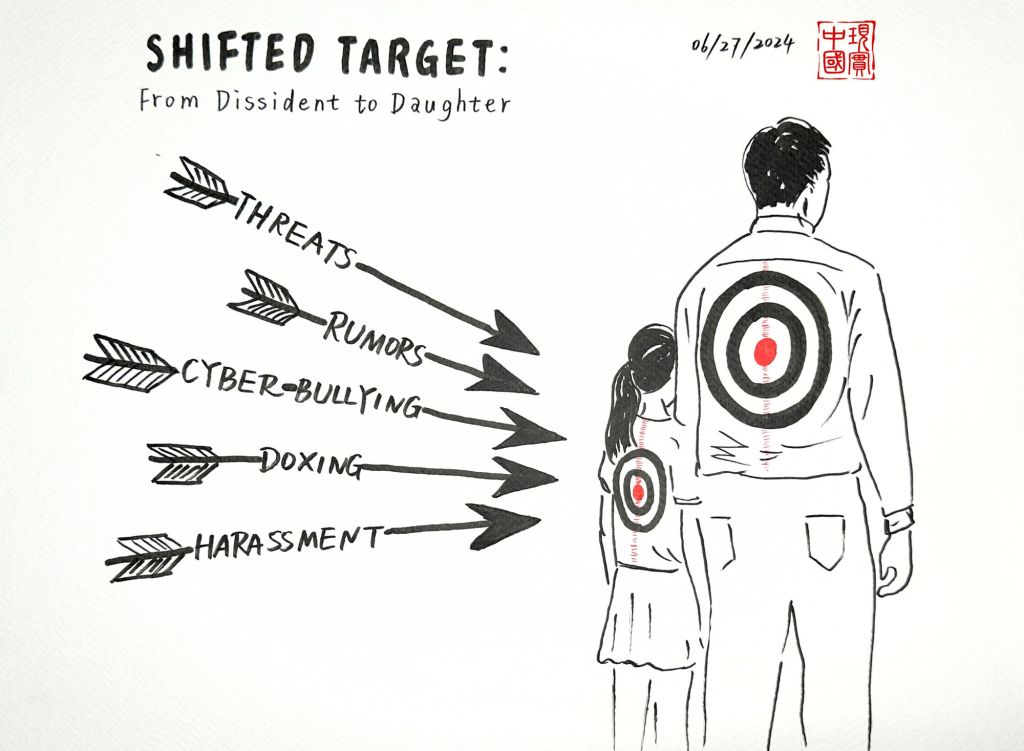
Chinese Exile Writer’s Daughter Targeted Online by Chinese Government

Living in the suburbs of Philadelphia, the prominent Chinese exile writer Deng Yuwen frequently criticizes China and its authoritarian leader, Xi Jinping. Recently, China’s response has been severe, launching aggressive and malicious attacks against his daughter online.

Research by Clemson University and Meta, the parent company of Facebook and Instagram, reveals that a secret propaganda network, possibly linked to China’s security apparatus, has targeted Deng Yuwen and even his teenage daughter on popular social media platforms. These attacks involve posts filled with sexual innuendos and threats, posted by fake identities. They appear in replies to Deng’s posts on platform X and comments on public school accounts in his community, falsely accusing his 16-year-old daughter of drug use, arson, and prostitution.

“Blocking isn’t effective,” Deng Yuwen remarked in an interview about the relentless online assaults. “Today you block it, tomorrow it resurfaces under a new alias.”

Researchers note that crude comments targeting Deng’s daughter have also appeared on Facebook community pages, as well as platforms like TripAdvisor, local news site Patch, and school rating site Niche. This harassment fits a pattern of cyber intimidation that has raised alarms in Washington, Canada, and beyond, highlighting China’s increasingly brazen attacks abroad.

For Deng Yuwen and his family, these attacks represent an escalation. Despite federal laws prohibiting severe online harassment or threats, China’s actions continue unchecked, reflecting a growing concern over its global influence and tactics aimed at stifling dissent, even beyond its borders.

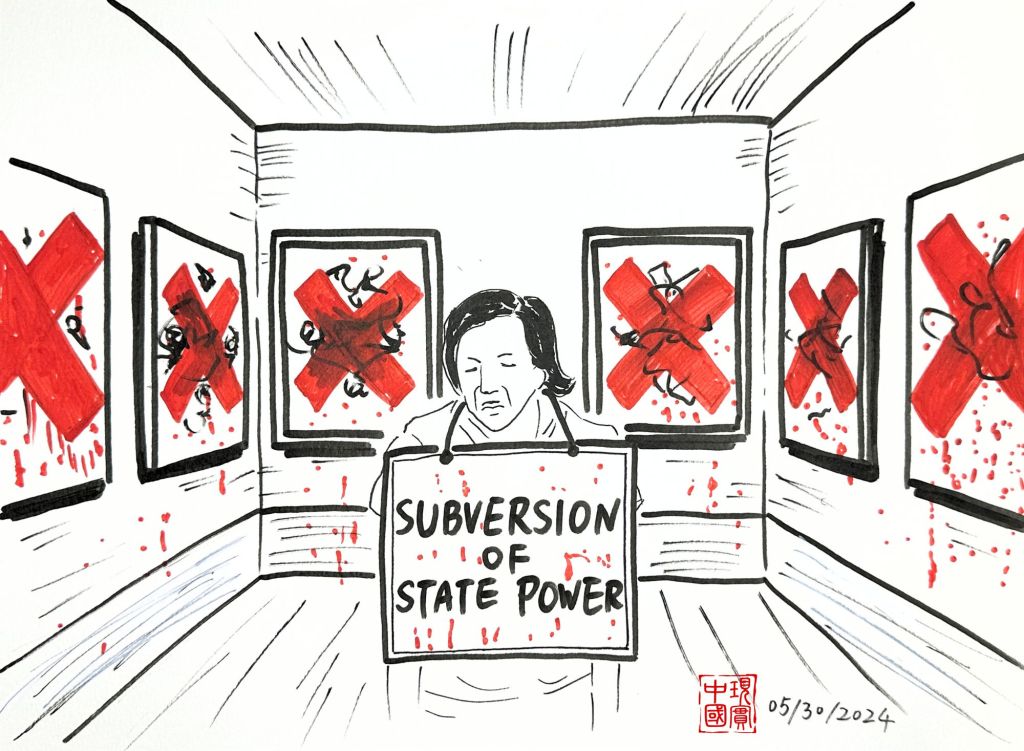
Verdict Against Chinese Activists Empowering #MeToo Voices

On Friday, a court in southern China sentenced prominent feminist journalist Huang Xueqin to five years in prison for inciting subversion of state power, marking Beijing’s latest crackdown on civil society. Labor activist Wang Jianbing received a three-year, six-month sentence on the same charge. Their activities leading to arrest and conviction included organizing discussions, supporting other activists, and receiving overseas training. Experts note the severity of these legal actions, even by Chinese standards, signaling a shrinking space for independent social discourse. Huang, once a vocal figure in China’s #MeToo movement and later a writer on Hong Kong protests, and Wang, an advocate for worker and disability rights, faced prolonged detention before a brief trial last September. Critics argue these cases reflect broader suppression of topics like women’s and workers’ rights under increasingly expansive interpretations of “threats to public order.”

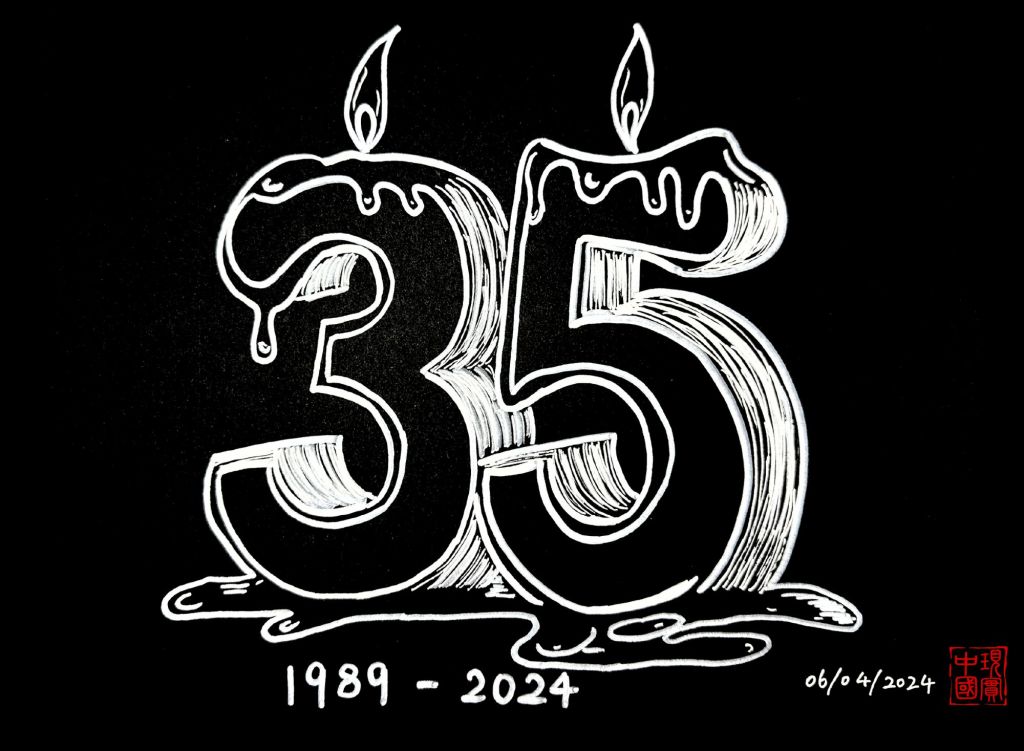
Remembering Tiananmen Massacre: 35 Years On

As we mark the 35th anniversary of the Tiananmen Square massacre, it’s a somber moment to reflect on a pivotal event in modern history. On June 4, 1989, peaceful protests in Beijing demanding democratic reforms met a tragic end as Chinese authorities cracked down with force, resulting in countless deaths and injuries.

The memory of those brave individuals standing for freedom and democracy resonates globally, reminding us of the enduring struggle for human rights. Despite efforts to suppress the truth, the spirit of Tiananmen lives on through the courage of those who continue to seek justice and accountability.

Hong Kong’s National Security Trial: A Turning Point in Democratic Dissent

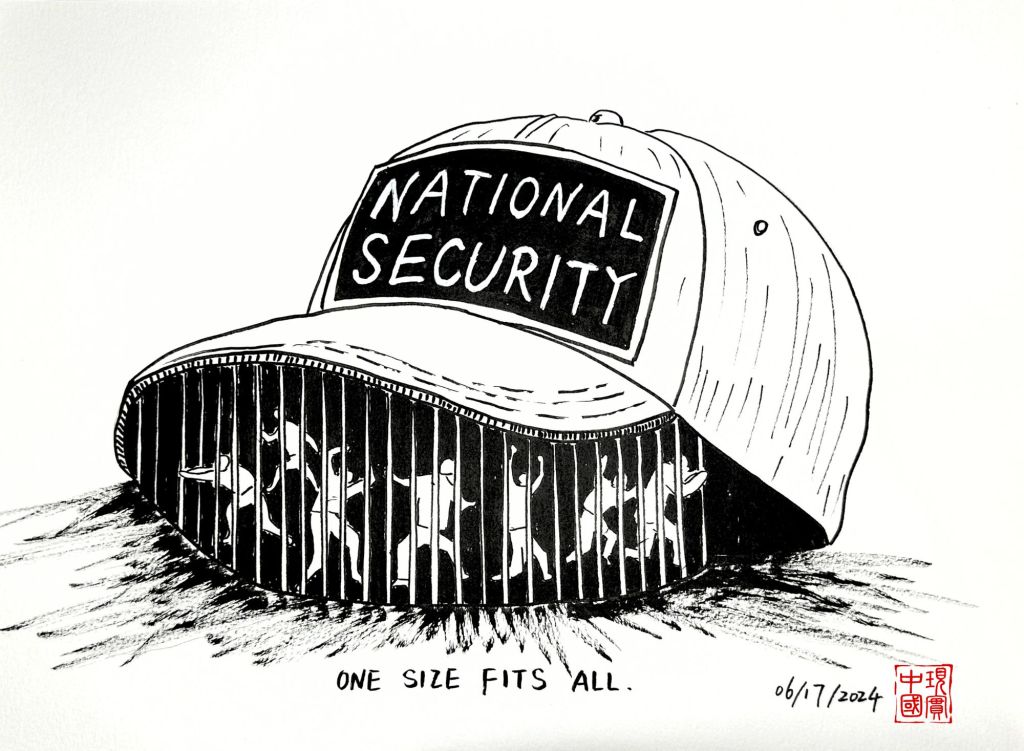
In a landmark ruling on Thursday, a Hong Kong court sentenced dozens of prominent democracy activists and leaders to potential life imprisonment, marking a severe crackdown under Beijing’s imposed national security law. The charges stem from organizing primary elections to enhance their chances in city-wide elections, deemed by authorities as a conspiracy to subvert state power.

Among the convicted are figures like legal scholar Benny Tai and protest leader Joshua Wong, whose activism symbolized Hong Kong’s vibrant political landscape. The verdict underscores Beijing’s use of broad powers to suppress dissent, turning these activists into political prisoners, some of whom were lawmakers since Hong Kong’s handover to China in 1997.

Most of the defendants have spent at least the last three years in detention ahead of and during the 118-day trial. It highlight a fundamental shift in Hong Kong’s political environment, where even mild opposition activities are no longer tolerated. Critics argue that the government’s prosecution of nonviolent electoral preparations undermines the city’s once-celebrated judicial independence and freedom of elections.

As Hong Kong faces its most significant political challenge in decades, international observers view these trials as a litmus test for Hong Kong’s judicial independence and fear a chilling effect on free speech and dissent.

Remembering Yan Zhengxue: Art and Activism Against Suppression

Renowned mainland dissident artist Yan Zhengxue passed away early Tuesday morning in Beijing at the age of 80. Yan, a staunch advocate for vulnerable communities’ rights, faced forced labor, secret detention, and a three-year prison sentence in 2006 for “inciting subversion of state power.” His sculptures, including one of Lin Zhao, executed during the Cultural Revolution, were deemed too sensitive for public display, shrouded in curtains during exhibitions. Despite government suppression, Yan’s art persisted, urging remembrance of China’s tumultuous political history. His passing marks a solemn moment for free expression advocates, echoing the enduring resilience of artists under authoritarian regimes.

相关中文报道

The Expansion of Surveillance in Chinese Communities

In a Beijing police station, walls are covered with papers, each representing a building in a large residential area. These papers list residents’ names, phone numbers, and other details, with color codes indicating their risk levels. Green means safe, yellow means to be watched, and orange signifies strict monitoring. A police officer marked a third-floor apartment in yellow, noting its high turnover and labeling it as “high risk” for follow-up.

This meticulous surveillance is a cornerstone of Xi Jinping’s grassroots governance strategy: more visible, invasive, and vigilant against real or perceived threats. Police officers immerse themselves in communities, understanding neighborhood disputes and recruiting retirees as extra eyes and ears. Employers are required to appoint “security advisors” to report regularly to the police.

Historically, the Chinese Communist Party (CCP) has implemented extensive surveillance on activists and dissenters. During the COVID-19 pandemic, this surveillance expanded to track nearly every urban resident. Xi Jinping aims to make this control permanent, embedding the Party deeply into daily life to prevent any disruptions, no matter how minor or non-political.

This approach, known as the “New Era Fengqiao Experience,” revives a method from Mao’s era where citizens were mobilized to publicly shame and control class enemies. Xi frequently references Fengqiao to highlight the Party’s commitment to addressing people’s needs, despite suppressing free speech and dissent.

This strategy aims to strengthen Beijing’s ability to quash dissent amid growing economic challenges and social unrest, solidifying the Party’s control and extending its reach into every aspect of citizens’ lives.

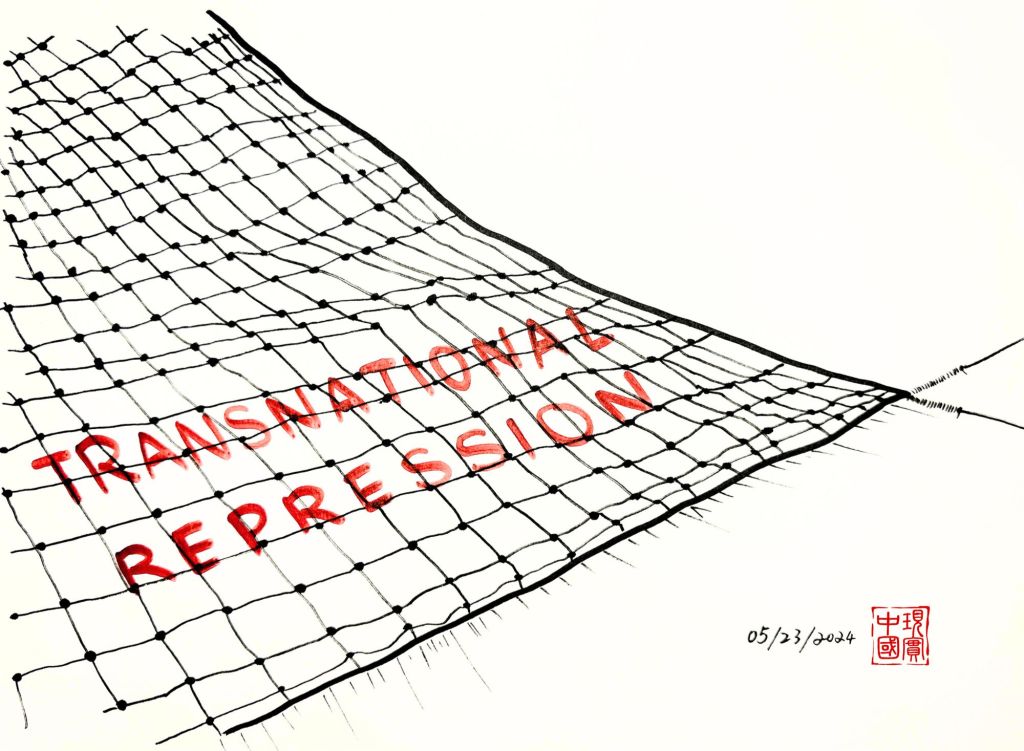
Spotlight on Transnational Repression

Last Tuesday, the UK Foreign Office summoned the Chinese ambassador for a formal rebuke following the arrest of three men accused of aiding Hong Kong intelligence and raiding a residence.

The Foreign Office condemned China’s recent actions, including offering rewards for information on dissidents settled in the UK and elsewhere. While the trial is ongoing, these arrests have spotlighted “transnational repression,” where authoritarian regimes monitor, harass, or attack their citizens abroad.

Transnational repression isn’t new but is increasingly prevalent. Globalization and the internet facilitate activism among exiles while enabling authoritarian regimes to suppress diaspora political activities more effectively.

Today, it remains a favored tool. Chinese students abroad report a climate of fear due to government intimidation. Governments now see overseas dissidents as potent threats due to their ability to influence from afar. This has led authoritarian regimes to share suppression tactics and increase cooperation, putting more lives at risk.

中文相关报道

Beijing Doubles Down on Suppressing Basic Freedoms: New National Security Law in Hong Kong

The Beijing-controlled Legislative Council in Hong Kong passed a new security law on March 19, 2024, that eliminates the last vestiges of fundamental freedoms in the city. The Safeguarding National Security Ordinance punishes peaceful speech and civil society activism with heavy prison sentences, expands police powers, and weakens due process rights. Because provisions apply to Hong Kong residents and businesses anywhere in the world, the law can silence dissent both in the city and globally.

Human Rights Watch condemned the rushed legislative process, where legislators spent a mere 39 hours reviewing a 212-page draft without proposing any amendments. The law takes effect on March 23, 2024, marking a new era of comprehensive oppression in Hong Kong.

“This law will subject Hong Kong to unprecedented levels of repression,” said Elaine Pearson, Asia director at Human Rights Watch. Even possession of books critical of China could now lead to lengthy imprisonment. The law criminalizes acts like subversion, secession, espionage, and foreign interference, violating international human rights standards enshrined in Hong Kong’s Basic Law.

相关中文报道

Defiance on Trial: Jimmy Lai and the Fight for Hong Kong’s Autonomy

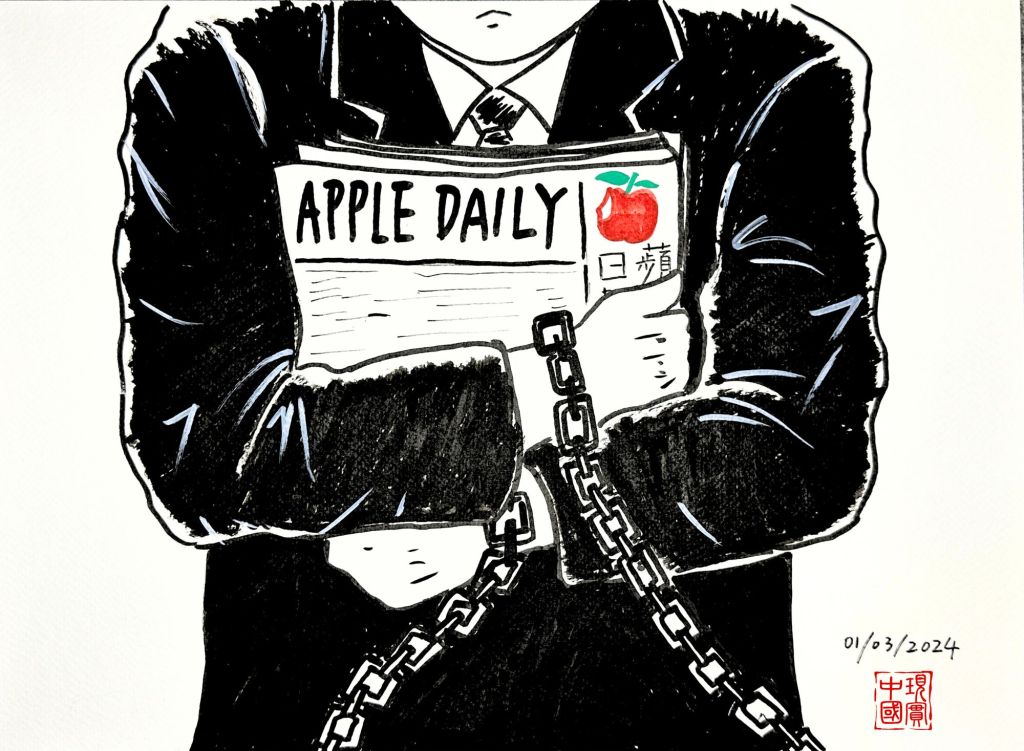
In a dramatic trial unfolding in Hong Kong, media tycoon Jimmy Lai, once a symbol of defiance against Beijing, faces severe charges under China’s National Security Law. Lai, known for his outspoken criticism of Beijing through his newspaper, APPLE DAILY, became a prominent figure in Hong Kong’s pro-democracy protests. Arrested in 2020, Lai now confronts allegations of colluding with foreign forces, which could lead to a life sentence. Despite international outcry over what many view as politically motivated charges, Lai appeared in court, greeted by supporters and family members, clad in a blue shirt and khaki jacket, his trademark defiance undiminished.

The trial marks a pivotal test for Hong Kong’s judicial independence under the controversial security law, widely criticized for eroding freedoms once enjoyed in the region. Amid heightened security at the courthouse, including police dogs and armored vehicles, supporters like elderly activist Grandma Wong continue to rally, waving British flags in protest against what they perceive as Beijing’s encroachment on Hong Kong’s autonomy.

As the trial proceeds, international observers and human rights advocates closely monitor proceedings, emphasizing concerns over fair trial standards and political interference. Lai’s case underscores broader tensions surrounding Hong Kong’s autonomy and the implications of Beijing’s tightening grip on dissent.

Stirring the Pot: Fried Rice, Politics, and Free Speech in China

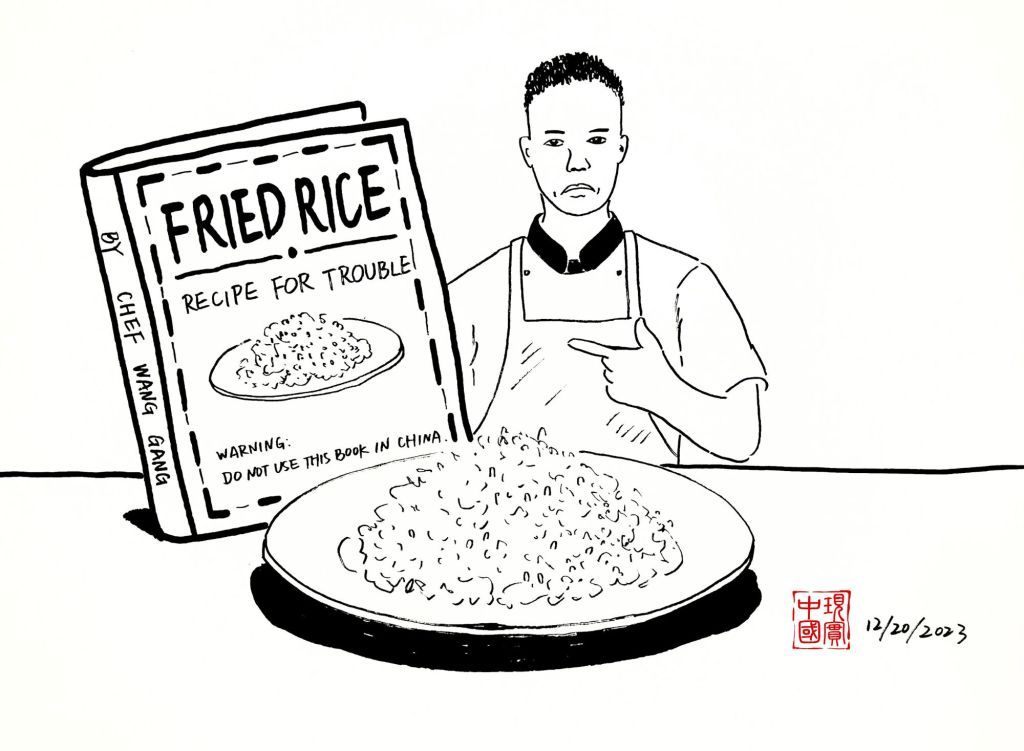
In the midst of heated debates about anti-Semitism and free speech on American college campuses, China has witnessed a viral controversy over a video teaching how to cook fried rice. Fried rice, a staple in Chinese households and often the first dish many learn to cook, holds a cultural significance akin to macaroni and cheese in the United States. This culinary icon has thrust Wang Gang, one of China’s most popular food bloggers, into the spotlight with his “perfect” fried rice recipe sparking both acclaim and critique.

However, a particular video stirred outrage among Chinese state media and the internet. On November 27th, just two days after the anniversary of Mao Zedong’s son Mao Anying’s death, Wang posted a fried rice video. Speculation arose that Mao Anying was preparing fried rice when he died in the Korean War.

China’s landscape has become increasingly politicized, turning everyday topics like cooking into potential minefields. Wang, who started working in restaurants at 15, has always focused solely on cuisine in his shows. Despite this, he found himself embroiled in political currents.

In China’s highly controlled online environment, coded language and cautious expressions have become common as citizens navigate what can and cannot be openly discussed. Wang’s experience highlights the constraints on free speech in China, where even seemingly innocuous topics can lead to controversy and censorship.

Hong Kong’s New Patriotism Education Initiative Raises Alarm

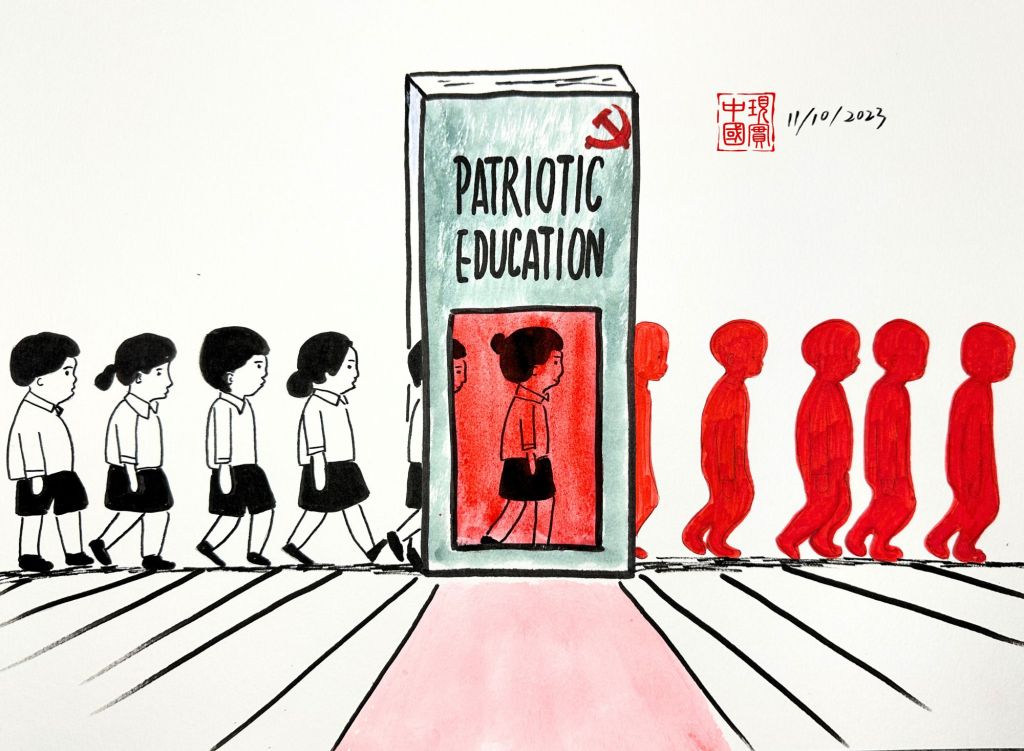
Hong Kong Chief Executive John Lee unveiled his second Policy Address in late October, introducing “patriotic education” for the first time in Hong Kong’s national education system. The Chief Secretary for Administration will oversee a task force to coordinate efforts across government and non-government sectors to promote this initiative.

Scholars noted the timing of Lee’s announcement, coinciding with China’s National People’s Congress Standing Committee passing the “Patriotic Education Law.” Led by the Chief Secretary for Administration, akin to the Cultural Revolution’s Central Cultural Group, the task force aims for comprehensive ideological education.

China’s National People’s Congress Standing Committee passed the “Patriotic Education Law of the People’s Republic of China” on October 24, effective January 1 next year. The following day, Lee integrated patriotic education into Hong Kong’s national education system, forming the “Patriotic Education Working Group” under Chief Secretary Chan Kwok-ki. This move aligns with mainland China’s law, emphasizing Chinese history, culture, and national identity education.

Xi Jinping Signals Women Should Focus on Familial Duties

At China’s 13th National Women’s Congress, the spotlight was on male leaders, with Xi Jinping prominently seated at the opening ceremony. The state media highlighted his presence, signaling the Communist Party’s stance on women’s issues. This year, notably, no women were included in China’s top leadership for the first time in two decades, underscoring a symbolic but significant shift.

Xi Jinping’s emphasis on traditional family values like promoting marriage and childbirth reflects a broader strategy amid China’s demographic challenges. The declining birth rate has prompted drastic measures to reverse the trend, including cash incentives and tax breaks. Yet, critics argue this focus sidelines broader gender equality issues, relegating women to traditional roles rather than acknowledging their contributions in the workplace.

While Xi Jinping acknowledges gender equality in principle, his recent speeches have predominantly focused on familial duties, signaling a regression from previous platforms advocating for women’s empowerment and self-fulfillment. This shift raises concerns among Chinese women who have long fought against societal pressures and government policies that restrict their freedoms and rights.

The congress’s discussions highlighted the government’s preference for reinforcing traditional values to address economic and demographic concerns, potentially sacrificing women’s progress in the process. As China navigates its most significant economic challenges in decades, the role of women in shaping its future remains a contentious issue.