Hong Kong’s National Security Trial: A Turning Point in Democratic Dissent

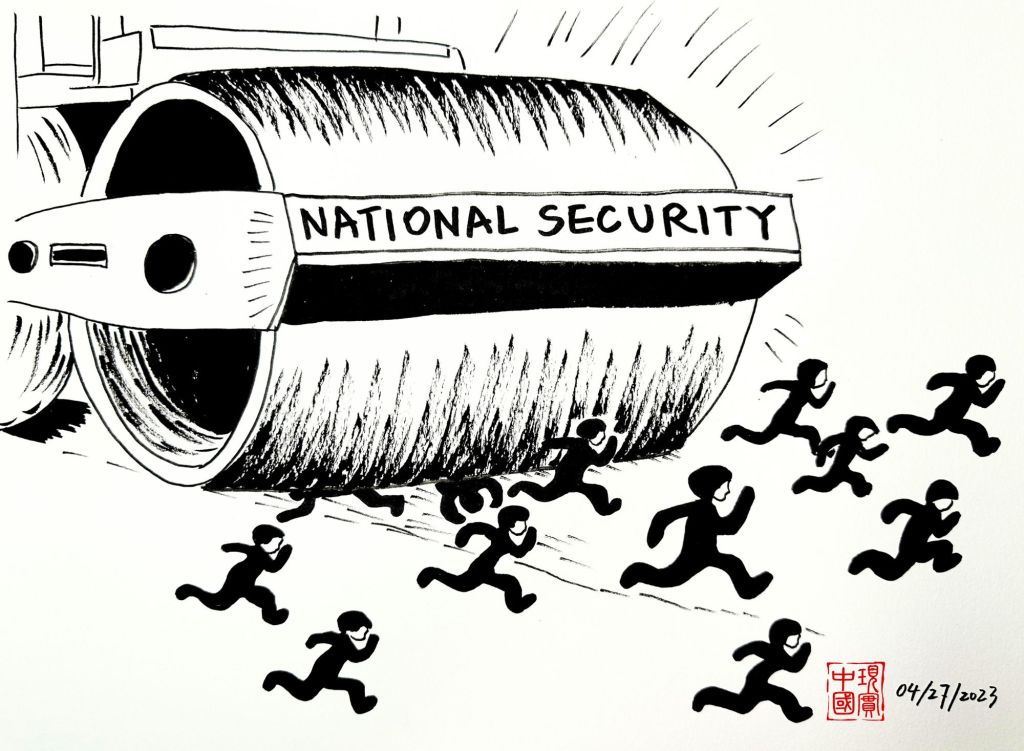
In a landmark ruling on Thursday, a Hong Kong court sentenced dozens of prominent democracy activists and leaders to potential life imprisonment, marking a severe crackdown under Beijing’s imposed national security law. The charges stem from organizing primary elections to enhance their chances in city-wide elections, deemed by authorities as a conspiracy to subvert state power.

Among the convicted are figures like legal scholar Benny Tai and protest leader Joshua Wong, whose activism symbolized Hong Kong’s vibrant political landscape. The verdict underscores Beijing’s use of broad powers to suppress dissent, turning these activists into political prisoners, some of whom were lawmakers since Hong Kong’s handover to China in 1997.

Most of the defendants have spent at least the last three years in detention ahead of and during the 118-day trial. It highlight a fundamental shift in Hong Kong’s political environment, where even mild opposition activities are no longer tolerated. Critics argue that the government’s prosecution of nonviolent electoral preparations undermines the city’s once-celebrated judicial independence and freedom of elections.

As Hong Kong faces its most significant political challenge in decades, international observers view these trials as a litmus test for Hong Kong’s judicial independence and fear a chilling effect on free speech and dissent.
Wave of Performance Cancellations Sweeps Across China Amid Tightened Censorship

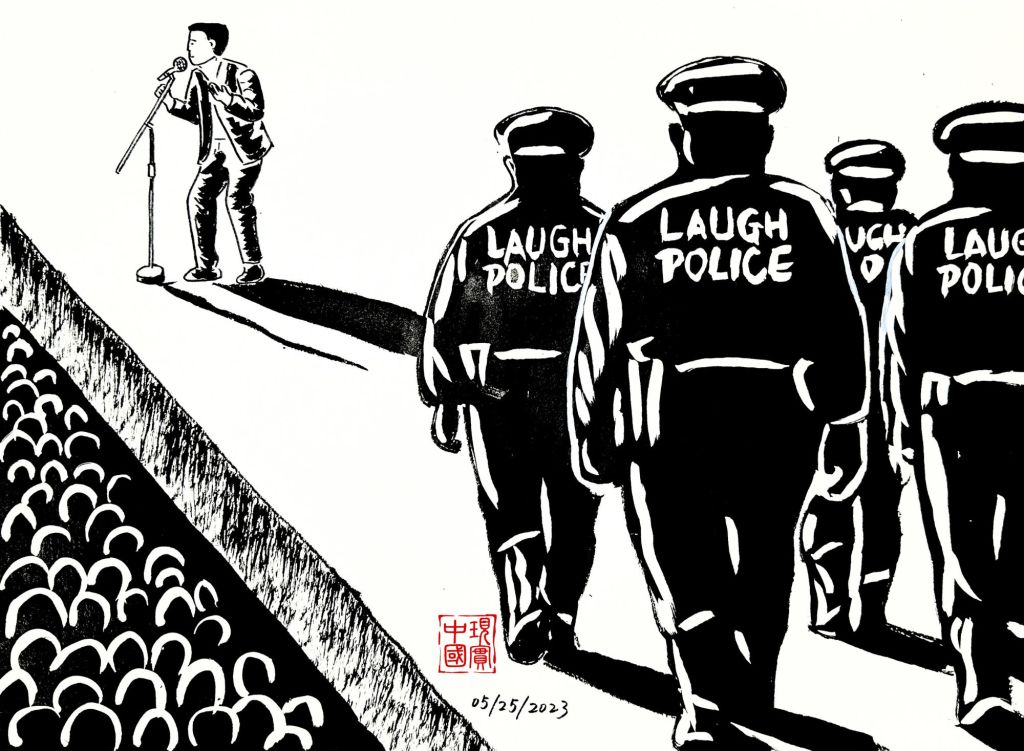
In recent days, China has witnessed a wave of performance cancellations across the country. A Japanese monk singer called off his tour, several cities halted stand-up comedy shows, and Beijing bars canceled jazz performances. Over a span of just a few days, more than a dozen shows were abruptly canceled, some mere minutes before they were scheduled to start, with little to no explanation provided.

These cancellations followed a significant fine imposed on a Chinese comedy studio in Beijing. The studio was fined 13.35 million yuan after the government accused one of its comedians of insulting soldiers in a joke. In a northern city, police also detained a woman for defending the comedian online. These actions highlight the increasing scrutiny faced by China’s creative industries.

Chinese President Xi Jinping has intensified the control over art and culture as part of an ideological campaign, urging artists to align their work with the Communist Party’s goals. Performers must submit scripts for review, and publications are closely monitored. In a letter to the National Art Museum of China on its 60th anniversary, Xi emphasized the need to “maintain the correct political direction.”

This heightened emphasis on controlling art and culture aligns with Xi’s broader focus on national security and eliminating foreign influences. Recently, authorities have raided Western consulting firms and expanded anti-espionage laws.

The crackdown also extended to live performances involving foreign artists, resulting in canceled shows for rock bands, jazz musicians, and rappers across major cities like Beijing, Shanghai, and Guangzhou. Cancellations were often attributed to “force majeure,” a term commonly used to imply government pressure.

Many observers see this as part of a larger strategy to tighten control over cultural expression amid deteriorating relations with the West. As Xi’s China becomes increasingly paranoid, cultural activities, including comedy and music, are becoming battlegrounds for ideological control.

Taiwan Publisher Detained in China, Sparking Concerns

Chinese authorities have confirmed the detention of Taiwanese publisher Li Yanhe, known by pen-named Fu Cha, on allegations of violating national security laws. This incident has raised fears in Taiwan about Beijing’s intentions towards its vibrant publishing industry.

Li Yanhe, a Chinese citizen who has lived in Taiwan since 2009, runs Gusa Publishing, known for its critical stance against the Chinese Communist Party (CCP). He disappeared shortly after returning to China for a family visit last month, causing alarm among colleagues and friends.

This is a strong blow, creating a chilling effect. Publishers, publishing, and freedom of speech are fundamental indicators of an open society. Convicting someone for publishing books critical of China is unacceptable.

Lee’s detention could further strain the already tense relations between Taiwan and China. Beijing views Taiwan as part of its territory, while many in Taiwan reject this claim, disapproving of Chinese President Xi Jinping’s authoritarian rule, especially after the crackdown on freedoms in Hong Kong.

点此查看相关中文报道

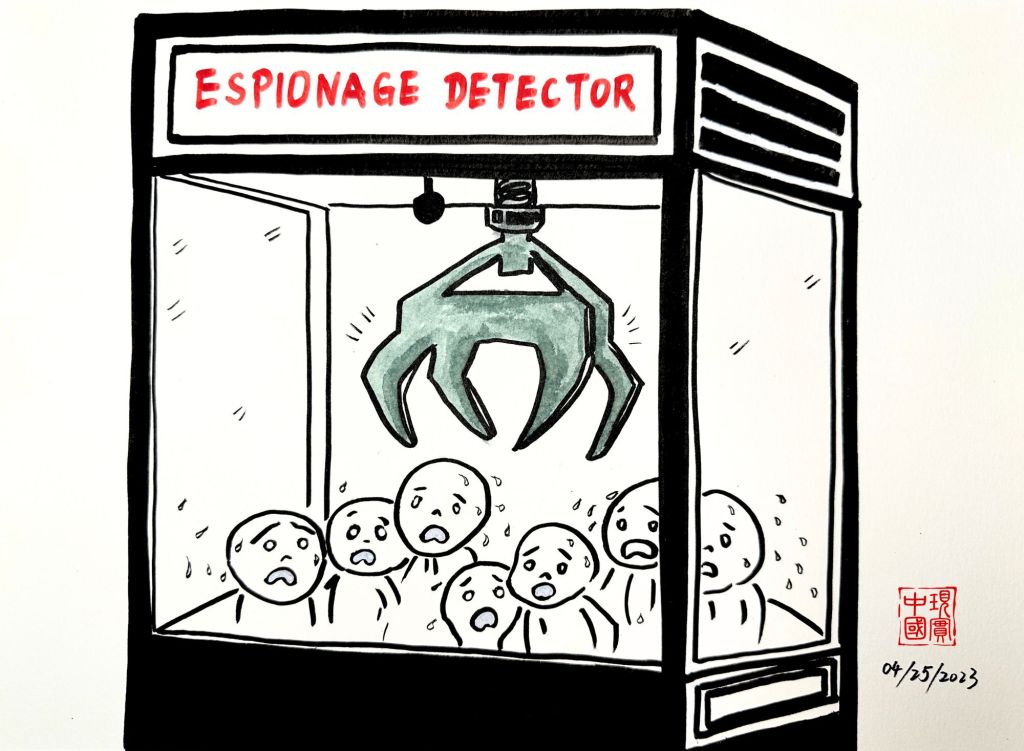
Chinese Editor Faces Espionage Trial After Arrest During Diplomat Lunch

A senior editor from a Chinese Communist Party newspaper, known for his liberal views, is set to face trial in Beijing on espionage charges after being arrested while having lunch with a Japanese diplomat. Dong Yuyu, deputy director of the commentary department and columnist at Guangming Daily, has had extensive interactions with foreigners, including diplomats and journalists, for his writing. His family believes these interactions are now being used against him as evidence of spying for Japan or the US.

Chinese President Xi Jinping has encouraged suspicion of foreign nations, especially the West, and has suppressed liberal views like Dong’s. Dong has contributed to both his own paper and relatively freer Chinese publications, many of which are now banned. He has also written for the New York Times Chinese website. It’s unclear if Dong is being targeted for his liberal views or his foreign contacts, or both. His family, fearing retaliation, has requested anonymity. The only evidence presented so far is his contacts with foreign diplomats and academic scholarships abroad.

Dong was arrested in February last year during a meeting with a Japanese diplomat, who was also detained but released hours later following Japanese government protests. Dong, however, was held in secret for six months before his formal arrest and recent indictment. He faces up to ten years in prison if convicted of espionage, with the trial date unknown and proceedings held in secret.

点此查看相关中文报道

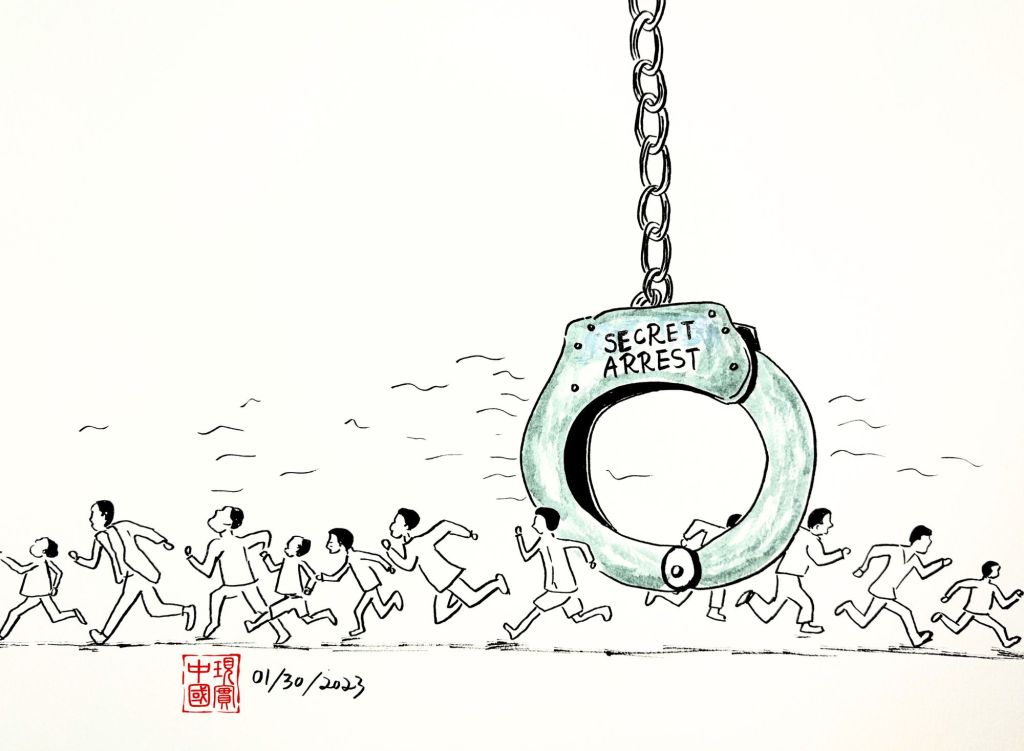
The Chinese Government’s Silent Crackdown on White Paper Movement Protesters

In late November 2022, Beijing saw rare protests against the strict “zero-COVID” policy. The Chinese Communist Party (CCP) quickly responded with its usual tactic of silencing dissent through secret arrests and intimidation, all while attempting to discredit protesters by alleging foreign influence.

The first to be detained were a finance firm employee, a freelance writer, a teacher with a degree in British literature, and an editor at a Beijing publishing house. These four women, friends who shared interests in social issues like feminism and LGBTQ rights, participated in the November protests and were swiftly arrested.

These arrests are part of a broader strategy by the CCP to intimidate and warn those who might be inspired by the recent surge of public discontent. The protests posed a significant challenge to the CCP’s rule and embarrassed President Xi Jinping.

Despite the government’s efforts to keep these actions under wraps, news of the arrests has spread among those involved in the protests. The CCP has avoided officially announcing these arrests to prevent further public outrage but has ensured that the message is clear: even peaceful expression of dissent will not be tolerated, and those who challenge the government face severe personal risks.

The Beijing protests began as a vigil for victims of a deadly fire in Xinjiang, which many blamed on the restrictive “zero-COVID” measures. While initial police response during the protests was relatively restrained, it soon escalated. In the following days, police summoned or visited demonstrators, questioning their participation and connections.

One of the detained women, Cao Zhixin, recorded a video before her arrest, expressing her belief in the right to express opinions even in China. Her case, along with the other three women, has highlighted the personal risks of challenging the government.

Authorities have accused these women of using foreign communication platforms and participating in feminist activities, framing their actions as influenced by foreign forces. The charge of “picking quarrels and provoking trouble,” a vague but commonly used accusation, carries a potential five-year prison sentence.

The CCP’s crackdown on these protesters serves as a stark reminder of the risks of dissent in China. The government’s actions aim to ensure that the recent wave of protests does not inspire further public outcry, using fear and repression to maintain control.

点此查看相关中文报道