Two Fires, One Extinguisher

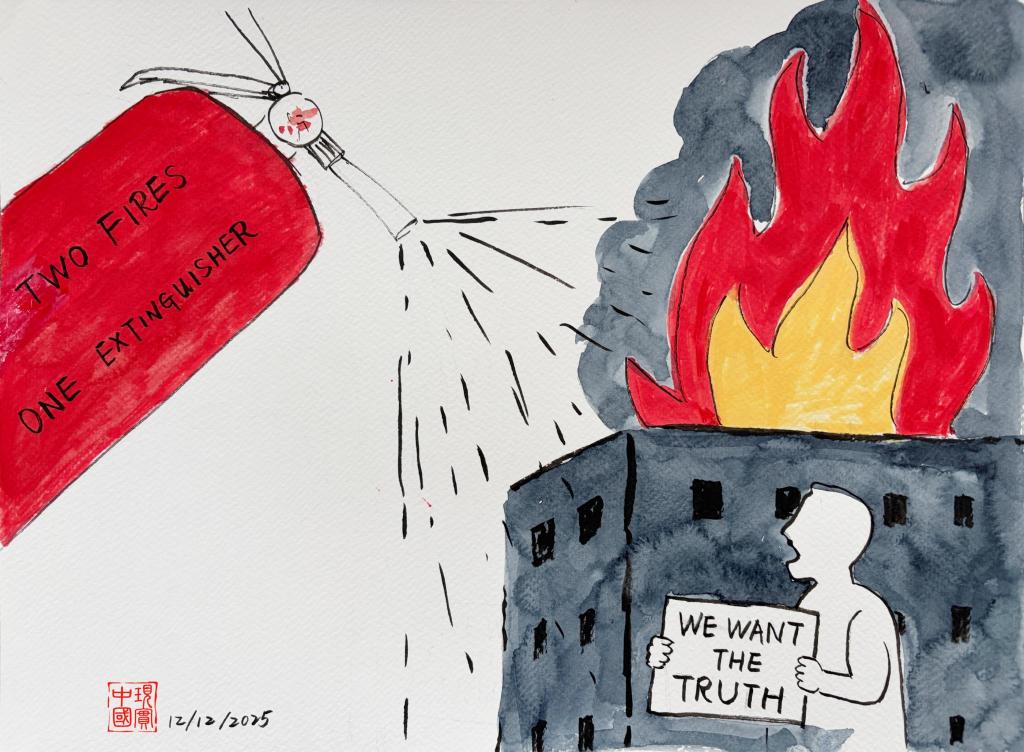
On November 26, 2025, a five-alarm fire tore through Hong Kong’s Tai Po estate, MacPherson Court (Hung Fuk Estate), engulfing seven residential blocks. At least 160 people died, dozens were injured, and the city was left in shock. The physical fire burned for more than 43 hours. Another fire — political and institutional — was extinguished far more quickly.

As residents mourned and volunteers mobilized aid, some asked uncomfortable but reasonable questions: Why were flammable materials used? Why did the fire spread so fast? Could this tragedy have been prevented? The official response focused less on answers than on control. Calls for independent investigation, leaflets, and online criticism were treated as security risks.

This is where the second fire appeared. Shared grief, if allowed to gather, can become shared accountability. For the authorities, that possibility was more dangerous than the blaze itself. One extinguisher was deployed for both fires: a national security mindset designed to smother not only unrest, but also collective mourning.

Click Here for detailed reports.

The Long Arm of Censorship Reaches New York

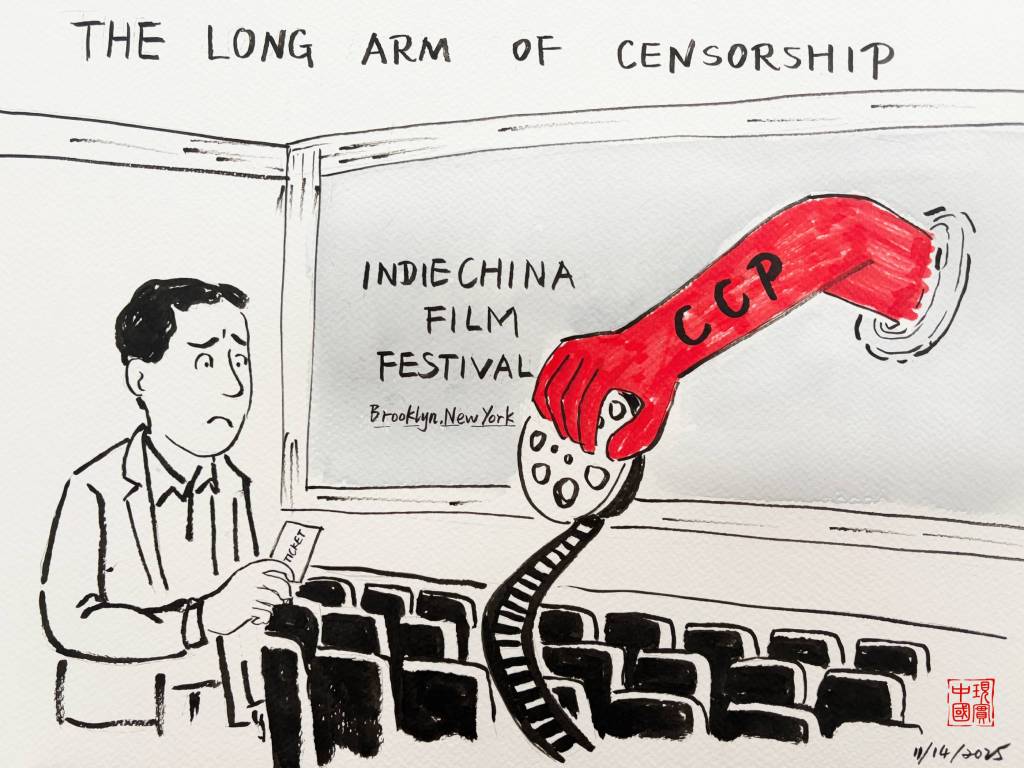
The cancellation of the IndieChina Film Festival in New York reveals an unsettling truth: censorship today is no longer confined by borders. What began as a small, independent gathering of filmmakers quickly became the target of pressure from thousands of miles away.

Organizer Zhu Rikun received a 5 a.m. call from his father in China — a call clearly influenced by authorities. Over the following days, directors, moderators, and even volunteers withdrew without explanation. Some quietly admitted they or their families had been warned by Chinese police. Others, including foreign citizens, faced pressure from employers connected to China.

The festival was modest in scale, yet the intimidation was sweeping. It shows a government willing to silence criticism wherever it appears, even in a Brooklyn theater with room for just a few dozen viewers.

Zhu ultimately canceled the event, not out of fear, but in hopes of shielding others from harassment. His empty screening room now symbolizes something far larger: the shrinking space for creative freedom, no matter where it tries to exist.

Click HERE for the detailed report.

When Art Becomes a Target

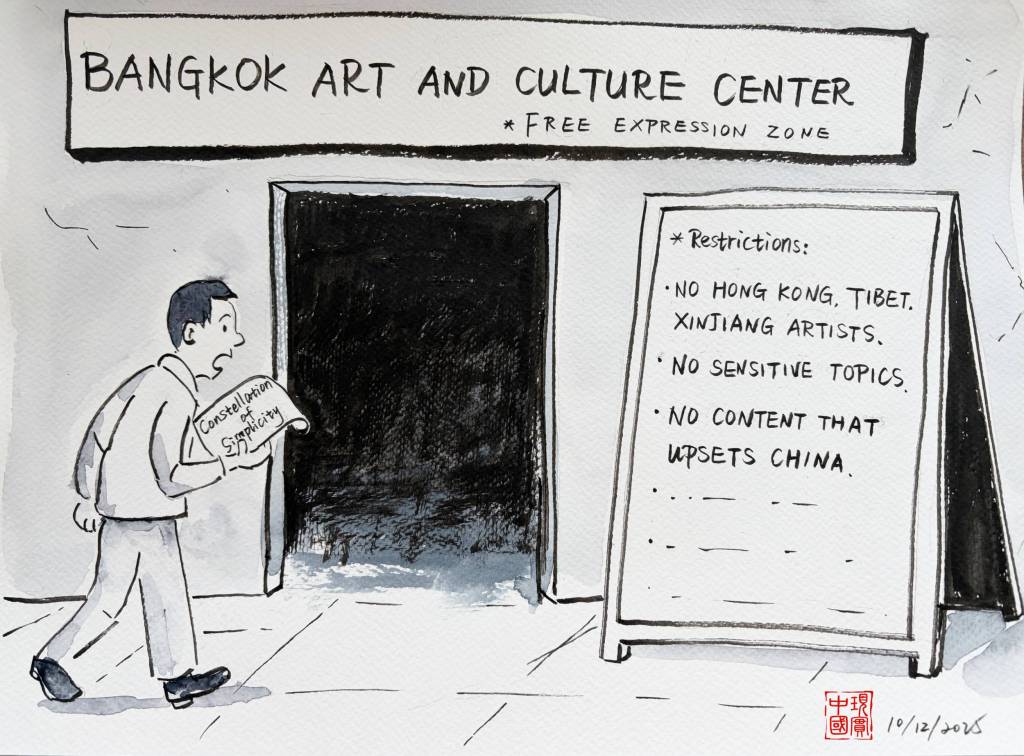
A new exhibition named “Constellation of Simplicity” in Bangkok was meant to explore how authoritarian governments cooperate across borders. Instead, it became an example of cross-border repression itself. The show’s curator, Sai — a Myanmar artist living in exile — found himself fleeing Thailand only two days after the opening. Museum directors warned him that Thai police were asking for his information, raising fears he might be deported back to Myanmar.

Pressure escalated quickly. Chinese authorities demanded that the museum erase the names and works of artists from Hong Kong, Tibet and Xinjiang. While the exhibition remained open, the institution blacked out those artists’ names and removed symbolic flags, turning a space meant for free expression into a quietly censored one.

The censorship was selective: works criticizing Myanmar’s junta, Iran or Russia stayed untouched. Only pieces tied to China’s most sensitive regions were targeted — a reminder of Beijing’s growing influence in Southeast Asia.

For Sai, now in London, the experience underscores a shrinking global space for political art. Yet he says he has no regrets and hopes to bring the exhibition to places where it can be shown freely.

Click HERE for detailed news report.

When Vanity Erupts on the Roof of the World

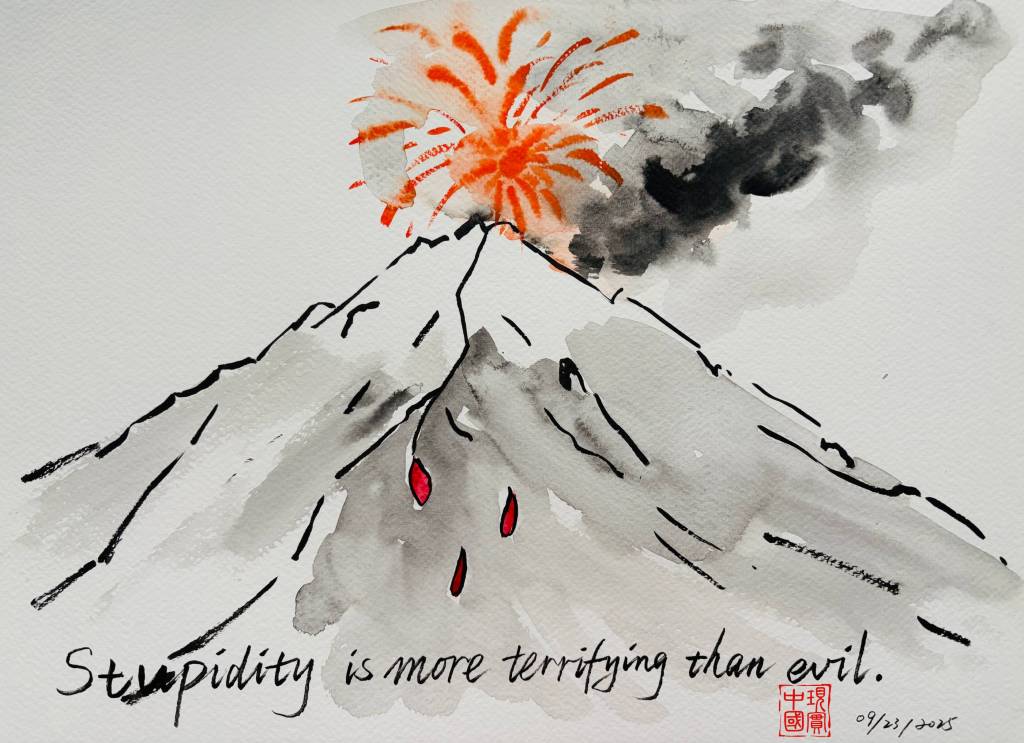
What was meant to be an “artistic celebration” became a symbol of arrogance and hypocrisy. At 5,500 meters above sea level, artist Cai Guo-Qiang and outdoor brand Arc’teryx lit up Tibet’s Himalayas with a massive “Rising Dragon” fireworks display — in one of Earth’s most fragile ecosystems.

The irony is breathtaking: a brand built on love for the outdoors helped pollute the very wilderness it claims to protect. Social media erupted with anger, and Arc’teryx was forced to issue an apology, calling the event “deeply disappointing.” Cai, too, expressed regret — but only after the backlash.

This was not art honoring nature; it was spectacle consuming it. On the world’s highest ground, humanity once again proved that ego burns brighter than respect.

Click here for the report.

Public Outcry Over School Bullying Sparks Clashes in China

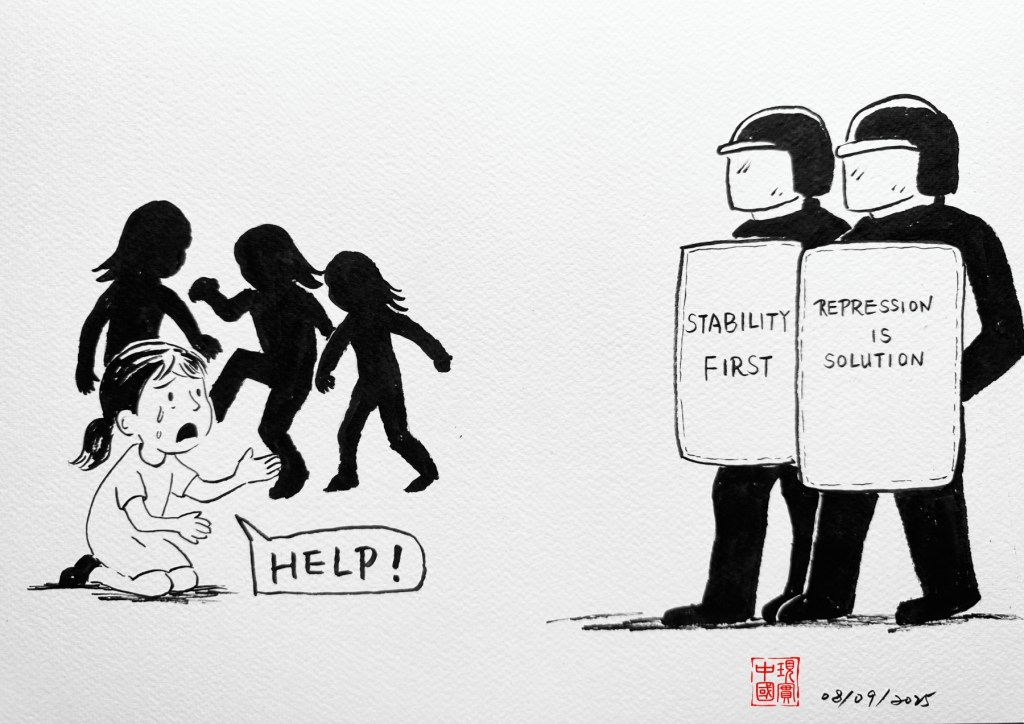
A video showing a 14-year-old girl being slapped, kicked, and tormented by several underage girls went viral, sparking public outrage in Jiangyou city of southwest China. Two of the offenders were sent to a specialized school for “corrective education,” while others received warnings or short-term detention less than 15 days. The girl’s parents, including a deaf mother, publicly expressed their frustration outside government offices, drawing the support of citizens demanding justice. Hundreds of residents initially protested, condemning the authorities for punishing the perpetrators too lightly.

As the protests grew, the government moved quickly to repress them. Security forces dispersed demonstrators, online discussion was heavily censored, and posts about the incident were removed from social media. State media coverage remained minimal and carefully framed to avoid fueling public anger, reflecting the authorities’ focus on maintaining social stability rather than addressing justice concerns.

Click here for related report.

Passports Confiscated: China Tightens Grip on Civil Servants’ Travel

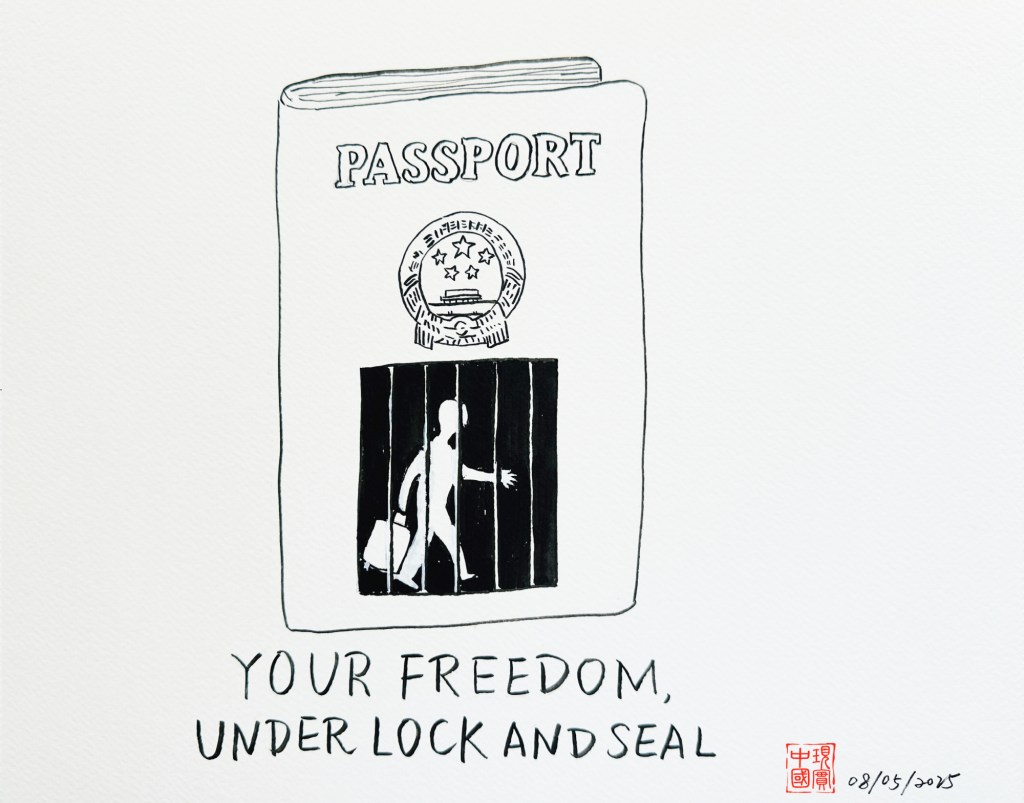
Across China, teachers, nurses, and other public-sector employees are being told to hand in their passports — and in some cases, even retirees must wait years to get them back. What was once a policy aimed at high-ranking officials with access to state secrets has now swept into the ranks of kindergarten staff, doctors, and local government contractors.

Authorities say the rules are meant to protect national security, curb corruption, and cut costs. But critics argue the net has widened far beyond sensitive posts, leaving ordinary workers with little chance to travel abroad without layers of approvals — if they get permission at all.

The clampdown comes as Beijing promotes itself as open for tourism and foreign investment, even as it quietly tightens restrictions at home. For many affected, it’s not just about missing a holiday; it’s about a shrinking sense of personal freedom, now kept “under lock and seal.”

Click here for related report.

China Launches National Childcare Subsidy Amid Falling Birth Rates

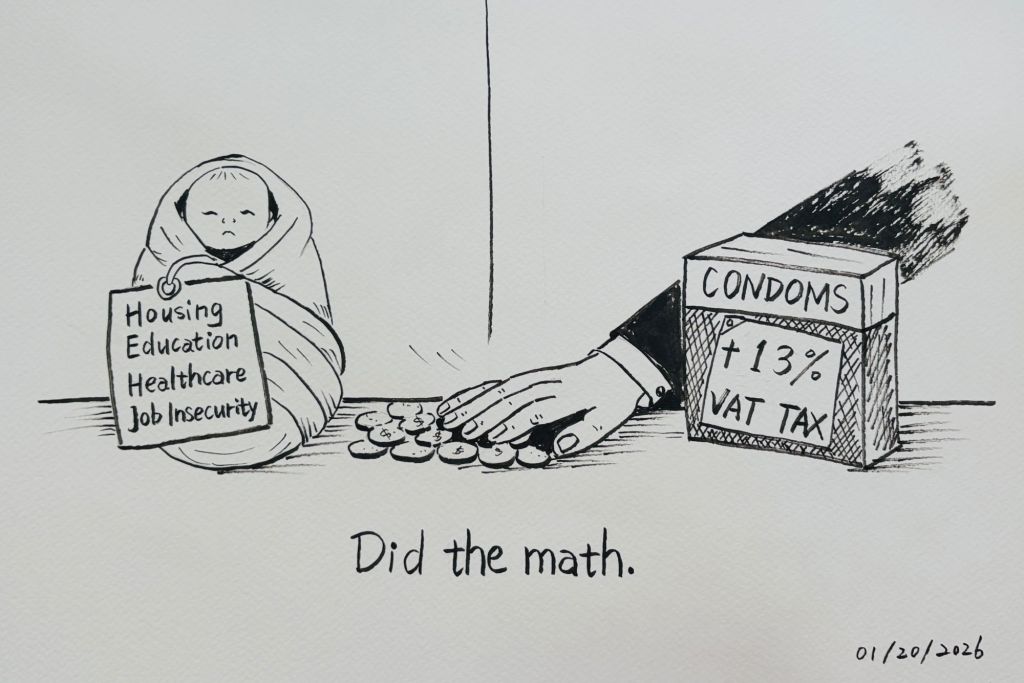
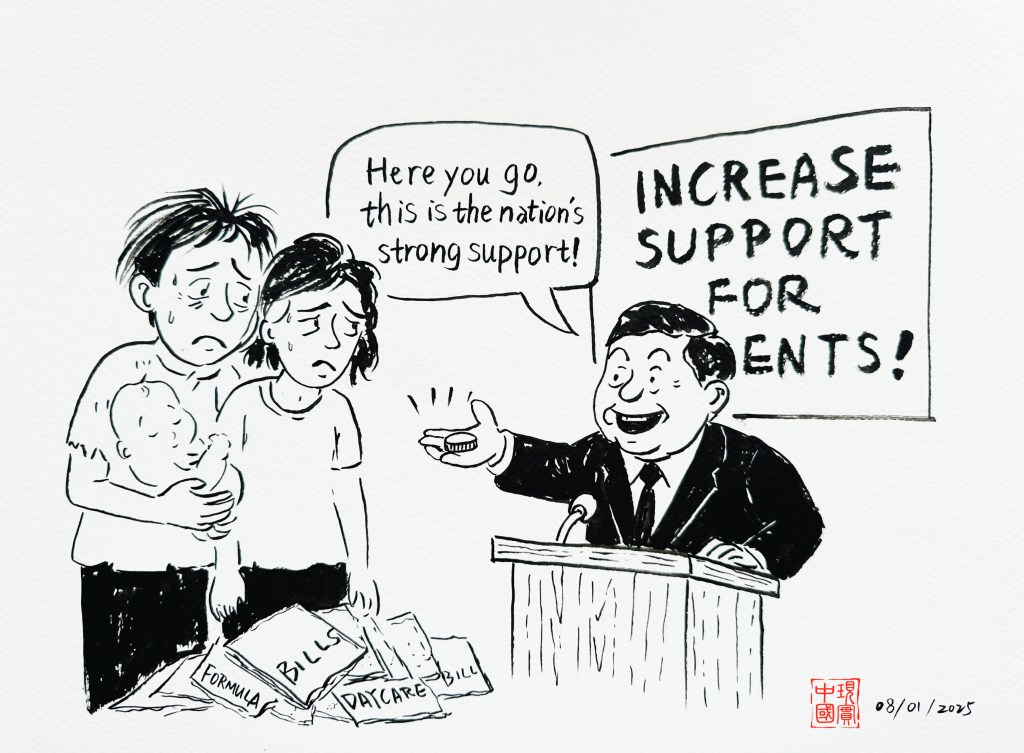
On July 28, 2025, China introduced a nationwide childcare subsidy, granting families 3,600 yuan (about $500) annually per child until the age of three. The initiative, funded by the central government, is expected to benefit more than 20 million households. Children born before 2025 will also receive partial support, signaling the state’s intention to reduce the financial strain of raising children.

Officials have described the plan as an “important national livelihood policy,” aiming to ease parenting costs and encourage higher fertility. Yet demographers and economists remain cautious. The amount, they argue, is unlikely to change the broader social and economic pressures deterring young people from having children—ranging from the high cost of education to job insecurity and a slowing economy.

Click here for related report.

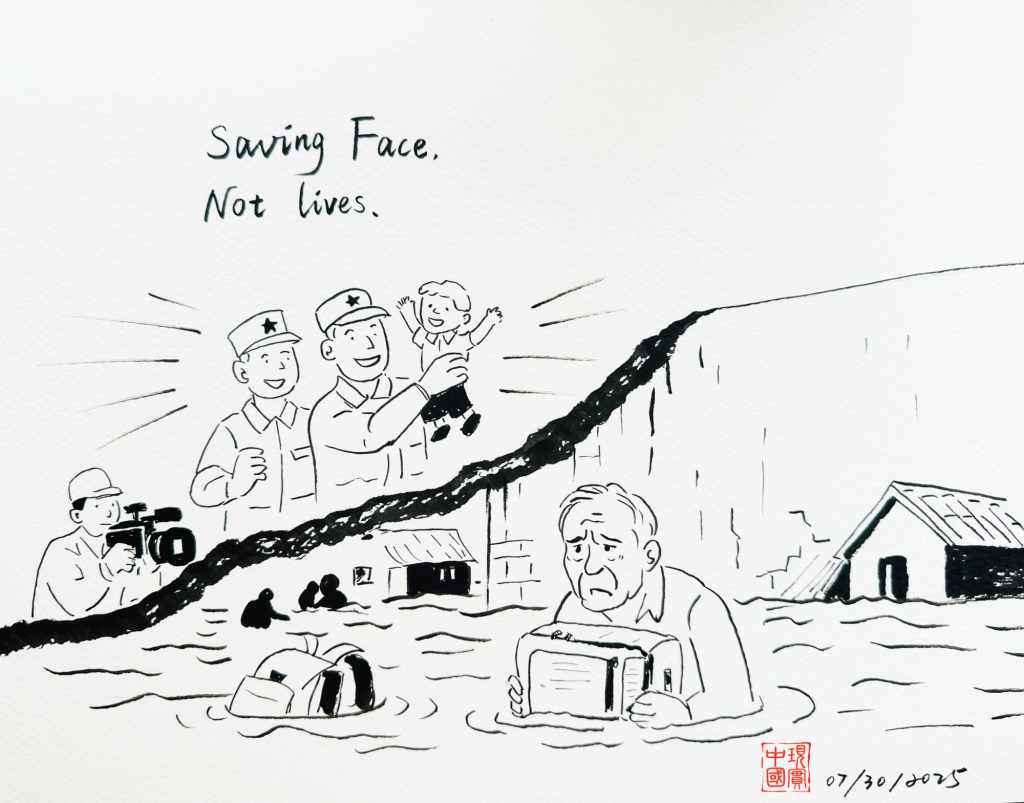
Beijing Floods: Lives Lost While Warnings Went Unsent

As devastating floods swept through Beijing and its surrounding regions, shocking reports reveal that many residents never received any warning. In villages like Miyun and Yanqing, residents woke to water already knee-deep, trapped by sudden torrents and landslides. Villagers recount frantic attempts to contact family members and charge phones amid power outages, relying on well water and whatever limited supplies they could access.

Despite the severity of the disaster—over 38 confirmed deaths, thousands displaced, and roads destroyed—official attention seemed more focused on controlling public perception than ensuring safety. Social media discussions about the floods were heavily censored, with authorities replacing citizen reports with state media narratives praising rescue efforts. Aid distribution was inconsistent, leaving some residents without food or bottled water while others received minimal support.

Experts link the extreme rainfall to climate change, yet warnings that could have saved lives were delayed or never issued. While government statements emphasized “full rescue efforts” and cities broadcast high-level flood alerts, these measures came too late for many. 

Click here for related report.

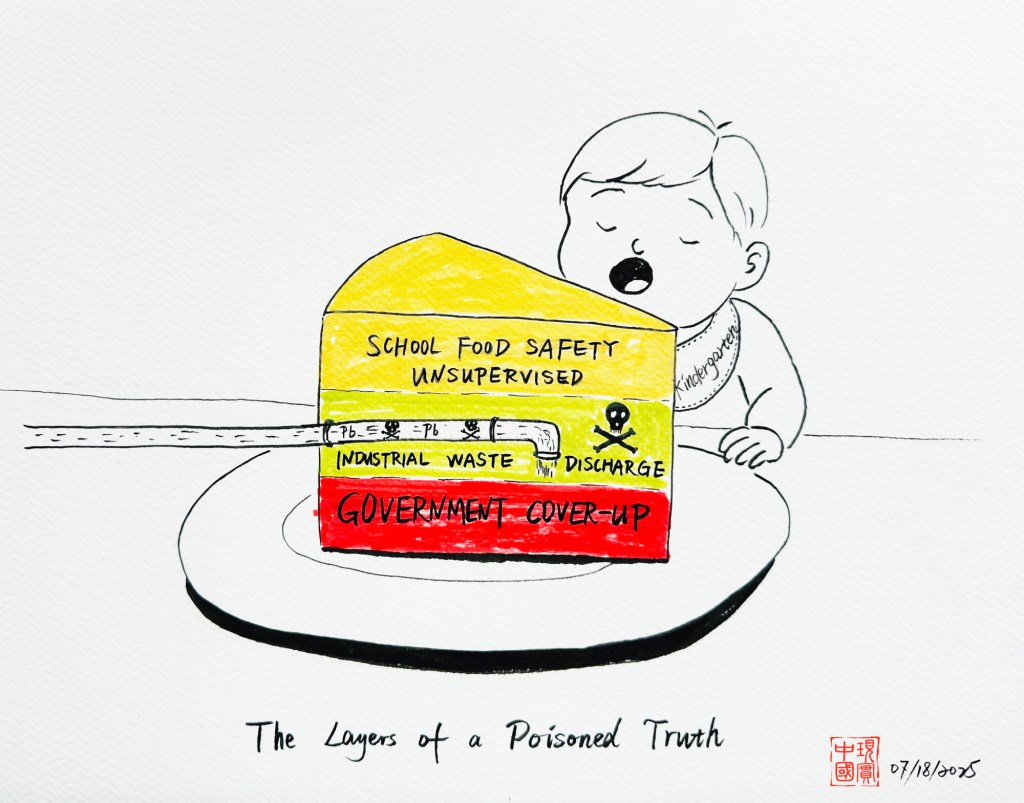
The Layers of a Poisoned Truth: Gansu Lead Poisoning Scandal

In Tianshui, Gansu province, more than 200 kindergarten children were poisoned by lead-tainted food — a shocking case that revealed multiple layers of failure. Investigations found that the kindergarten had added industrial lead-based paint to meals to make them look more appealing. The scandal triggered protests from parents and led to the detention of school staff, investors, and local officials.

While official narratives emphasized swift investigations and arrests, far less attention was given to the deeper context. Parents alleged that authorities delayed disclosure, suppressed early complaints, and manipulated blood test results to avoid public outrage. Online discussions claimed the contamination originated from industrial waste-laced ingredients supplied to the school, pointing to a chain of negligence reaching well beyond the kindergarten. Some reports also suggested that health checks were intentionally downplayed to shield local officials and businesses. These accounts, however, were quickly removed from public view through censorship.

Click here for related news report.

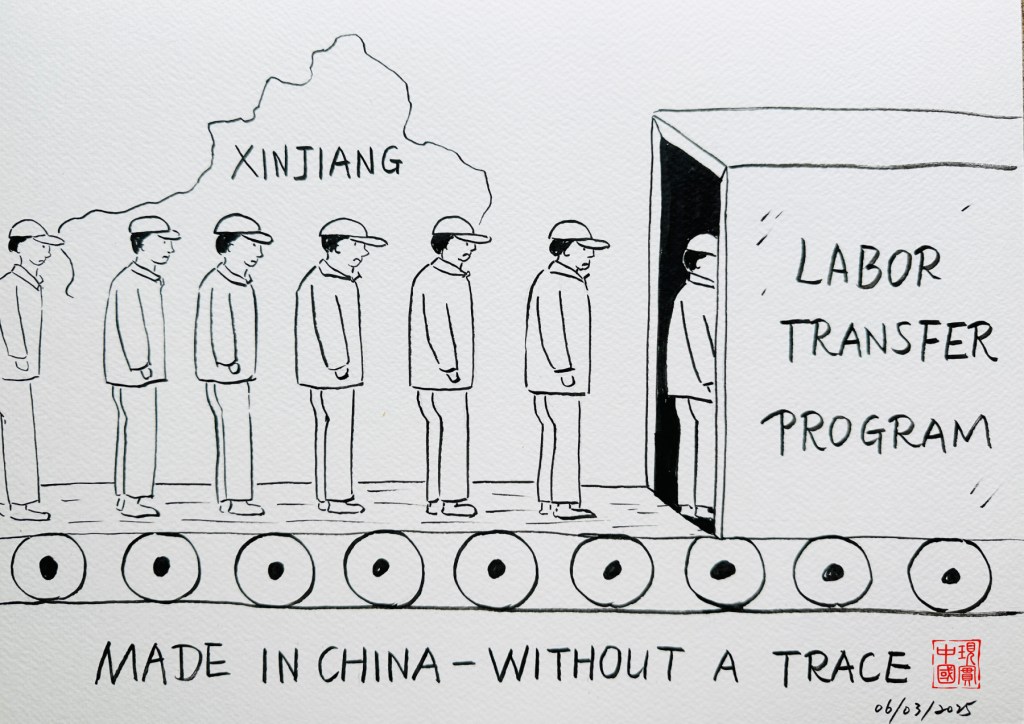
Uyghur Forced Labor Moves Beyond Xinjiang

China’s government has expanded a controversial labor program moving Uyghur workers from Xinjiang to factories across the country. While officials frame these transfers as voluntary employment opportunities aimed at poverty reduction, investigations reveal a more coercive reality. Workers, often leaving home under government supervision, are assigned to factories producing goods for international brands, from appliances to automotive parts.

Reports indicate that tens of thousands of Uyghurs are affected, living in segregated dormitories and monitored closely, with restricted freedom of movement. Despite legal bans in the U.S. and EU on importing goods made with forced labor from Xinjiang, tracking products made outside the region has proven difficult. This loophole allows China to continue supplying global markets while circumventing human rights laws.

Experts warn that these labor transfers are part of a broader strategy of social control, aiming to disperse Uyghur communities and limit cultural expression. 

Click here for related report.

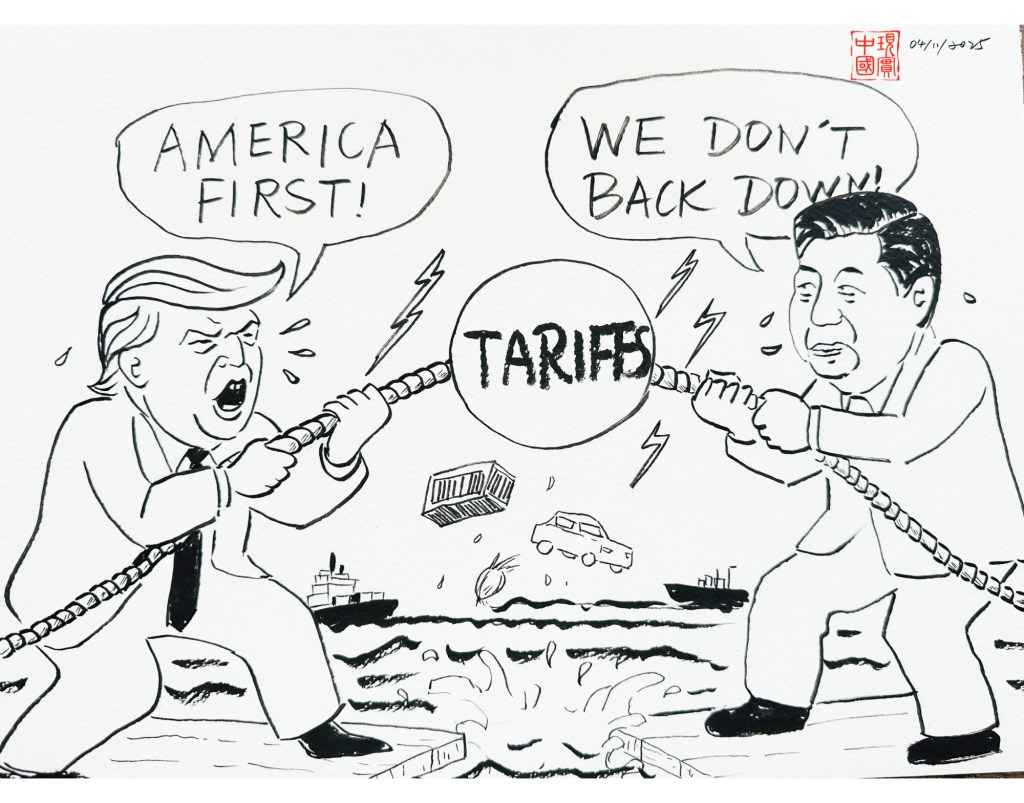
Tariff Tug-of-War: When Superpowers Pull in Opposite Directions

The U.S.–China trade war entered another round as Washington confirmed that nearly all Chinese exports now face a minimum tariff of 145%, with additional duties on key sectors such as automobiles, steel, and aluminum. In response, Beijing raised its tariffs on American goods from 84% to 125%, marking its third retaliatory move in just weeks.

What began as a dispute over “fair trade” has turned into a high-stakes tug-of-war, with neither side willing to let go. Trump insists on “America First,” while Xi warns that “no one wins a tariff war.” Meanwhile, businesses on both sides are cutting orders, global markets are on edge, and the rest of the world is left wondering whether this contest is about economic strategy or political theater.

Click here for related report.

When Your Job Demands a Wedding Ring

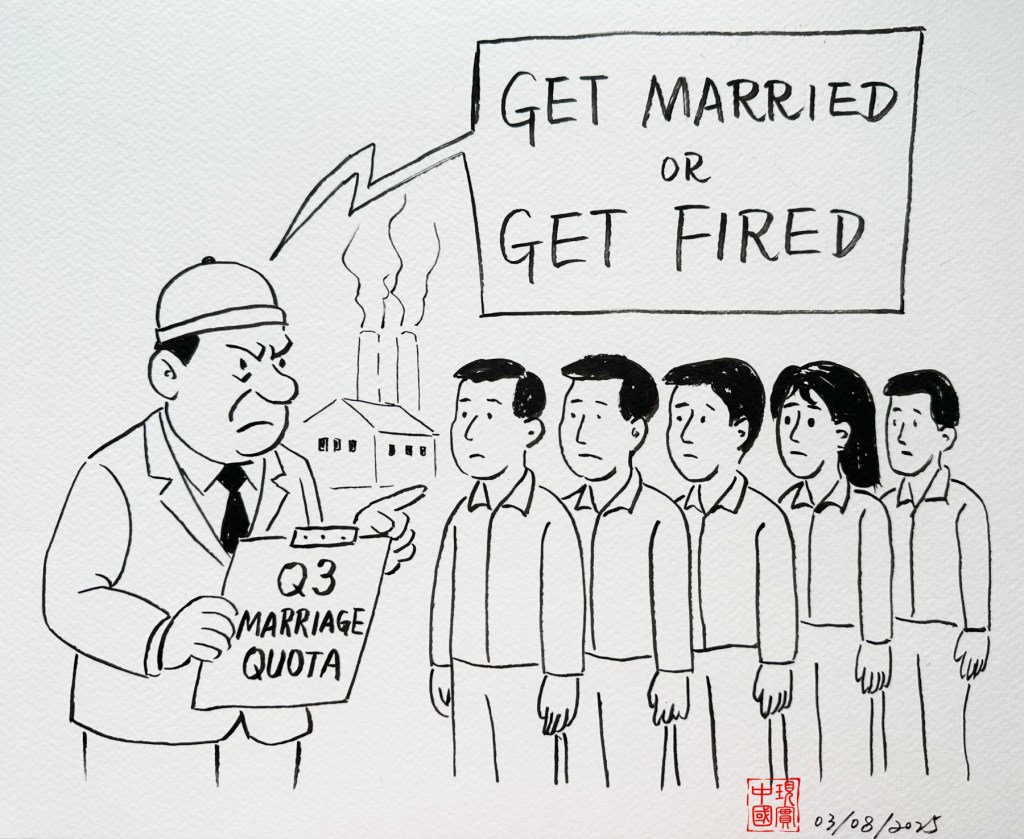
A recent controversy in China has exposed the troubling lengths some companies will go to in order to enforce the state’s demographic agenda. Shandong Shuntian Chemical Group issued a memo ordering unmarried employees between the ages of 28 and 58 to get married and start families by September 30—or face dismissal. The notice, which went viral online, declared that refusing to wed and reproduce was “disloyal” to the nation.

This is not an isolated case. A popular supermarket chain has also banned its employees from paying or demanding expensive dowries, framing it as a way to promote affordable marriages. While officials and state media defend such measures as creating a “pro-family environment,” many young people see them as intrusive, costly, and ultimately counterproductive.

As China’s birthrate continues to fall, the question remains: how far will institutions go to fill the nation’s cradles?

Click here for the report.

China Imposes Mandatory AI Model Censorship

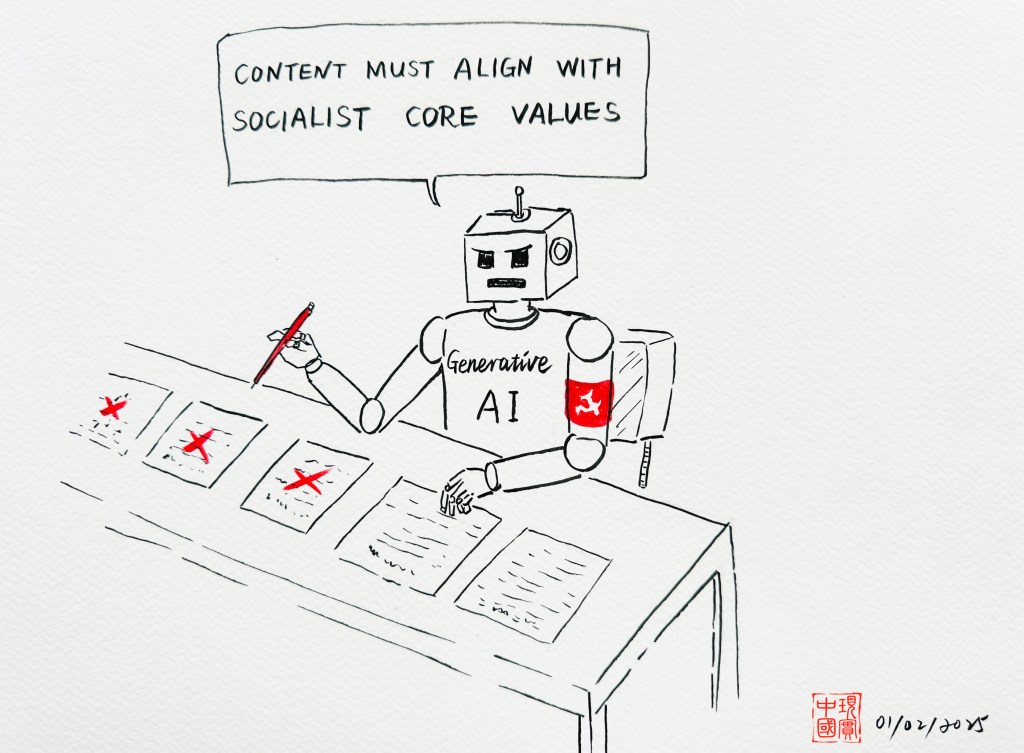
China is tightening control over artificial intelligence by requiring tech firms to undergo mandatory government censorship tests. According to insiders, companies such as ByteDance and Alibaba. AI must ensure their large language models reflect “socialist core values.”

The Cyberspace Administration of China (CAC) is said to be testing how these models respond to politically sensitive questions, including those related to President Xi Jinping. Officials reportedly review training data and security processes on-site, with some companies needing multiple attempts to pass the evaluation.

China’s approach is seen as an effort to establish the world’s most stringent AI regulatory framework. While this ensures alignment with state ideology, it also forces AI startups to adapt quickly, often by building keyword filters and sanitizing datasets. For many developers, compliance has become as critical as innovation itself.

Click here for related report.

When a Public Space Becomes a Danger Zone

On November 11, 2024, tragedy struck Zhuhai, Guangdong, when a car drove into a crowded fitness square, leaving 35 people dead and 43 injured. Most of the victims were elderly citizens participating in a walking exercise group. The shocking attack exposed the vulnerability of ordinary people in public spaces and has left a deep scar on the community.

The suspect, a 62-year-old man, was quickly arrested after attempting self-harm. His case moved through the courts with unusual speed: by late December he was sentenced to death, and by January 2025 the sentence was carried out. This rapid judicial process sparked debate. For some, it demonstrated decisive justice. For others, it raised questions about whether speed came at the expense of transparency and fairness.

Click here for the report.

China Announces Gradual Increase in Retirement Age

China has approved a plan to raise its statutory retirement age for the first time since the 1950s, addressing the challenges of its aging population. Starting on January 1, 2025, the retirement age will increase gradually. Men, who could previously retire at 60, will see their age rise incrementally to 63 by 2040. For women in white-collar jobs, the retirement age will increase from 55 to 58. Women in blue-collar jobs, previously able to retire at 50, will now work until 55. Although necessary, the changes have been met with resistance from the public.