
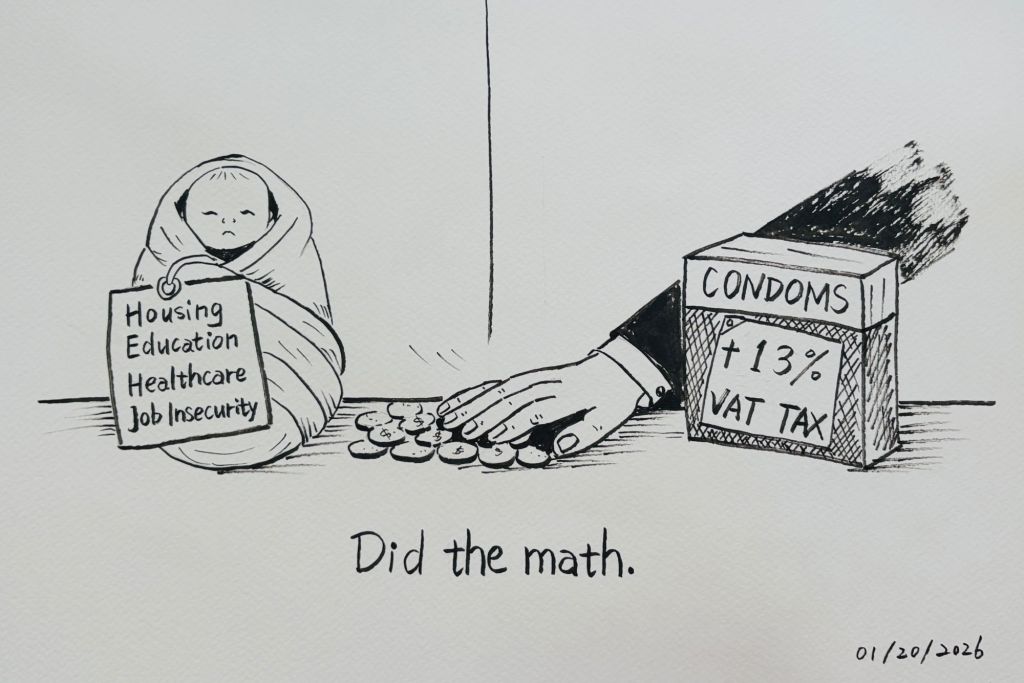
China’s leadership has made reversing the country’s falling birth rate a national priority. Officials have framed childbirth as a patriotic act, pressured newly married couples to plan pregnancies, offered subsidies, and most recently imposed a 13% value-added tax on contraceptives. None of it has worked.
In 2025, deaths exceeded births for the fourth consecutive year. The number of newborns fell to historic lows, while the population continued to age rapidly. Despite slogans and incentives, young people remain unconvinced.
The reasons are not mysterious. Housing is expensive, education costs are high, healthcare remains uncertain, and job insecurity is widespread—especially among younger workers. Economic growth has slowed, the property market is in crisis, and social welfare systems offer limited protection. Under these conditions, having children feels less like a moral duty and more like a financial risk.
Taxing condoms may signal official frustration, but it does little to change personal decisions. Many young adults openly acknowledge that the cost of raising a child far outweighs the cost of contraception. Others simply feel unready—for economic, emotional, or practical reasons.
Demographic decline cannot be reversed through pressure alone. When policies fail to address the structural costs of family life, appeals to patriotism sound hollow. People are not refusing to have children out of defiance. They are responding rationally to the realities in front of them.
Click here for related report.
Discover more from The Truth Of China
Subscribe to get the latest posts sent to your email.
 The Truth Of China